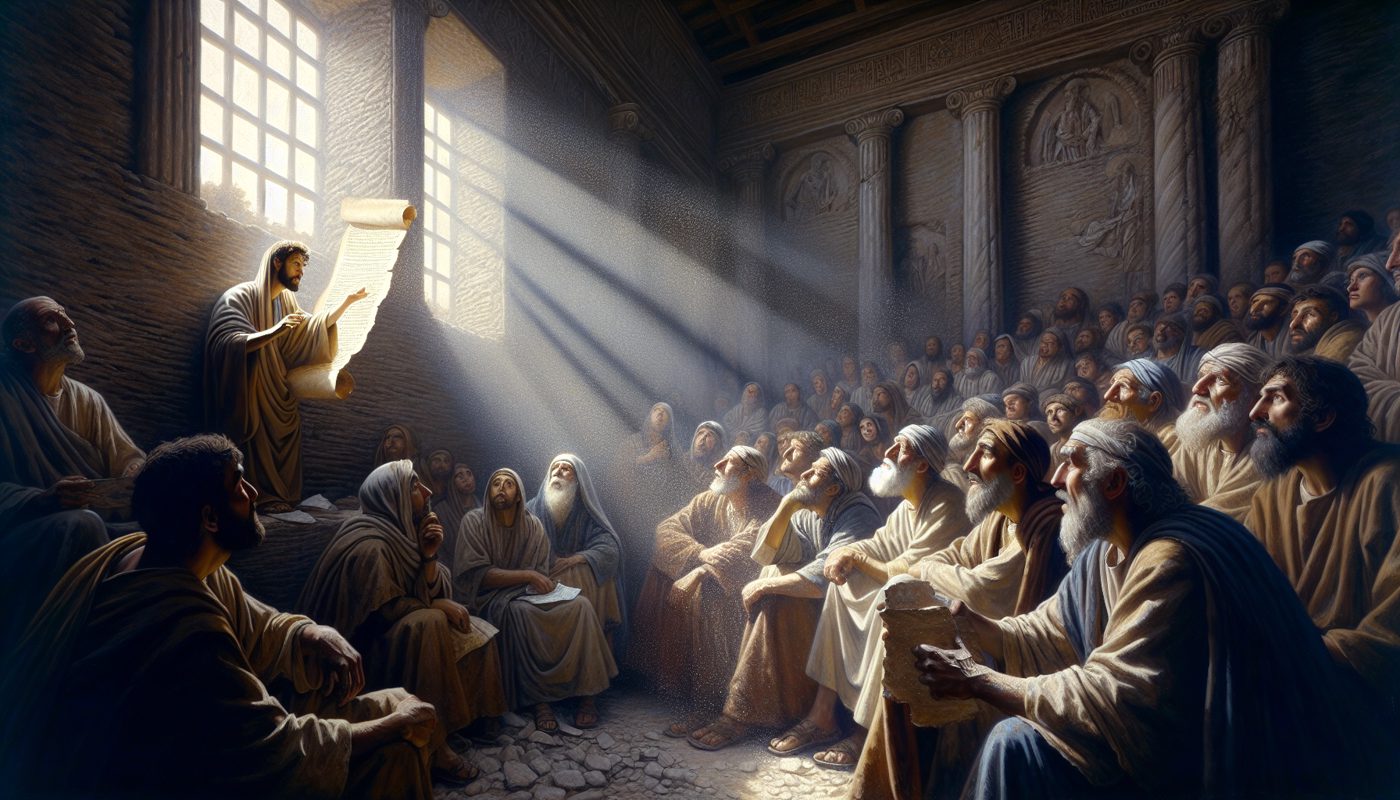
The letter does not begin with praise. It begins with a warning dressed as a history lesson. Paul writes to a congregation that thinks it stands secure, and he reaches back into the wilderness to show them what standing secure really looked like. The ancestors were all under the cloud. They all passed through the sea. They all ate the same spiritual food and drank the same spiritual drink. The rock that followed them was Christ. And yet, Paul says, God was not pleased with most of them. Their bodies were scattered in the desert.
The point is not that the Corinthians are in danger of being overthrown by a pillar of fire or a plague of serpents. The point is that the same pattern is alive in their own city. They have their own tables. They have their own cups. They have their own temptations to treat the Lord’s provision as permission to indulge the old appetites. Paul names the sins plainly: lust for evil things, idolatry, sexual immorality, testing the Lord, grumbling. Each one has a wilderness precedent. Each one ended in judgment.
The wilderness generation did not fall because they lacked spiritual resources. They had the cloud. They had the sea. They had the rock. They had Christ present with them in a form that preceded the incarnation. And still they fell. Paul insists that these things were written down as examples, not as ancient trivia. The Corinthians are living in the period the prophets called “the ends of the ages.” The stakes are not lower because the geography has changed.
Paul then shifts from warning to a direct pastoral command: flee from idolatry. He does not assume the Corinthians know how to recognize it. He explains that the cup of blessing they share is a participation in the blood of Christ. The bread they break is a participation in the body of Christ. Because they all share the one bread, they are one body. That is the positive side of the argument. The negative side follows immediately: the sacrifices offered to idols are offered to demons, not to God. Paul does not say the idols are real gods. He says the spiritual reality behind them is demonic. To share the Lord’s table and then share a table of demons is not liberty. It is a contradiction that provokes the Lord to jealousy.
Paul does not leave the Corinthians with a simple ban on eating meat. He gives them a framework. All things are lawful, but not all things are beneficial. All things are lawful, but not all things build up. The governing principle is not personal freedom but the good of the neighbor. A Christian can eat meat sold in the market without asking questions, because the earth is the Lord’s and everything in it. But if someone at the table points out that the meat was offered to an idol, the Christian should refrain—not because the meat is contaminated, but because the other person’s conscience is at stake. Paul refuses to let his own liberty become an occasion for someone else to stumble.
The logic is tight. Paul’s own conscience is not bound by the opinion of another person. He can give thanks for the meat and eat it with a clear heart. But if eating it causes another believer to fall back into idolatry or confusion, then the eating is not worth it. The question is not whether the meat is clean. The question is whether the act builds up the church or tears it down.
Paul ends the section with a sweeping command that covers every detail of daily life: whether you eat or drink or whatever you do, do everything for the glory of God. That is not a vague slogan. It is the practical test for every decision in a city full of temples, markets, and dinner parties. The Corinthians are not to give offense to Jews or to Greeks or to the church of God. Paul himself models this. He does not seek his own profit. He seeks the profit of the many, so that they may be saved.
The rock that followed the wilderness generation was Christ. The same Christ is present in the cup and the bread. The same Christ is present in the conscience of the weak brother. The Corinthians do not need to go back to Egypt or wander in the desert to learn what it means to fall. They have the example already written. The question is whether they will read it as ancient history or as a mirror.
Comments
Comments 0
Read the discussion and add your voice.
Members only
Sign in to join the conversation
We keep comments tied to real accounts so the discussion stays clean and trustworthy.
No comments yet. Be the first to add one.