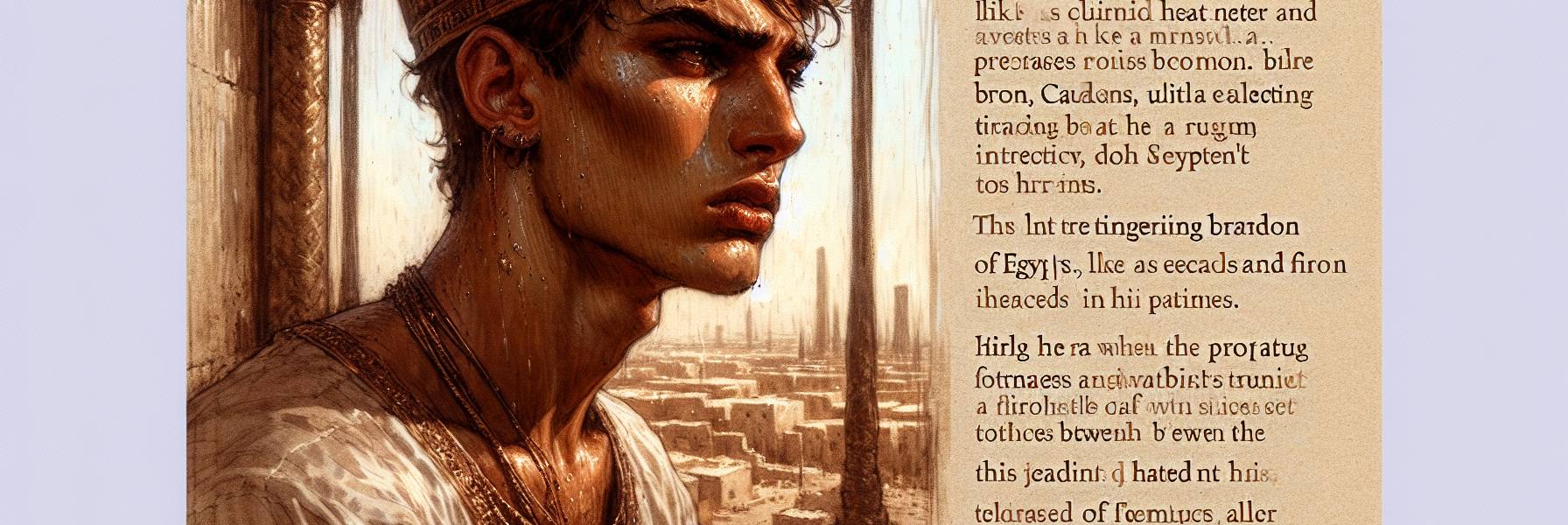

The heat in Jerusalem that summer was a clinging, dusty thing. It settled in the courtyards of the palace and seeped through the very stones, carrying with it the distant scent of fear. Jehoiachin, barely eighteen, felt the weight of the crown not as a symbol, but as a physical pressure, like a too-tight band of bronze around his temples. He stood at a latticed window, looking out over a city that was no longer truly his. The memory of his father, Jehoiakim, was a recent, sour taste. A king who had burned the words of a prophet, who had vacillated between the crocodile of Egypt and the lion of Babylon until the lion’s patience had snapped.
It had begun with the creeping tide of Nebuchadnezzar. Not a sudden wave, but a slow, inexistent flooding of the low places. First, the outlying towns. Then, the fortresses. Messengers, their robes stained with sweat and road dust, would arrive with fewer words each time, their eyes hollow. “The Chaldeans are at such-and-such a place.” Then, silence from that place forever. His father had raged, had made promises to Egypt that arrived on papyrus but never in the form of soldiers or shields. And the Lord, the chroniclers whispered in corners, had sent bands of raiders—Arameans, Moabites, Ammonites—to harry the land, a persistent itching scourge alongside the Babylonian plague. It was the judgement pronounced for the sins of Manasseh, a debt called due not in a single moment, but in a long, excruciating foreclosure of peace.
Jehoiachin remembered the day the Egyptian relief force was shattered at Carchemish. The news reached the palace not with a shout, but with a profound, chilling quiet. The last prop had been kicked away. Babylon’s shadow now stretched, unbroken, from the river Euphrates to the walls of Jerusalem itself.
His father died then, perhaps of the shame, perhaps of a heart clenched too tight by dread. And Jehoiachin, the son, was left with the empty treasury, a demoralized army, and a name that meant “The Lord Establishes.” A bitter joke.
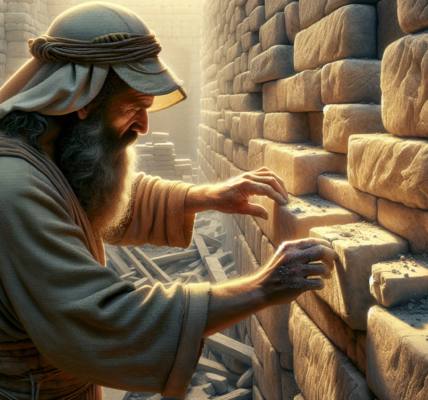
The siege, when it came, was not the dramatic thunder of a hundred rams. It was a slow, methodical strangulation. The Babylonians, veterans of a dozen such sieges, simply built their circumvallation—a grim, earthen wall that crept around the city like a serpent coiling. They cut off the roads, the streams, the hope. From the walls, Jehoiachin watched the smoke from their countless cook-fires stain the horizon. He watched their siege engines, strange and terrible wooden beasts, being assembled with unhurried expertise.
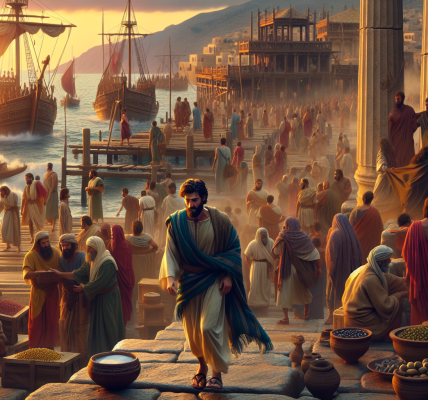
Inside, the city began to eat itself. The grand houses on the hill still had some grain, but in the lower city, the bartering became desperate. A silver bracelet for a half-sack of millet. A fine linen tunic for a skin of water. The prayers at the Temple took on a frantic, grating tone. Priests offered the daily sacrifices, but the smoke seemed thin, unable to pierce the heavy pall of despair that lay over Zion.
He lasted three months. A hundred days of watching his people’s eyes grow large in gaunt faces. The commanders, practical men who knew the mathematics of starvation, came to him in his chamber. Their words were respectful, their meaning absolute. “There is no hope from Egypt. The storehouses are ash. The walls will hold, but the people within them will be bones by the new moon. To continue is to see every soul perish.”
So he went out. Not in a final, glorious charge, but in a pathetic, humiliating procession. He, his mother Nehushta—her regal bearing the only thing left unbroken—his servants, his officials, and the palace eunuchs, all filed out of the city gate. The Babylonian officers received them with cold, professional courtesy. There was no malice in their faces, only the blank efficiency of a task being completed. The year was 597. The spring sun was cruel in its brightness.
What followed was a careful, systematic dismantling. Nebuchadnezzar himself arrived to oversee the plunder. Jehoiachin, from under guard, watched as the Babylonians entered the House of the Lord. They did not rage or defile. They itemized. They brought out the treasures accumulated over centuries, from Solomon’s glorious days to the gifts of Hezekiah: the gold vessels, the silver lampstands, the intricate panels of cedar overlayed with gold. Each piece was catalogued, wrapped in linen, and placed on ox-carts. It was a surgical removal of the kingdom’s soul. He saw the faces of the priests, as still and white as marble, watching the holy place be emptied.
Then came the selection of the people. Not a wholesale slaughter, but a precise, intelligent deportation. The Babylonian mind thought in terms of utility and control. They took the mighty men of valor—seven thousand of them. Not to kill them, but to neuter their power, to conscript them into foreign armies. A thousand craftsmen and smiths. This was the true genius of the exile: they took the architects, the metalworkers, the weavers, the men who could build and create. They left behind the poor, the “vines and fig trees” of the land, to tend to fields that would now feed Babylon’s coffers.
Jehoiachin, his mother, his wives, his officials—they were bound, not with rough ropes, but with the invisible, unbreakable cords of captivity. He took one last look over his shoulder at the city on the hill. The walls stood. The Temple stood. But they were shells, emptied of their substance. The Lord had established, all right. He had established the truth of his warnings.
The journey north was a blur of heat and dust and despair. He didn’t see the fields of his ancestors fall away. He felt it. In Babylon, they were not thrown into a dungeon. They were installed, a living trophy, in a comfortable but guarded quarter of the palace. His uncle, Mattaniah—whose name they changed to Zedekiah, “The Lord is my Righteousness,” another bitter joke—was placed on the throne in Jerusalem as a puppet king.
And so Jehoiachin sat. For years, he sat. He ate the bread of a foreign king, wore the clothes of a pensioned captive. The dreams of youth were replaced by the slow, granular reality of exile. The prophecy had been precise, the chronicle meticulous: *And he carried away all Jerusalem, and all the princes, and all the mighty men of valor, even ten thousand captives, and all the craftsmen and smiths: none remained, save the poorest sort of the people of the land.* The word of the Lord, spoken through the prophets, had sunk into the history of his people like a stone into deep water. It was done. And in the doing, a terrible, necessary clarity was born. The Lord was not a localized god, defeated by Marduk. He was the author of the judgement, using the king of Babylon as his unwitting scribe. The throne of David was not gone. It was, for now, a chair in a garden in Babylon, where a young man who had been king for three months stared at the strange, hanging gardens, and wondered what establishment by the Lord might look like next.