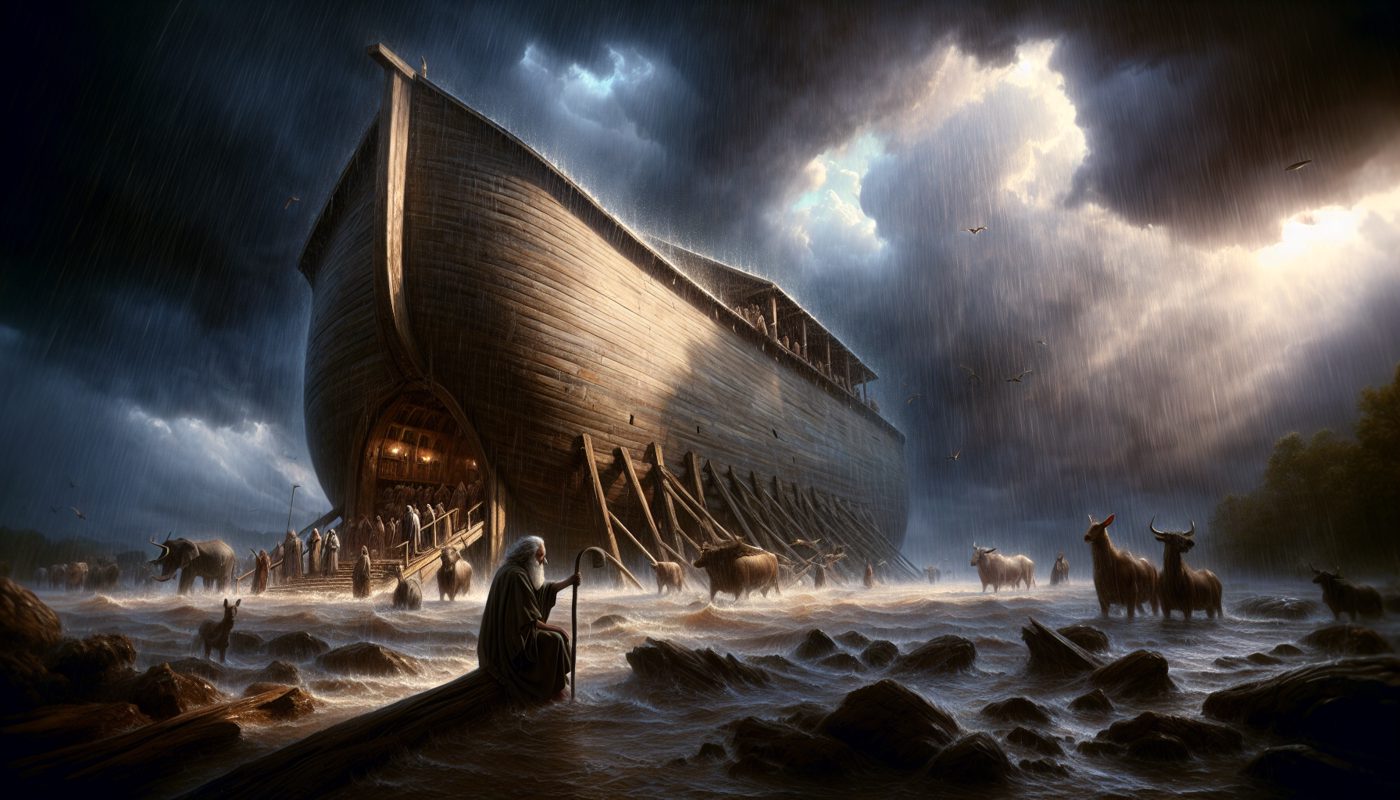
The rain stopped. The text does not say it faded or slowed. It says the windows of heaven were stopped, and the fountains of the deep were shut. The assault from above and the upwelling from below both ceased at once. What remained was water—massive, silent, covering everything. The ark floated on a world that had become a single ocean, and the only movement was the slow recession of that water, day after day, month after month.
God remembered Noah. The phrase is not about forgetfulness. It is about attention turning. After the long violence of the flood, the Lord directed his mind toward the ark and everything inside it. He made a wind pass over the earth. That wind was not a storm. It was a steady, patient force that began to push the waters back, to dry what had been drowned. The waters assuaged. They did not vanish instantly. They returned from off the earth continually, a process that took time.
For a hundred and fifty days the waters decreased. The ark did not crash down when the rain stopped. It settled gradually, carried by the receding flood until it grounded on the mountains of Ararat. That happened on the seventeenth day of the seventh month. The text gives the exact date. The ark rested. It did not break open or tip. It sat there, lodged on a peak, while the waters continued to fall away.
By the first day of the tenth month, the tops of the mountains were visible. Noah saw land again—not dry ground, but the ridges and summits of a world emerging from the deep. He waited forty more days before opening the window he had built into the ark. Then he sent out a raven. The raven went to and fro, flying back and forth, not settling, until the waters were completely dried up from the earth.
After the raven, Noah sent a dove. The dove found no place to rest. The waters still covered everything. She returned to him, and he reached out his hand, took her, and brought her back inside the ark. He waited seven days and sent her again. This time she came back at evening with an olive leaf freshly plucked in her mouth. That leaf was the first sign that the earth was recovering. The waters had abated enough for trees to emerge and put out new growth.
Noah waited another seven days and sent the dove a third time. She did not return. She had found a place to live. The ground was drying. On the first day of the first month of Noah's six hundred and first year, he removed the covering of the ark and looked out. The face of the ground was dry. But he did not leave yet. He waited until the twenty-seventh day of the second month, when the earth was fully dry.
Then God spoke to Noah directly. He told him to go out of the ark—he and his wife, his sons and their wives. He told him to bring out every living thing with him: birds, cattle, creeping things. The command was not just about leaving. It was about starting again. They were to breed abundantly, to be fruitful, to multiply on the earth. The flood was over. The world was empty and wet, but it was ready.
Noah went out. His family went out. Every animal came out after their families. The text lists them: beast, creeping thing, bird. They left the ark in order, species by species, and stepped onto the raw, clean earth. Noah did not simply walk away. He built an altar to the Lord. He took clean animals and clean birds and offered burnt offerings on that altar. The smoke rose, and the Lord smelled the sweet savor.
God spoke in his heart. He said he would not curse the ground again because of man, even though the imagination of man's heart is evil from his youth. He would not strike down every living thing again. The promise was not based on human improvement. It was based on God's own decision. While the earth remains, he said, seedtime and harvest, cold and heat, summer and winter, day and night shall not cease. The cycles of the world were restored and guaranteed.
The dove and the olive leaf are the memorable images, but the core of the chapter is the patient waiting and the precise timing. Noah did not rush. He waited for the dove to stop returning. He waited for the ground to dry completely. He waited for God's command before stepping out. And when he stepped out, he built an altar first. The flood had ended, but the world had not returned to what it was before. It had been washed clean, and a new stability had been promised. The seasons would hold. The days would continue. The earth would endure.
Comments
Comments 0
Read the discussion and add your voice.
Members only
Sign in to join the conversation
We keep comments tied to real accounts so the discussion stays clean and trustworthy.
No comments yet. Be the first to add one.