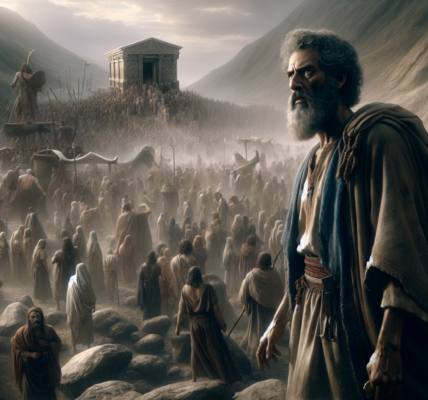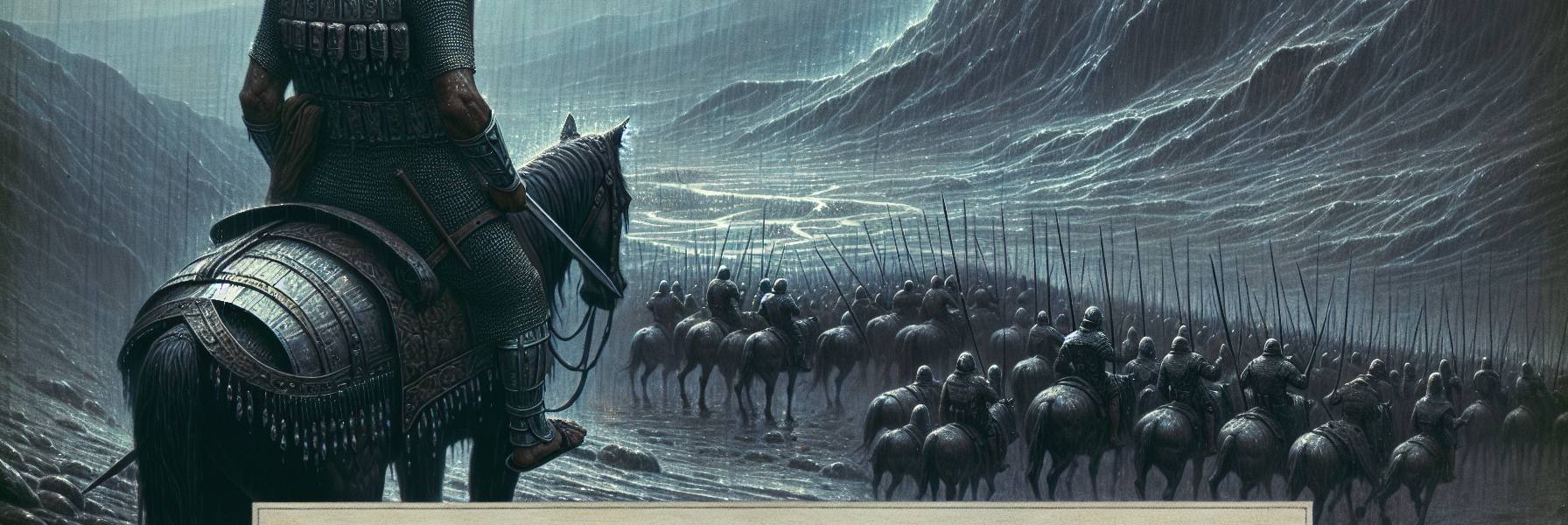

The rain had finally stopped, but the air clung thick with the damp of it, a cold, metallic smell of wet earth and iron. It seeped through the seams of Saul’s armor, a chill that had nothing to do with the weather. From the ridge of Mount Gilboa, the land spread out below like a rumpled, grey-green cloak, and upon it crawled the dark, glittering mass of the Philistine host. Their campfires were a galaxy of hostile stars in the gathering dusk.
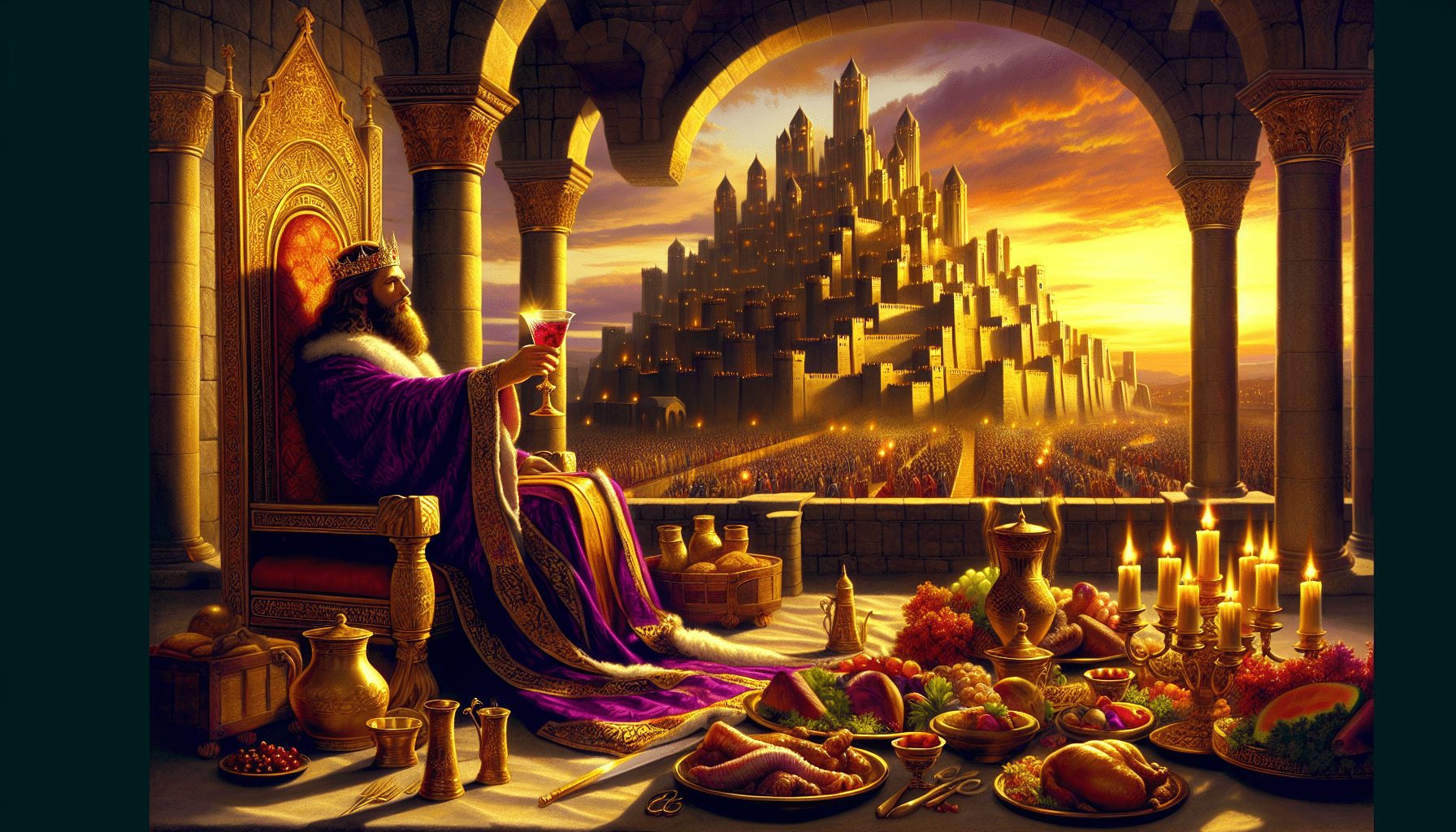
He was a tall man, Saul, or had been. Now his shoulders slumped under the weight of the crown and the silence. The LORD had not answered him—not by dreams, not by Urim, not by prophets. The divine silence was a physical void in his chest, a hollow where guidance and courage had once resided. All that remained was the drum of Philistine chariots and the memory of a boy from Bethlehem, whose songs once drove the shadows from his mind. Now the shadows were all there was.
The battle the next day was not a battle; it was a slow, grinding unraveling. The Israelite lines, pressed from the valley, frayed and broke against the slopes of Gilboa like waves against a cliff. Saul fought, his arm moving with a heavy, mechanical rhythm, but his eyes were distant. He saw Jonathan, a flash of red hair and desperate valor, cutting a path through the enemy, always moving farther away. The tide of men in polished bronze and layered linen swept between them, and Jonathan was gone, swallowed by the chaos.
An arrow struck Saul then. It was not a dramatic, mortal blow, but a deep, burning wound in the shoulder. The shock of it broke his trance. Pain, sharp and clarifying, shot through him. He stumbled back, his bodyguard closing around him, their faces masks of fear and fury. “Your armor-bearer,” someone shouted, “stay close to the king!”
The Philistine archers had found their mark. More arrows whispered through the air, thudding into shields and earth. One found the joint at Saul’s knee, and he went down, the world tilting. The sounds of battle—the screams, the clash of bronze, the terrible war-cries of the Philistines—became muffled, as if he were sinking into deep water. They were closing in. He could see their faces now, eager and fierce, recognizing the king of Israel.
“Draw your sword,” Saul gasped, his voice a ragged tear in his throat. He looked up at his armor-bearer, a youth from Gibeah with wide, loyal eyes. “Run me through with it. Before these uncircumcised men come and make sport of me.”
The boy’s face went pale as curd. His hand trembled on the hilt of his sword. He looked from his dying king to the advancing enemy, and a violent shake took his whole body. He could not do it. The terror was too great, the reverence for the Lord’s anointed too deeply etched in his soul. He stood frozen, paralyzed.
Saul saw the refusal in his eyes. A strange, final clarity descended. He would not be a spectacle for the lords of Ashkelon and Gath. With a groan that came from the very root of his being, he summoned the last of his strength. He placed the hilt of his own sword in the bloody mud, the point against his abdomen. The metal was cold. He leaned forward, his weight driving the blade home. The world dissolved into a white, silent shock.
The armor-bearer, seeing his king dead, gave a single, choked cry. Then, in an act of mirrored despair or fierce loyalty, he too fell upon his sword, dying beside Saul.
So died Saul, and his three sons with him—Jonathan, Abinadab, and Malchi-shua. The house of Saul, once the hope of Israel, was extinguished on that bloody mountain. The men of Israel who were on the other side of the valley saw the line break, saw the royal standard fall, and they fled their towns. The Philistines moved in, claiming the empty cities, occupying the land.
The next day, when the Philistines came to strip the slain, they found the body of the king of Israel. A great shout went up. They took his head—that proud, tormented head—and sent it throughout the land of the Philistines, carried from town to fortress, a grizzly proclamation of their victory. They placed his armor in the temple of their gods, a trophy for Dagon, and nailed his headless corpse to the wall of Beth-shan, a public curse for all to see.
But the story does not end on the wall of Beth-shan.
Word traveled, borne on the feet of refugees and the whispers of the desperate. It reached Jabesh-gilead, east of the Jordan. The men of that town sat in council, and the air grew thick with a memory. It was Saul, in his first, glorious flush of kingship, who had delivered them from the Ammonite king Nahash, who would have put out their right eyes as a disgrace upon all Israel. Saul had mustered the tribes, marched through the night, and broken the siege. He had been their savior.
They remembered. And remembrance, in such a time, is a form of courage.
That night, every valiant man among them arose. They crossed the Jordan under the cover of a moonless sky, their movements silent as shadows. The climb to Beth-shan was tense, every rustle of a night creature a potential alarm. The Philistine garrison, drunk on victory and wine, slept.
They found the wall. They took down the desecrated bodies of Saul and his sons from their gibbet. They carried them back across the river, the weight of their burden a solemn, grief-laden honor. In Jabesh, they built a pyre not of indignity, but of respect. They burned the bodies there, a cleansing fire to purify what had been defiled. Then they took the bones—all that remained of Israel’s first king—and buried them under the great tamarisk tree in their town. And for seven days, the people of Jabesh-gilead fasted, their hunger a tangible echo of the nation’s loss.
The chronicler, setting this down, adds a quiet, terrible sentence, the theological bedrock beneath the tragedy: *So Saul died for his breach of faith. He had broken faith with the Lord in that he did not keep the command of the Lord, and also consulted a medium, seeking guidance. He did not seek guidance from the Lord.*
The throne of Israel stood empty. The Philistine yoke grew heavier. But in the hills of Judah, a man anointed years earlier by the prophet Samuel was tending sheep, waiting on the Lord. The house of Saul was dust and memory. The kingdom, by the word and will of the God of Israel, would be given to another.