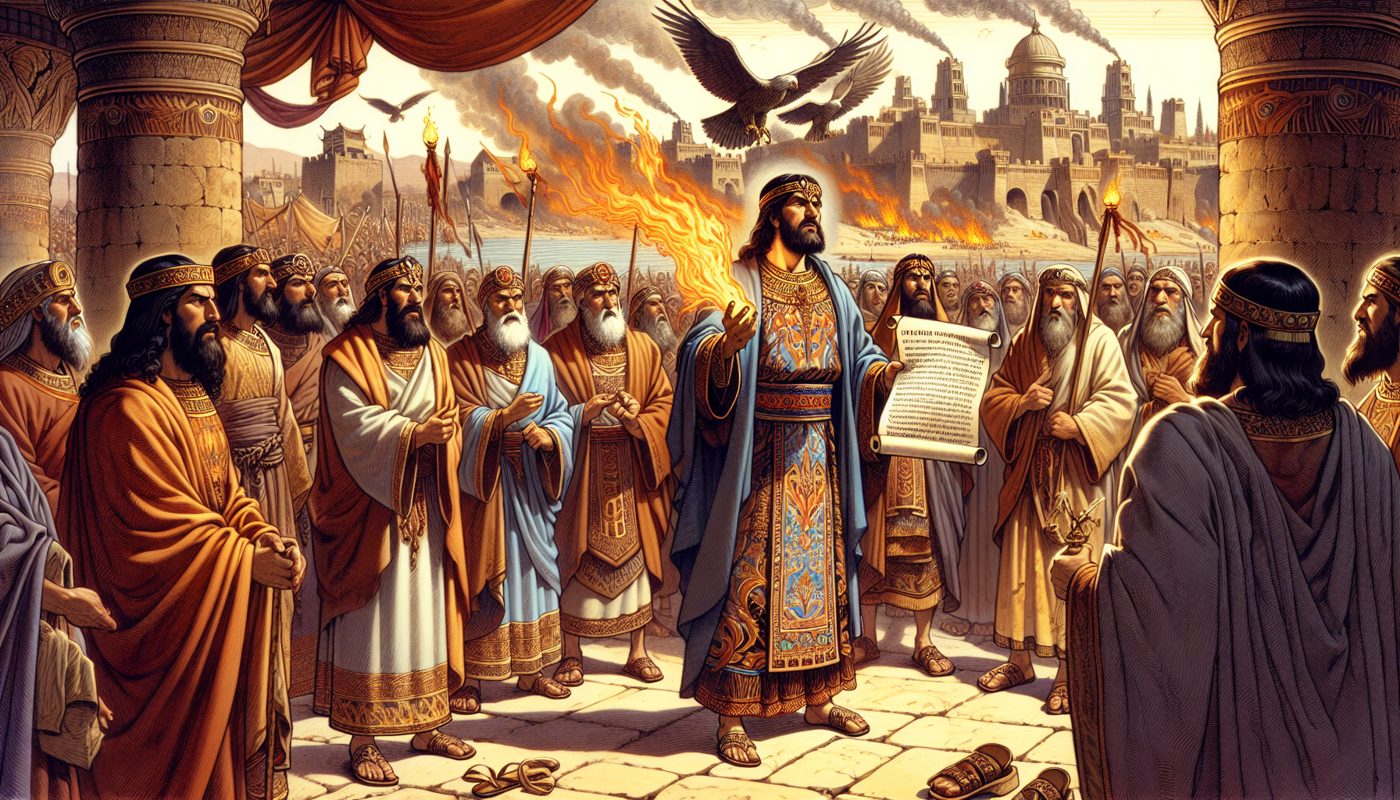
The caravan that formed at the river Ahava began not with marching but with a census. Ezra had gathered the people, the priests, and the heads of the clans. He had recorded them by name and by father's house, lineage by lineage, as the text preserves: Gershom of Phinehas, Daniel of Ithamar, Hattush of David, and others from Parosh, Pahath-moab, Shecaniah, Adin, Elam, Shephatiah, Joab, Shelomith, Bebai, Azgad, Adonikam, and Bigvai. The numbers were modest—a hundred and fifty here, two hundred there, seventy, sixty, twenty-eight. It was a deliberate company, not a mass exodus. But when Ezra reviewed the assembly after three days of encampment, he found a gap that no number could fill: there were no sons of Levi among them.
The absence was not accidental. No Levite had volunteered for the journey. The temple in Jerusalem stood rebuilt but understaffed in its sacred labor, and the men who should have carried the vessels and led the worship were still in Babylon. Ezra did not proceed without them. He sent for nine chief men—Eliezer, Ariel, Shemaiah, Elnathan, Jarib, another Elnathan, Nathan, Zechariah, and Meshullam—along with Joiarib and Elnathan, who are called teachers. These men he dispatched to Iddo, the chief at a place called Casiphia, with a specific instruction: bring ministers for the house of God.
The mission succeeded. By the good hand of the Lord upon them, Iddo sent a man of discretion named Sherebiah, a descendant of Mahli the son of Levi, along with his sons and brothers—eighteen men in all. Hashabiah and Jeshaiah of the sons of Merari came with twenty more. And from the Nethinim, the temple servants appointed by David and the princes for the service of the Levites, two hundred and twenty men joined, all recorded by name. The gap was filled not by chance but by deliberate search and response.
Before the caravan moved, Ezra proclaimed a fast at the river Ahava. The purpose was plain: to humble themselves before God and seek a straight way for themselves, their children, and all their possessions. Ezra had a particular reason for this fast. He had told the king that the hand of the Lord is upon those who seek him for good, but his power and wrath are against those who forsake him. Having spoken so boldly, Ezra was ashamed to ask Artaxerxes for a military escort. The company would travel without soldiers or horsemen, trusting the Lord to guard them against enemies and ambushes along the road.
The fast was answered. The text says plainly: the Lord was entreated of them. No dramatic sign is recorded, no vision or voice. The answer came in the quiet confidence that the journey could proceed under divine protection, not royal arms.
Then Ezra set apart twelve priests from the chiefs—Sherebiah, Hashabiah, and ten others—and weighed into their hands the treasure for the house of God: six hundred and fifty talents of silver, silver vessels weighing a hundred talents, a hundred talents of gold, twenty gold bowls worth a thousand darics, and two vessels of fine bright brass valued as gold. This was the offering from the king, his counselors, his princes, and all Israel who were present. Ezra charged the priests plainly: you are holy to the Lord, and these vessels are holy. The silver and gold are a freewill offering. Watch them and keep them until you weigh them before the priests, Levites, and heads of fathers' houses in Jerusalem, in the chambers of the Lord's house.
The priests and Levites received the weight and carried it. On the twelfth day of the first month, they departed from the river Ahava toward Jerusalem. The hand of the Lord was upon them, and he delivered them from the hand of the enemy and from those who lay in wait by the way. No battle is described, no skirmish. The protection was complete and unbroken.
They arrived in Jerusalem and rested three days. On the fourth day, the silver, gold, and vessels were weighed in the house of God. The priests Meremoth son of Uriah and Eleazar son of Phinehas received them, along with the Levites Jozabad son of Jeshua and Noadiah son of Binnui. Everything was counted and weighed, and the full weight was recorded at that time.
Then the returned exiles offered burnt offerings to the God of Israel: twelve bullocks for all Israel, ninety-six rams, seventy-seven lambs, and twelve he-goats for a sin offering. All of it was a burnt offering to the Lord. The worship was not theoretical. It was measured in animals and blood, a concrete act of dedication after the long journey.
Finally, they delivered the king's commissions to the satraps and governors beyond the River. Those officials furthered the people and the house of God. The authority of the Persian crown, which had authorized the journey, now secured the settlement. The caravan that began with a census and a missing tribe ended with worship, accounting, and political recognition. The Lord had provided the straight way, the ministers, the safe passage, and the welcome home.
Comments
Comments 0
Read the discussion and add your voice.
Members only
Sign in to join the conversation
We keep comments tied to real accounts so the discussion stays clean and trustworthy.
No comments yet. Be the first to add one.