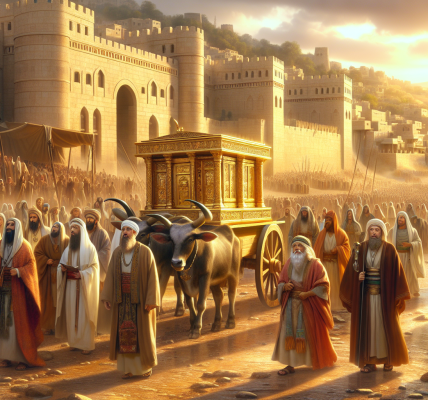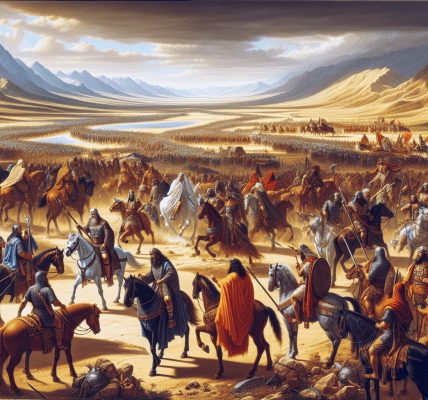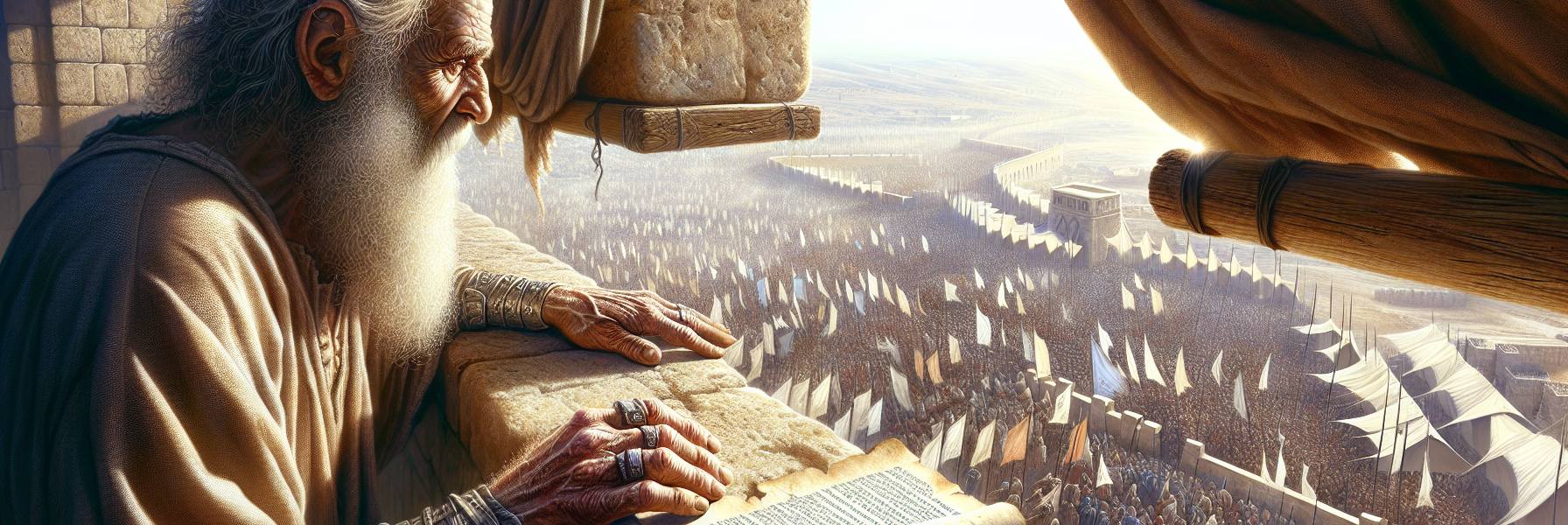

The air over Jerusalem tasted of dust and desperation. It was the kind of heat that didn’t just press down from a white sky, but rose in shimmering waves from the pale stones, making the very city seem to waver like a mirage. Old Jared leaned on the parapet, his knuckles white where they gripped the sun-warmed rock. From here, he could see the encircling host—a dark, restless stain spreading across the valleys and foothills, a tapestry of rival banners and glinting spearpoints. It wasn’t one army, but many. Nations, they said. All of them.
He remembered the words, whispered in the dimness of the scribe’s house, words from the prophet Zechariah that felt less like comfort and more like a riddle. *“I am going to make Jerusalem a cup that sends all the surrounding peoples reeling. A heavy stone for all the peoples; all who try to lift it will injure themselves.”* Looking at the siege works taking shape, the ramps of earth crawling like scars toward the walls, Jared felt no heaviness in Jerusalem, only a terrible lightness, a fragility. They were a clay cup, and the nations were not reeling—they were thirsting.
The first assault came at dawn. It was not a coordinated thing, but a furious, snarling clash of wills. The Edomites, fueled by ancient grievance, surged against the Joppa Gate. The swift chariots of the coastal kings swarmed the northern approaches. But they did not move as one body. Jared watched, his breath tight in his chest, as a contingent of Greek mercenaries, hired by one of the southern princes, found themselves entangled with the advance of the Ammonites. Confusion sparked. A dispute over plunder not yet won flared into violence within the shadow of the walls. Before the eyes of the defenders, a battle became a brawl. The siege tower of one king was set alight by the arrows of another.
And something shifted. A strange, unearthly strength seeped into the limbs of the defenders. Farmers who could barely lift a ploughshare found a ferocious precision with a sling. Boys’ voices cracked not with fear, but with a roaring courage that seemed to echo from the stones themselves. Jared felt it in his own old bones—a fire, not of fever, but of clarity. He saw an Egyptian captain, magnificent in bronze, raise a sword against a young Levite armed only with a mason’s hammer. The Levite moved, not with skill, but with a terrifying inevitability, and the captain went down as if the earth had snatched his feet. It was happening all along the line. The city was not fighting; it was becoming a weapon in a hand none could see. The cup was indeed making the nations reel, drunk on their own discord.
That night, the silence was louder than the battle. The encircling host had drawn back, licking wounds that were as much from their own allies as from Jerusalem’s defenders. Jared could not sleep. The words of the prophecy coiled in his mind, leading him to a harder, darker place. *“They will look on me, the one they have pierced, and they will mourn for him as one mourns for an only child…”* It made no sense. Who was pierced? God? The thought was a blade twisting in the spirit. He climbed again to the roof of his house, looking over the city he loved—a city saved, yet profoundly, unsettlingly spared.
The deliverance did not bring celebration. A heaviness descended with the morning, a gravity of soul. People moved through the streets quietly, their eyes hollow. They had seen the miraculous, and it had broken something in them. In the Temple courts, without signal or summons, families began to gather. Not in the grand court, but in smaller, secluded spaces, by clan and by household. A murmur rose, not of prayer, but of a deep, sighing lament.
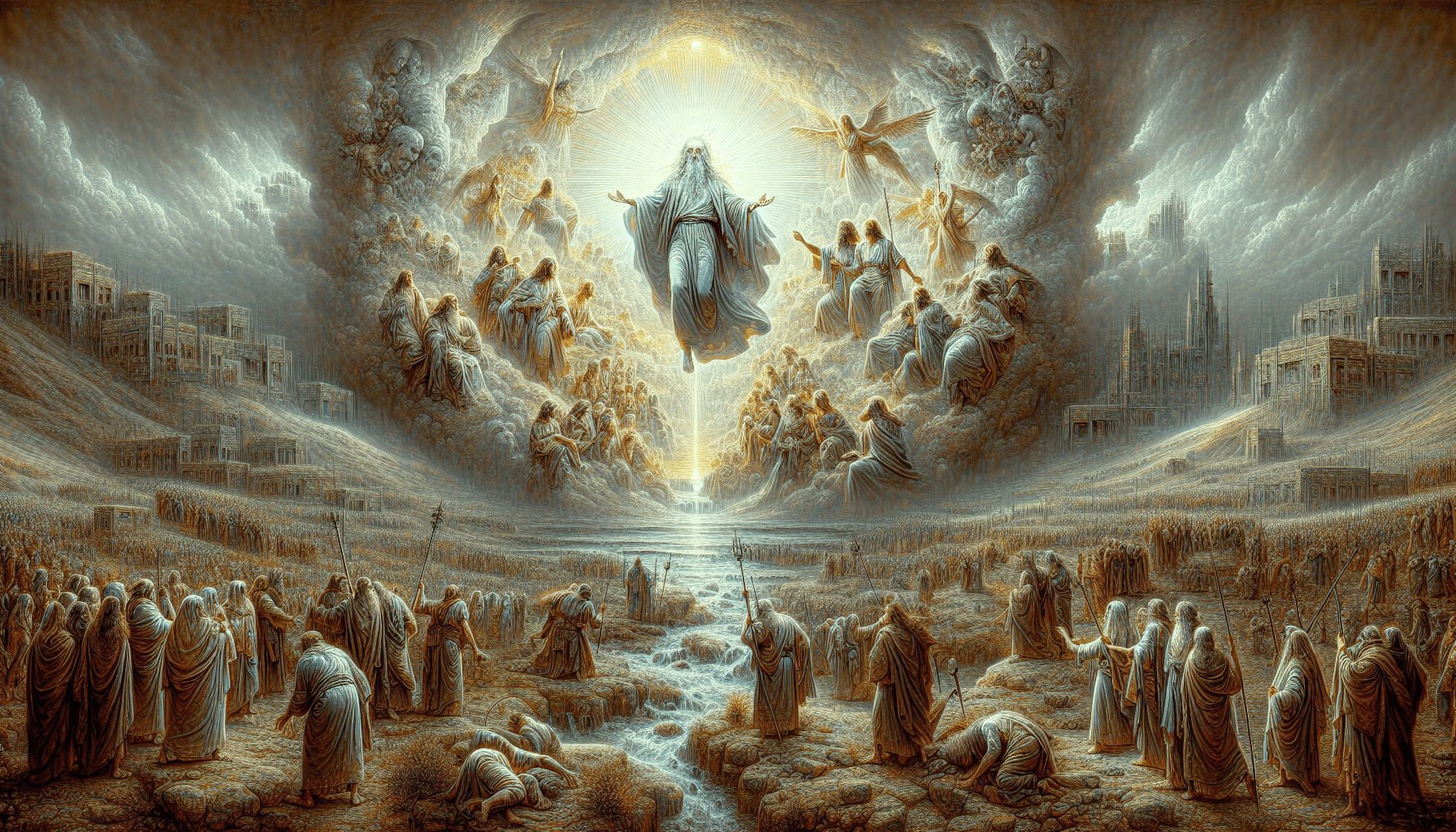
Then Jared saw it. It was not a vision, not exactly. It was a knowing, etched with sudden, brutal clarity upon the heart of every person there. He saw the faithfulness of God, stretching across centuries—a faithfulness met with betrayal, with petty idols, with hard hearts. He saw the prophets, sent with words of life, stoned and discarded. And he saw, with a shock that drove him to his knees, the ultimate image of that rejected love: a figure, righteous and true, pierced. Not by a foreign spear, but by the collective will of human sin, by the very people he came to. The piercing was theirs. It was *his*.
A wail went up, a sound Jared had never heard, torn from a thousand throats as one. It was the sound of a truth too terrible and too beautiful to bear. Men fell prostrate, their shoulders shaking with sobs not of grief, but of horrified recognition. Women wept as for a firstborn son lost, a raw, gut-deep agony. The family of David’s line wept apart, their mourning a kingly, desperate thing. The family of Nathan, of Levi, of Shimei—each household was alone in its shared remorse, the privacy of their grief making it all the more universal. The city was saved from the sword only to be plunged into this ocean of penitent sorrow. It was a mourning that cleansed, that scraped the soul bare.
Jared wept until he had no tears left. He looked at his own hands, old and scarred, and saw in them the ones that had driven the nails. And in that seeing, for the first time, he understood the weight of the stone that was Jerusalem. It was not a weapon to crush others, but a mirror to crush the heart. The deliverance from the armies was nothing. This was the salvation. This opening of a fountain, right there in the dust and the silence of their shattered pride, for sin and for impurity. The siege was over. The real battle had just been won.