The opening of Acts does not begin with a burst of action. It begins with a backward glance. The former treatise, as Luke calls it, covered all that Jesus began to do and to teach, up to the day he was received up. That receiving is the hinge. Everything before it was preparation; everything after it is the spread of the testimony. The apostles are not yet preachers. They are witnesses in waiting.
For forty days the Lord showed himself alive after his passion, and he did it with many proofs. This was not a private vision or a fleeting impression. He appeared, he spoke, he ate. He gave them commands through the Holy Spirit, and he spoke of the kingdom of God. The kingdom was still the subject. But the method of its advance was about to change.
He charged them not to leave Jerusalem. They were to wait for the promise of the Father, the one they had heard from his own mouth. John baptized with water, but they would be baptized in the Holy Spirit not many days from now. The waiting was not empty. It was the space between the promise and the power.
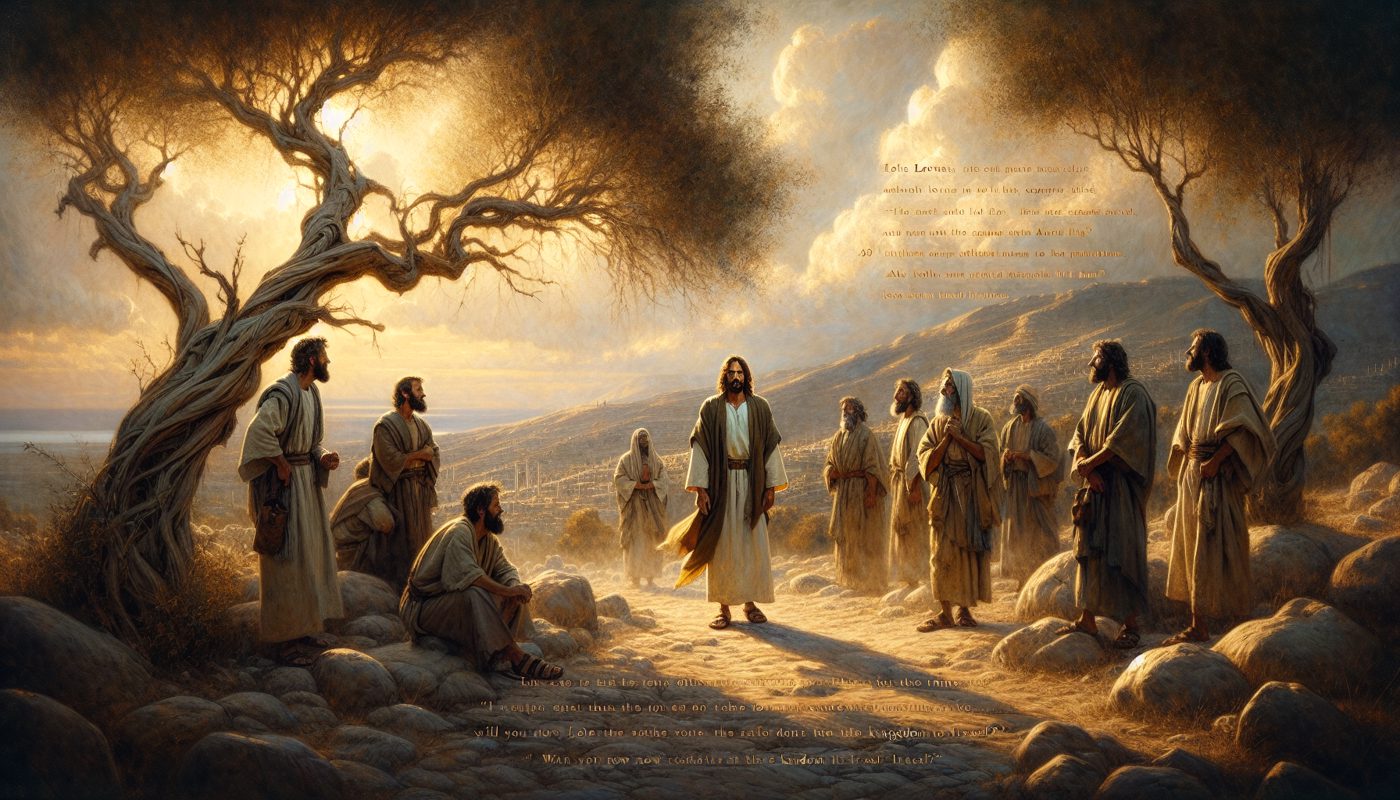
They came together and asked him directly: Lord, do you at this time restore the kingdom to Israel? The question was natural. They had lived through the crucifixion, the resurrection, and forty days of teaching. They wanted the political resolution, the visible restoration. But Jesus did not answer the timetable. He said it was not for them to know the times or seasons that the Father had set within his own authority. The question was not wrong, but the timing was not theirs.
Instead, he gave them a different certainty. They would receive power when the Holy Spirit came upon them. And that power would make them witnesses. The geography of that witness was specific: Jerusalem, all Judea, Samaria, and the uttermost part of the earth. The kingdom would not come by a single political act. It would come by the spread of testimony from a small city to the whole world.
Then, as they watched, he was taken up. A cloud received him out of their sight. They stood there, staring into heaven, until two men in white apparel appeared beside them. The men said what the apostles needed to hear: Why do you stand looking into heaven? This Jesus, who was taken up from you into heaven, will come in the same way you saw him go. The ascension was not the end. It was the beginning of the waiting for his return.
They returned to Jerusalem from the Mount of Olives, a Sabbath day's journey away. They went into the upper room, where they were staying. The list of names is given: Peter, John, James, Andrew, Philip, Thomas, Bartholomew, Matthew, James the son of Alphaeus, Simon the Zealot, and Judas the son of James. These eleven, along with the women, Mary the mother of Jesus, and his brothers, were all together. They were not idle. They were in constant prayer, united in purpose.
In those days Peter stood up among the brothers, a gathering of about a hundred and twenty. He spoke of the necessity of Scripture being fulfilled. The Holy Spirit had spoken through David about Judas, who had been their guide to those who arrested Jesus. Judas had been numbered among them and had received his portion in the ministry. But he had fallen away, and the field bought with his reward became known as Akeldama, the Field of Blood.
Peter quoted the Psalms: Let his habitation be made desolate, and let no man dwell in it; and, His office let another take. The vacancy had to be filled. The requirement was clear: the new apostle must have accompanied them all the time the Lord Jesus went in and out among them, from the baptism of John until the day he was taken up. He must become a witness of the resurrection with the others.
They put forward two men: Joseph called Barsabbas, also known as Justus, and Matthias. Then they prayed. They asked the Lord, who knows the hearts of all men, to show which one he had chosen to take the place in this ministry and apostleship from which Judas had fallen away to go to his own place. They cast lots, and the lot fell to Matthias. He was added to the eleven apostles.
The waiting had structure. It had prayer, Scripture, and a clear process for restoring the number. The apostles were not passive. They were preparing for the power that would come. The ascension had left them looking up, but the two men in white had turned their eyes back to the earth. The witness was about to begin.
Comments
Comments 0
Read the discussion and add your voice.
Members only
Sign in to join the conversation
We keep comments tied to real accounts so the discussion stays clean and trustworthy.
No comments yet. Be the first to add one.