The chapter opens with a declaration of absolute sovereignty. The Lord does not begin with a plea or a vision of future peace, but with a claim: He stretched out the heavens, laid the earth’s foundation, and forms the spirit of man within him. This is not poetry for its own sake. It is the ground on which everything else in Zechariah 12 stands. If the Lord made the cosmos and the inner life of every person, then what He says about Jerusalem carries the weight of creation itself.
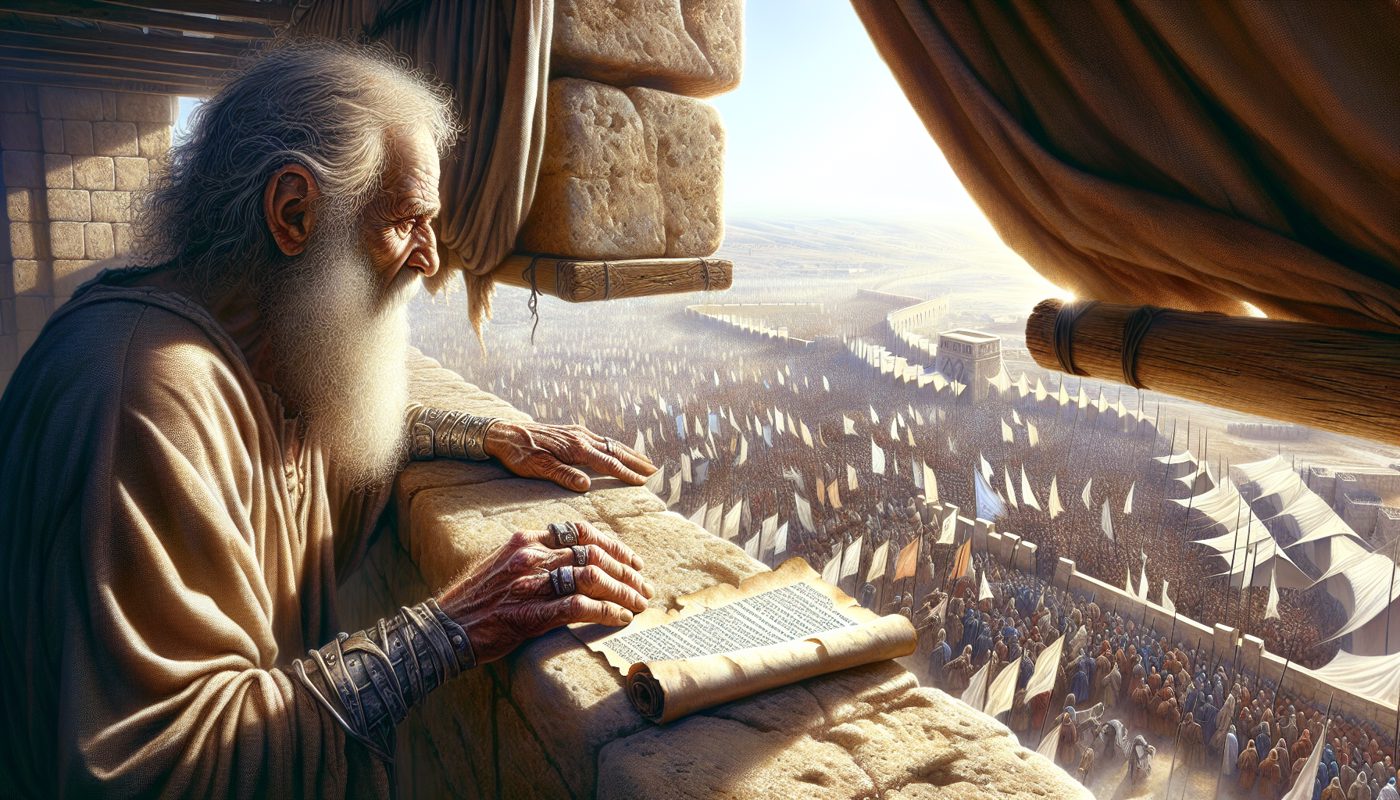
What He says is blunt. Jerusalem will become a cup of reeling for all the surrounding peoples. The image is not of a gentle chalice but of a vessel that intoxicates and disorients everyone who drinks from it. The siege against Jerusalem will also touch Judah—the surrounding region is not exempt from the pressure. But the cup is not the final word. The Lord will also make Jerusalem a burdensome stone. Every nation that tries to lift it will be cut and wounded. The gathered armies will find that the city they mean to crush becomes the thing that crushes them.
The Lord’s intervention is described in terms that strip the enemy of their military confidence. He will strike every horse with terror and its rider with madness. He will open His eyes on the house of Judah and strike every horse of the peoples with blindness. The cavalry, the ancient world’s equivalent of armored divisions, becomes useless. The horses panic. The riders lose their minds. Judah, by contrast, receives the Lord’s direct attention. The battle is not decided by numbers or tactics but by a divine disorientation that hits the enemy at the point of their strength.
Then the chieftains of Judah speak. They say in their hearts that the inhabitants of Jerusalem are their strength in the Lord of hosts, their God. This is not a boast about the city’s walls or its warriors. It is a confession that the people of Jerusalem, under siege and apparently vulnerable, have become the source of strength for the surrounding region. The Lord reverses the expected logic. The weak city strengthens the strong chieftains.
The Lord makes the chieftains of Judah like a pan of fire among wood and a flaming torch among sheaves. They devour all the surrounding peoples on the right and on the left. The fire is not gentle. It consumes. And the people of Jerusalem will again dwell in their own place, in Jerusalem. The siege is broken, and the city is reoccupied by its own inhabitants. But the Lord is careful about glory. He saves the tents of Judah first, so that the glory of David’s house and the glory of Jerusalem’s inhabitants are not magnified above Judah. The victory belongs to the whole people, not just the royal city.
In that day, the Lord defends the inhabitants of Jerusalem. The weakest among them becomes like David. The house of David becomes like God, like the angel of the Lord before them. The transformation is total. The feeble are elevated to the level of Israel’s greatest warrior-king. The royal house is elevated to a divine and angelic status. This is not a metaphor for moral improvement. It is a description of what the Lord does when He defends His city. He changes the very capacity of the people who live there.
Then the chapter pivots. The Lord says He will seek to destroy all the nations that come against Jerusalem. That is the end of the external war. But the internal work is just beginning. The Lord pours out on the house of David and the inhabitants of Jerusalem a spirit of grace and supplication. They look to the Lord, whom they have pierced. They mourn for Him as one mourns for an only son, in bitterness as for a firstborn. The mourning is not for a defeat or a fallen king. It is for someone they have personally wounded. The language is intimate and devastating. The pierced one is the Lord Himself.
The mourning is not private or quiet. It is a great mourning in Jerusalem, comparable to the mourning of Hadadrimmon in the valley of Megiddon. That reference points to a historical grief so profound that it became proverbial. But here the grief is even more specific. The land mourns, every family apart. The house of David mourns apart, with their wives apart. The house of Nathan mourns apart. The house of Levi mourns apart. The house of Shimei mourns apart. Every family that remains mourns apart, and their wives apart. The separation of men and women underscores the intensity and individuality of the grief. No one can share this mourning. It is faced alone, even in the midst of a community.
The chapter ends without resolution. The mourning is the final note. The cup of reeling, the burdensome stone, the pan of fire, the feeble becoming like David—all of these are the Lord’s work against the nations. But the spirit of grace and supplication, the look at the pierced one, and the bitter mourning—these are the Lord’s work within His own people. The chapter does not explain why the piercing happened or how the mourning ends. It simply declares that in that day, the Lord will be both the warrior who destroys the nations and the one whom His own people have wounded and will mourn. The two movements belong to the same day.
Comments
Comments 0
Read the discussion and add your voice.
Members only
Sign in to join the conversation
We keep comments tied to real accounts so the discussion stays clean and trustworthy.
No comments yet. Be the first to add one.