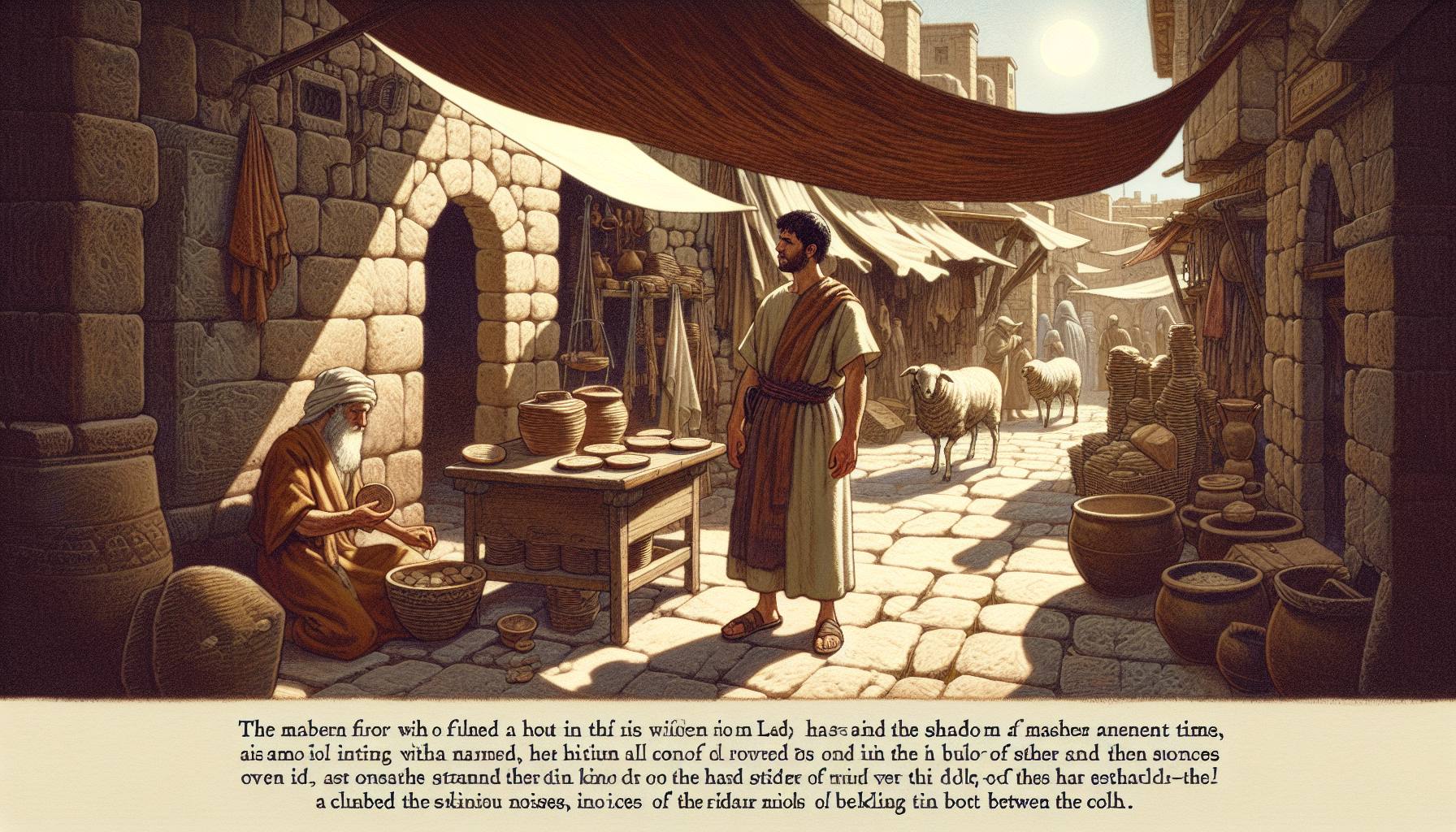
The chapter opens with a voice that does not bargain. It calls out to anyone who is thirsty, to anyone who has no money, and tells them to come, buy, and eat—wine and milk without money and without price. This is not a marketplace transaction. The Lord is not haggling. He is issuing a direct summons to people whose hands are empty, whose purses are light, whose throats are dry from chasing what does not satisfy.
The question that follows cuts to the bone: Why do you spend money for what is not bread? Why do you labor for what does not satisfy? The Lord is not asking about poor financial planning. He is asking about the deeper hunger that drives people to trade their strength for things that leave them hollow. The answer He offers is not a better product but a different posture—hearken diligently, incline your ear, come to Him. The soul that does this will live, and will delight itself in fatness, a word that means richness, abundance, satisfaction that does not fade.
Then the Lord shifts the ground. He says He will make an everlasting covenant with them, the sure mercies of David. David is not mentioned elsewhere in this chapter as a historical figure to be studied. He is presented as a witness, a leader, a commander given to the peoples. The covenant is not a new negotiation. It is the same steady mercy that ran through David’s line, now offered to anyone who will hear. The Lord says that a nation you do not know will run to you, and a nation that did not know you will come, because the Holy One of Israel has glorified you. This is not about ethnic pride. It is about the Lord drawing people from outside the familiar boundaries, and the one who receives His call becomes a magnet for others.
The urgency is real. Seek the Lord while He may be found. Call upon Him while He is near. These are not timeless proverbs. They carry a pressing edge—there is a window, and it will not stay open forever. The wicked are told to forsake their way, the unrighteous their thoughts. The call is not merely to change behavior but to return to the Lord, who will have mercy and will abundantly pardon. The word abundantly is not a small thing. It means multiply, increase, do again and again. The pardon is not grudging.
And then the Lord explains why this is possible. His thoughts are not your thoughts. His ways are not your ways. For as the heavens are higher than the earth, so are His ways higher than your ways, and His thoughts than your thoughts. This is not a put-down. It is the reason mercy can be real. If God thought the way humans think, there would be no pardon for the wicked. But He does not. His mind runs on a different scale, and that scale makes room for forgiveness where human logic would close the door.
The Lord compares His word to rain and snow. They come down from heaven and do not return empty. They water the earth, make it bring forth and bud, give seed to the sower and bread to the eater. In the same way, His word goes out from His mouth and will not return void. It will accomplish what He pleases. It will prosper in the thing He sent it to do. The word is not fragile. It does not depend on human reception to be effective. It carries its own power and its own purpose, and it will finish what it started.
The chapter ends with a picture of joy that is almost too vivid to be real. You shall go out with joy and be led forth with peace. The mountains and the hills will break into singing before you. All the trees of the field will clap their hands. This is not a metaphor for a nice hike. It is the creation responding to the restoration that the Lord’s word brings. Instead of the thorn, the fir tree. Instead of the brier, the myrtle. The land itself is transformed, and this transformation will be to the Lord for a name, for an everlasting sign that shall not be cut off.
The invitation stands open. It costs nothing. But it demands everything—the willingness to stop spending on what does not satisfy, to turn from wicked ways and unrighteous thoughts, to trust that the Lord’s word will do what He says. The water is free. The wine and milk are without price. The only question is whether the thirsty will come.