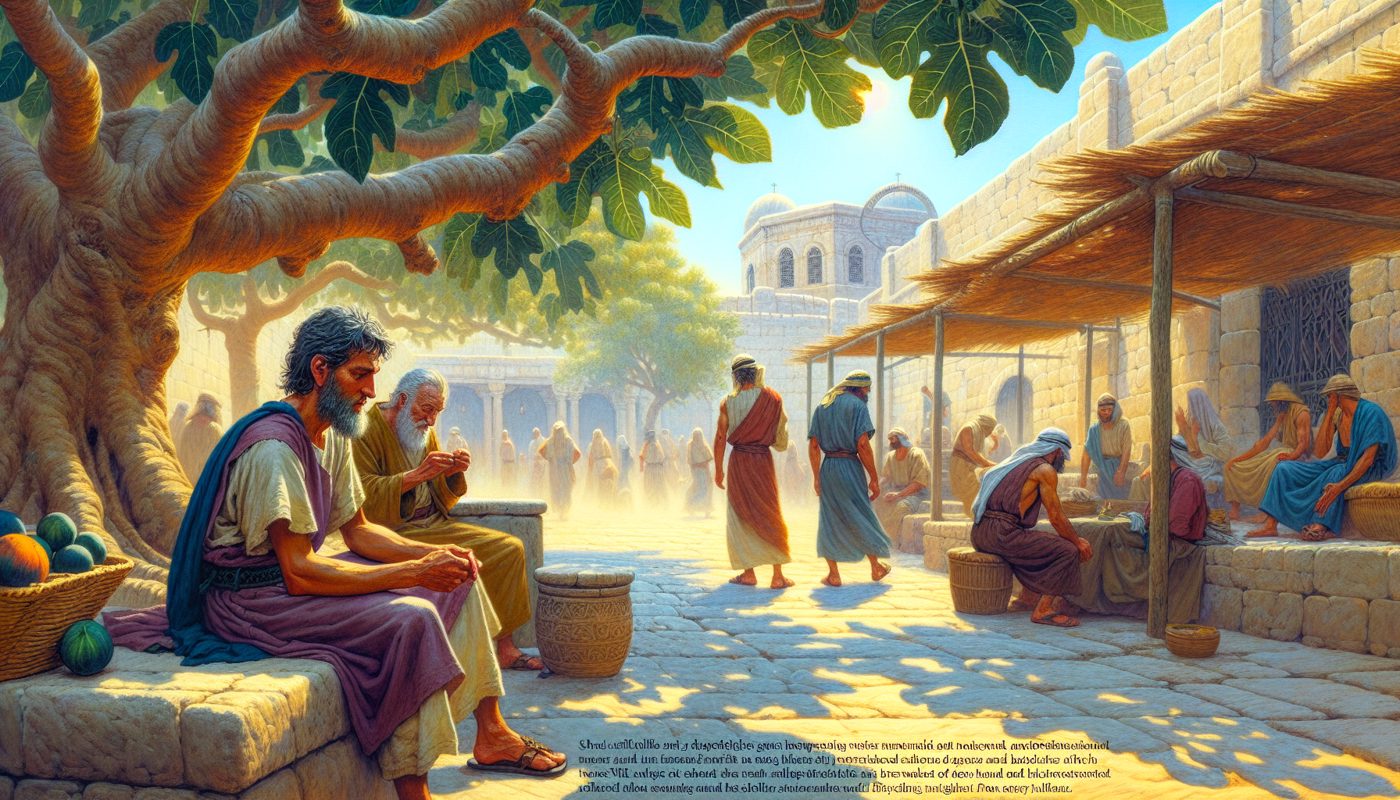
The Teacher does not soften the tension. He speaks to a man standing on the edge of action, the grain heavy in his hands, the sea grey and indifferent before him. The instruction is blunt: cast your bread upon the waters. Not store it, not hoard it, not wait for a guarantee. Send it out, and trust that after many days you will find it again. The command assumes risk. It assumes the possibility of loss. But it also assumes a God who works through time, not in spite of it.
The second verse pushes further. Give a portion to seven, even to eight. The number is deliberately imprecise. The point is not arithmetic but generosity in the face of uncertainty. You do not know what evil will come upon the earth, so you spread your resources wide. You do not concentrate your hope on one outcome, one investment, one season. The prudent man diversifies not because he fears poverty but because he acknowledges ignorance. He cannot see the future, so he prepares for many futures at once.
The Teacher draws on the natural world to illustrate the limits of human control. Clouds full of rain empty themselves. A tree falls where it falls. There is no negotiating with gravity or weather. These things are not governed by human preference. They simply happen. The man who waits for perfect conditions will never sow. He who studies the wind too closely will stand idle while the planting window closes. The harvest belongs to those who act despite incomplete knowledge.
The comparison to the wind and the unborn child is deliberate. Both are invisible, both are beyond human comprehension, and both belong to the Lord. The way of the wind cannot be charted. The formation of bones in the womb cannot be explained. These are mysteries that belong to God, and the Teacher insists that human beings accept their place before them. You do not need to understand the mechanism. You need to trust the one who does.
So the instruction becomes practical. Sow your seed in the morning. Do not withhold your hand in the evening. Work through the full day because you do not know which effort will prosper. Perhaps both will. Perhaps only one. But the man who works both shifts gives himself twice the chance. The alternative is paralysis, and paralysis is a form of vanity. It treats human caution as if it could outsmart divine sovereignty.
The tone shifts at verse seven. The Teacher acknowledges that light is sweet, that the sun is pleasant to behold. He does not deny the goodness of life. He does not call joy an illusion. But he immediately qualifies it: let a man rejoice in all his years, but let him also remember the days of darkness, for they will be many. The sweetness of light is real, but it is not permanent. The darkness will come, and the wise man does not pretend otherwise. He holds joy and grief together, neither cancelling the other.
Then the Teacher addresses the young man directly. Rejoice in your youth. Let your heart cheer you. Walk in the ways of your heart and the sight of your eyes. The permission is full and unqualified. But it is followed by a clause that changes everything: know that for all these things God will bring you into judgment. The young man is not free from accountability. His joy is not a license for rebellion. The judgment is not a future threat but a present reality. Every choice stands before the Lord, and the young man must live with that knowledge.
The final verse is both a command and a conclusion. Remove sorrow from your heart. Put away evil from your flesh. The two are linked. Sorrow and evil feed each other. The man who indulges his grief often indulges his sin. But the Teacher does not offer a therapeutic solution. He simply states the imperative and then gives the reason: youth and the dawn of life are vanity. The energy of youth, the beauty of the morning, the promise of a long future—these things are fleeting. They do not last. The wise man does not waste them on regret or rebellion.
The chapter ends without resolution. There is no promise that the bread will return quickly. No guarantee that the seed sown in the morning will yield a harvest. No assurance that the young man's joy will be vindicated. The Teacher leaves his reader standing on the same shore, grain in hand, wind in the face. The only difference is that the reader has been told the truth. The risk is real. The ignorance is real. But the Lord who made the wind and the womb is real as well. Cast the bread. Sow the seed. Rejoice in the light. And remember the darkness. That is the whole of wisdom.
Comments
Comments 0
Read the discussion and add your voice.
Members only
Sign in to join the conversation
We keep comments tied to real accounts so the discussion stays clean and trustworthy.
No comments yet. Be the first to add one.