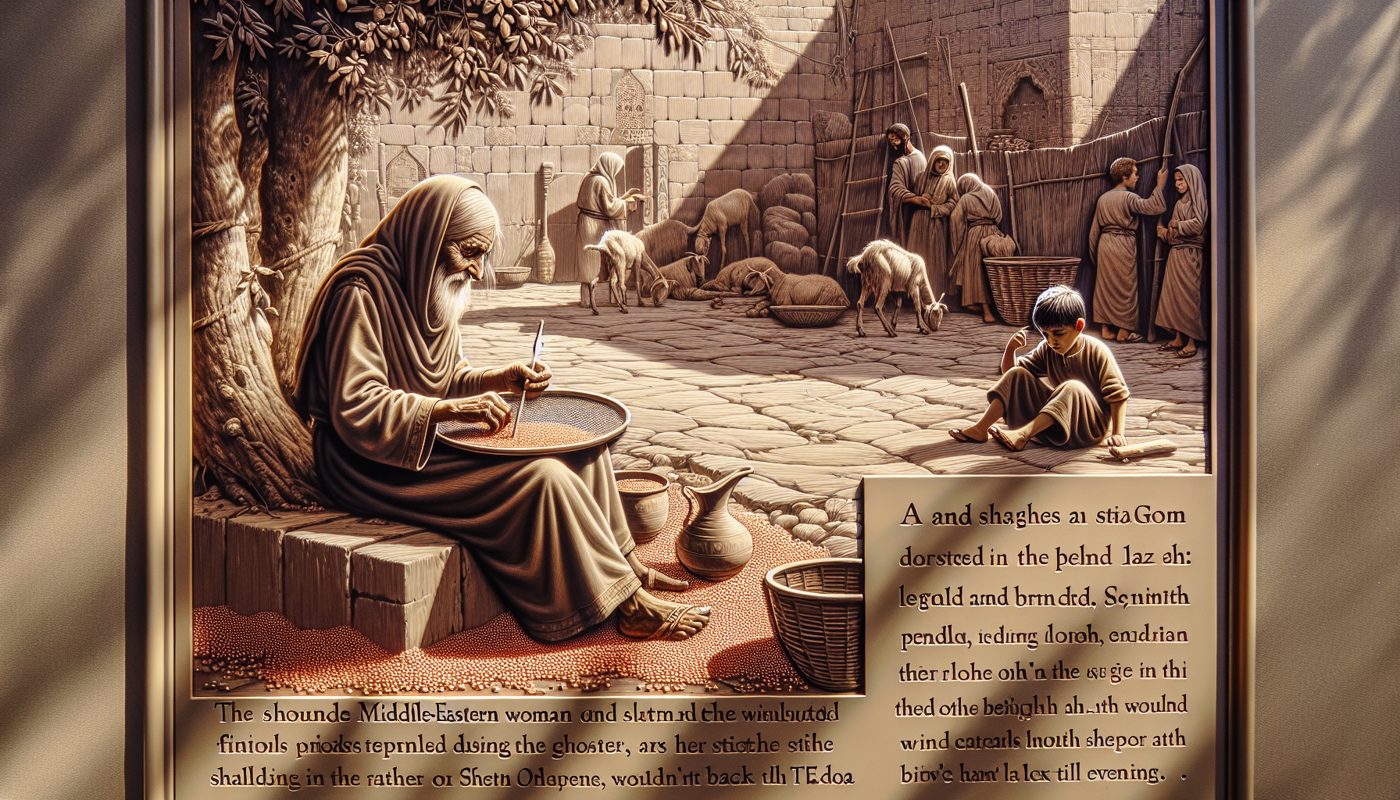
The book of Proverbs turns a corner in chapter ten. The long introductory speeches of Wisdom as a woman calling in the streets are finished. Now the proverbs of Solomon begin in earnest—short, paired lines that press hard on daily choices. The first verse sets the frame: a wise son makes a glad father, but a foolish son is a mother's heaviness. The family is the proving ground. The son's character shows itself not in grand gestures but in how he handles a harvest, a command, a word spoken in haste.
Verse four draws a line that runs through the whole chapter: slack hands bring poverty, but diligent hands make rich. This is not a promise that every hard worker will own a walled city. The proverb describes a reliable pattern, not a mechanical law. The sluggard who sleeps through harvest is called a son who causes shame—not because he failed a business plan, but because he abandoned the season's demand. The wise son gathers in summer. He reads the time and moves.
The mouth receives extraordinary attention in this chapter. The righteous man's mouth is a fountain of life. His tongue is choice silver. His lips feed many. These are not metaphors for eloquence or charm. They describe a person whose speech delivers what others actually need—guidance, correction, truth that sustains. By contrast, the fool's mouth is a present destruction. He talks too much, and in the multitude of words, transgression is never absent. The one who restrains his lips does wisely. The one who winking with the eye causes sorrow is paired with the prating fool who falls. Both are unreliable, but the winker is subtle and the babbler is loud. Both bring trouble.
Hatred stirs up strife, but love covers all transgressions. This is not a command to hide wrongdoing or to pretend sin does not exist. The covering here is the same kind of covering that keeps a household from tearing apart over every offense. Love absorbs what hatred would expose and weaponize. The verse does not say love ignores transgression. It says love covers it—keeps it from becoming the fuel for the next fight.
The rich man's wealth is his strong city. The destruction of the poor is their poverty. This is a hard observation, not a moral judgment. The chapter does not say wealth proves righteousness or poverty proves sin. It simply notes that money functions as a wall in a way that poverty cannot. The poor have no such defense. The proverb does not scold the poor or flatter the rich. It states a fact about how the world works, and it leaves the reader to feel the weight of that fact.
Violence covers the mouth of the wicked. That phrase appears twice in the chapter. It means that wickedness eventually silences a man. His own violence, or the violence he has invited, shuts his mouth. The righteous, by contrast, have blessings on their head and a memory that is blessed. The name of the wicked rots. It decays like something buried and forgotten. The righteous are an everlasting foundation when the whirlwind passes. The wicked are simply gone.
The blessing of the Lord makes rich, and he adds no sorrow with it. This verse stands apart from the earlier proverb about diligent hands. Wealth gained through wickedness profits nothing. But wealth that comes as the Lord's blessing carries no hidden grief. It is not the same as treasure gained by fraud or oppression. The chapter does not say that every rich man is blessed or that every poor man is cursed. It draws a distinction between kinds of wealth and the means by which they come.
The fear of the Lord prolongs days. The way of the Lord is a stronghold to the upright but destruction to workers of iniquity. The same path that protects one man crushes another, depending on how he walks. The righteous shall never be removed. The wicked shall not dwell in the land. These are not predictions about real estate. They describe a moral stability that outlasts every shift of fortune.
The chapter ends where it began: with the mouth. The lips of the righteous know what is acceptable. The mouth of the wicked speaks perverseness. The righteous man feeds many with his words. The fool dies for lack of understanding—not because he lacked intelligence, but because he refused to receive it. The book of Proverbs does not offer secrets. It offers a choice between two kinds of living, and it names the consequences plainly. The wise son listens. The foolish son sleeps through harvest. The difference shows in the mouth, the hand, and the household.
Comments
Comments 0
Read the discussion and add your voice.
Members only
Sign in to join the conversation
We keep comments tied to real accounts so the discussion stays clean and trustworthy.
No comments yet. Be the first to add one.