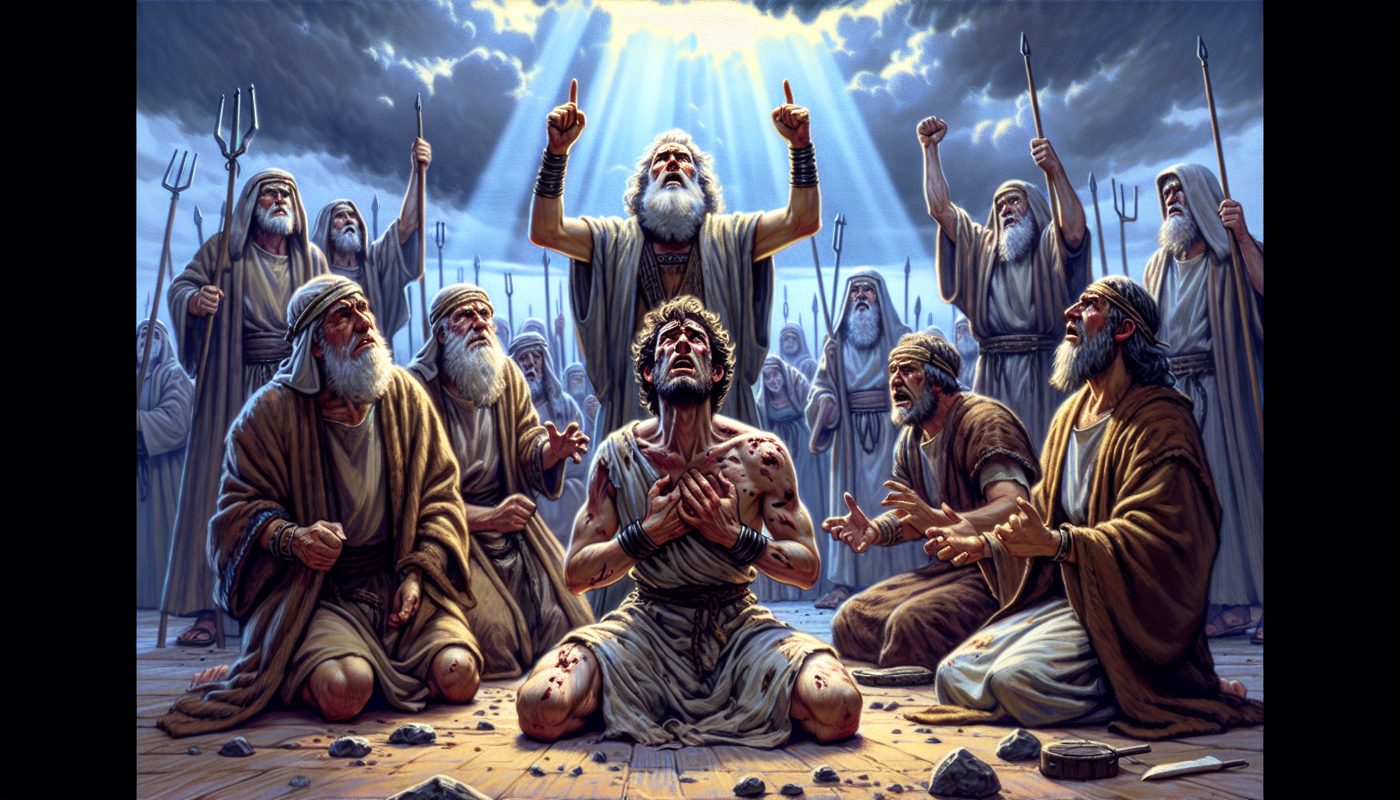
Job's final speech is not a plea for mercy. It is a legal oath, sworn before heaven, itemizing every charge his friends have not dared to name. He begins where temptation starts: the eye. He has made a covenant with his eyes not to gaze upon a virgin, because he knows what portion comes from God above for the unrighteous. Calamity. Disaster. And God sees every step.
He calls for an even balance, a public weighing of his integrity. If his foot has hurried to deceit, if his heart has followed his eyes, if any spot has clung to his hands, then let another eat what he sows. Let the produce of his field be rooted out. He is willing to be stripped of everything if the charge holds.
Then he moves to the hidden sin: the heart enticed to a woman, the wait at a neighbor's door. That is a heinous crime, a fire that consumes to Destruction. If he has done it, let his wife grind for another, let others bow down upon her. He does not soften the penalty. He names the full consequence because he is certain of his innocence.
He turns to the powerless. If he has despised the cause of his male or female servant when they contended with him, what will he answer when God rises up? The same God made both master and servant in the womb. He has not withheld the poor from their desire, nor caused the widow's eyes to fail. He has not eaten his morsel alone; the fatherless ate with him from his youth. If he has seen anyone perish for lack of clothing and not warmed him with the fleece of his own sheep, then let his shoulder fall from the shoulder blade, let his arm be broken from the bone. The terror of God's majesty is why he cannot do such things.
He addresses the worship of wealth. If he has made gold his hope, if he has rejoiced because his hand had gotten much, that would be an iniquity punishable by the judges, a denial of God above. He has not secretly kissed his hand to the sun or the moon in their brightness. He has not rejoiced at the destruction of an enemy or lifted himself up when evil found him. He has not let his mouth sin by asking for his enemy's life with a curse.
He calls the men of his tent as witnesses. They have said no one went unfed from his meat. The sojourner did not lodge in the street; he opened his doors to the traveler. He has not covered his transgressions like Adam, hiding iniquity in his bosom because he feared the great multitude or the contempt of families. He did not keep silence or stay inside out of terror.
Then comes the climax. Job cries out for someone to hear him. He signs his name to the oath and demands that the Almighty answer. He wants the indictment his adversary has written. He would carry it on his shoulder, bind it as a crown, declare the number of his steps, and approach God as a prince. He is not hiding. He is not ashamed. He is ready for the courtroom of heaven.
He ends with the land itself. If the furrows weep because he has eaten its fruits without payment or caused the owners to lose their life, then let thistles grow instead of wheat, cockle instead of barley. The words of Job are ended. He has said everything he will say. The silence that follows is not defeat. It is a waiting for the Judge to speak.
Comments
Comments 0
Read the discussion and add your voice.
Members only
Sign in to join the conversation
We keep comments tied to real accounts so the discussion stays clean and trustworthy.
No comments yet. Be the first to add one.