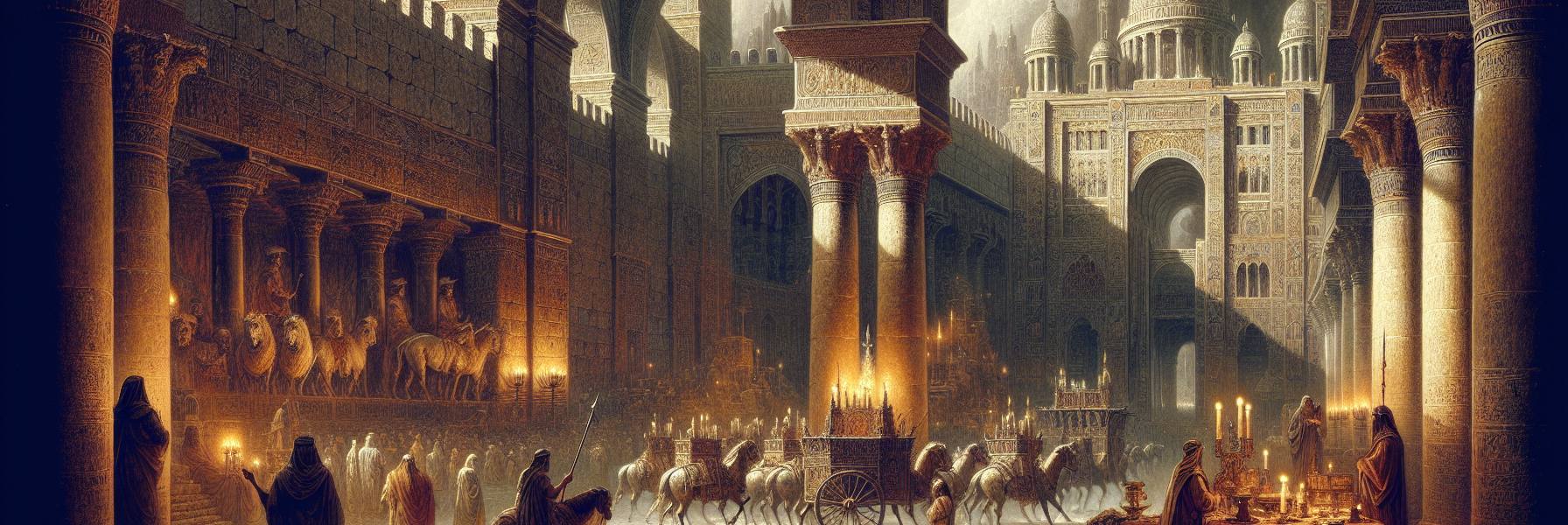

The air in Jerusalem tasted of dust and old incense. It was a taste that had seeped into the very stones of the city, a residue of centuries of sacrifice and smoke, now tinged with the metallic hint of fear. The story of those final years was not one of a single catastrophe, but of a long, sighing collapse, a series of small surrenders that amounted to a great fall.
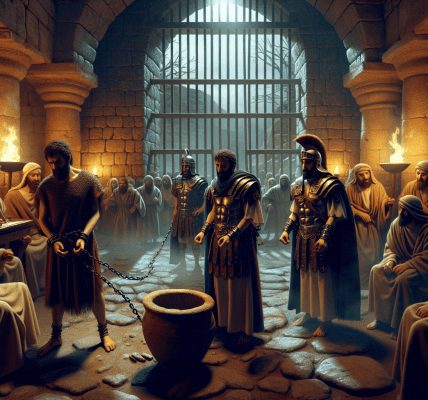
Josiah had been a memory of light, a king who tore his robes at the rediscovery of the Law and stirred the people to a Passover unlike any since the days of Samuel. But the light he kindled was guttering, a candle in a drafty hall. His son, Jehoahaz, reigned in Jerusalem for three months, a nervous, fleeting shadow. The Pharaoh Neco, a man whose chariots smelled of the Nile and foreign ambition, came up from Egypt. He saw Jerusalem not as a holy city, but as a piece on a board, a strategic high ground. Jehoahaz was summoned to the Egyptian camp at Riblah. The meeting was short, devoid of ceremony. The king was bound in chains, a sight that made the watchmen on the walls turn away, their throats tight. Neco installed Eliakim, another of Josiah’s sons, and changed his name to Jehoiakim, as if to say, *I own even your identity.*
Jehoiakim learned the wrong lesson. He saw his brother’s fate and concluded that power was the only truth. For eleven years he ruled, and the house of the Lord, which his father had repaired, began to gather a different kind of dust. The gold and silver he levied from the land did not go for temple upkeep, but as tribute, first to Pharaoh Neco, and then, when the wind of empire shifted, to the new and terrible power from the east: Babylon. The prophet Jeremiah spoke words that scraped like stone on stone, warning of the coming northern fury. Jehoiakim had the scroll cut with a scribe’s knife and burned, piece by piece, in the winter fire of his own chamber, the wax seals curling and blackening. He thought he was burning words. He was burning time.
His son Jehoiachin was eighteen when he took the throne, a boy holding a cracking scepter. He lasted three months and ten days. In the spring of that year, the Babylonian forces, relentless and orderly as a plague of locusts, encircled Jerusalem. The siege was not long. The city’s spirit was already broken. The king, his mother, his officials, the warriors, the craftsmen—all the substance and skill of the nation—were led out through the gates. They took the temple treasures too, the things Jehoiakim had left behind. They were not looted in a frenzy, but cataloged and removed with a chilling efficiency. The Babylonians left behind the poor of the land, to tend the vines and the fig trees, a kingdom reduced to a farming commune. And over them they set Mattaniah, Jehoiachin’s uncle, and changed his name to Zedekiah.
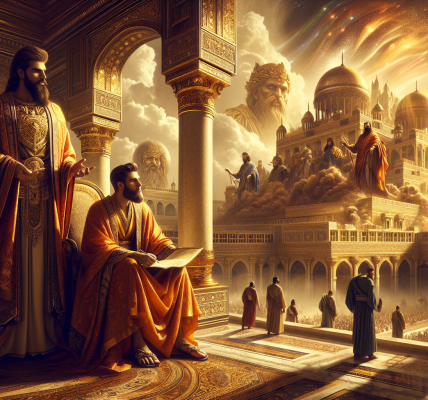
Zedekiah was the last, and his reign was a study in terrible weakness. He was a man who looked in two mirrors and saw two different faces. He swore an oath by the name of the Lord to Nebuchadnezzar of Babylon, then whispered in dark rooms with envoys from Edom, Moab, Ammon, and Tyre, plotting rebellion. The prophet Jeremiah stood before him, an unwelcome pillar of clarity, urging submission to the yoke Babylon had placed upon them, speaking of it as if it were the very discipline of God. But the officials around Zedekiah, men with polished beards and desperate eyes, mocked Jeremiah as a madman, a defeatist. They flattered the king, speaking of former glories, of divine favor as an unconditional right.
Zedekiah hardened his heart. It was not a dramatic, fist-clenching hardening, but a slow calcification, a closing of the ears. He rebelled. And this time, Babylon had no patience for lessons.
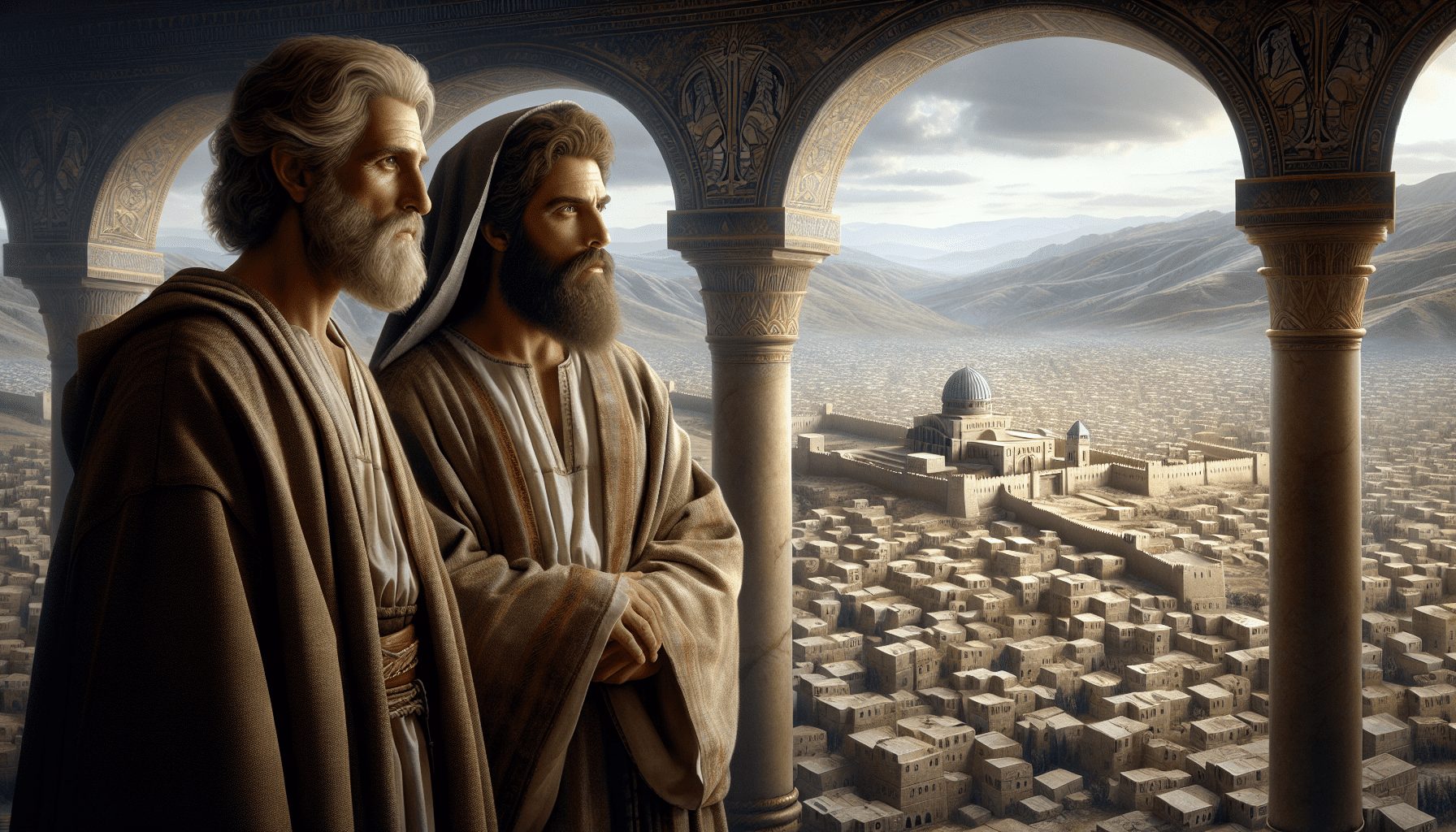
The army returned in the ninth year of Zedekiah’s reign, on the tenth day of the tenth month. They built siege works all around the city, towers of creaking wood that rose higher than the walls. For eighteen months, Jerusalem suffocated. The bread, when there was any, was coarse and filled with grit. The sounds of the city changed: the laughter of children ceased, replaced by the low wail of hunger and the dry cough of sickness. The temple sacrifices stopped; there were no more lambs, and the priests were hollow-eyed men staring at empty altars.
In the fourth month, on the ninth day, the famine had cracked the city’s bones from within. That night, under cover of a moonless sky, the king and his fighting men slipped out through a gate near the royal garden, through the wall by a hidden passage. They fled toward the Arabah, toward the illusion of desert safety. The Babylonian army pursued them with the weary certainty of hounds. They overtook Zedekiah on the plains of Jericho. His men scattered like chaff. They brought him to Nebuchadnezzar at Riblah, that same place of judgment. There, they made him watch as his sons were slain. The last thing Zedekiah, king of Judah, ever saw was the blood of his heirs on the Syrian dirt. Then they put out his eyes, bound him in bronze shackles, and took him to Babylon, where he lived out his days in a darkness that was more than physical.
A month later, Nebuzaradan, the captain of the Babylonian guard, a practical man with no interest in theology, entered Jerusalem. He burned the house of the Lord, the royal palace, and every great house. The fire did not roar; it was a thorough, consuming fire that took days to finish its work. The great bronze pillars, the sea, the basins, all the items of bronze, silver, and gold that remained—he broke them, weighed the metal, and carried it to Babylon. The walls of Jerusalem, the proud declaration of David and Solomon, were broken down by sledgehammers until they were mere ramps of rubble.
Those who had survived the sword, the famine, and the plague—the remnant left from the burning—were carried into exile. They became servants to Nebuchadnezzar and his sons, in a land where the rivers were wide and strange, and the gods were made of baked clay. The land, promised to Abraham, enjoyed its Sabbath rests. For seventy years it lay fallow, a quiet, wounded witness, keeping the Sabbaths it had been denied through centuries of forgetful greed.
It was the end. The throne of David was empty, the temple a memory of smoke. Yet, in the mind of God, endings are never the final word. The chronicler, looking back from the other side of exile, knew this. The story closed not with the echo of shattering bronze, but with a foreign king’s heart being stirred. Cyrus of Persia, a man who had never heard the law of Moses, became the unwitting instrument of a promise older than kings. The proclamation went out: the Lord, the God of heaven, had given him all the kingdoms of the earth, and had charged him to build a temple in Jerusalem. Whoever was among his people, let him go up.
And so, in the silence after the great collapse, a whisper began. It was the sound of a few exiles packing their bags, looking west, and remembering Zion.