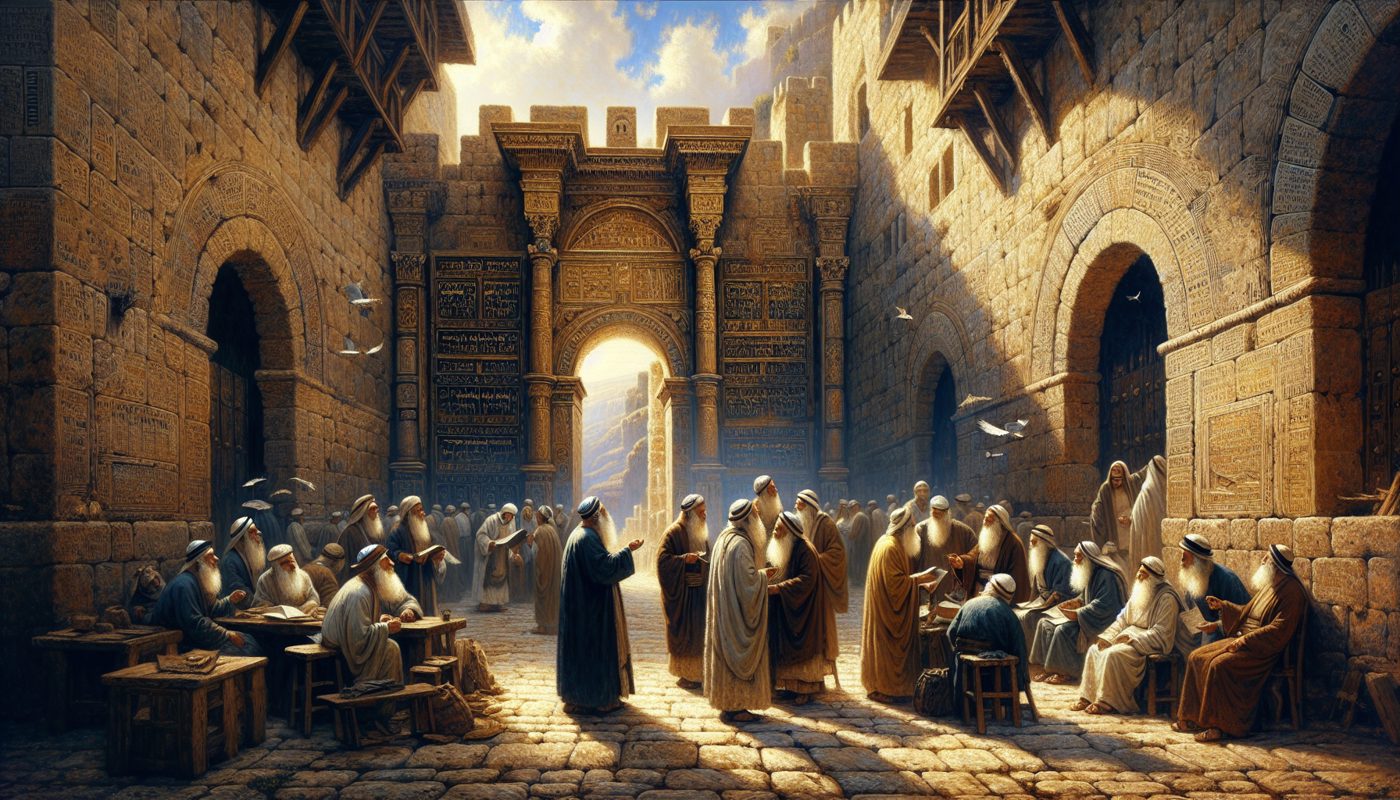
The chapter opens with a terse, almost mechanical list of victories. David smote the Philistines and subdued them. He took the bridle of the mother city out of their hand—not a trophy, but a symbol of control. The bridle is what guides a horse, and now it guided Israel’s ancient tormentors. The chronicler does not pause to describe the battle. He simply records the result.
Then comes Moab. The method is coldly precise: David measured them with a line, making them lie down on the ground. Two lines for death, one full line to keep alive. The Moabites became servants and brought tribute. There is no explanation, no moral gloss. The numbers are stark, and the reader is left to sit with the weight of them. This is not the David of the shepherd’s sling or the fugitive’s cave. This is a king who administers judgment with a measuring cord.
David turned north, to Hadadezer son of Rehob, king of Zobah. Hadadezer was trying to recover his dominion at the River—the Euphrates, the old boundary of the promised land. David took from him seventeen hundred horsemen and twenty thousand footmen. He hamstrung all the chariot horses but reserved a hundred. The chariot was the terror weapon of the age; David crippled it and kept a remnant for his own use. The message was that Israel would not depend on the world’s war machines, but neither would it reject them outright.
The Syrians of Damascus came to help Hadadezer, and David struck them down—twenty-two thousand men. He put garrisons in Syria of Damascus, and the Syrians became servants and brought tribute. The refrain appears: “And the Lord gave victory to David wherever he went.” It is not a boast. It is the theological spine of the chapter. The victories are not David’s doing alone.
David took the shields of gold that belonged to Hadadezer’s servants and brought them to Jerusalem. From Betah and Berothai, cities of Hadadezer, he took a great quantity of bronze. The gold and bronze were not hoarded for personal wealth. They would become materials for the house of the Lord, as the later chapters will show. David was already thinking of what the victory meant for worship.
Then came an unexpected turn. Toi king of Hamath heard that David had defeated Hadadezer, and he sent his son Joram to salute David and bless him. Why? Because Hadadezer had wars with Toi. David had done Toi’s dirty work. Joram brought vessels of silver, gold, and bronze. David did not keep them. He dedicated them to the Lord, along with the spoil from Syria, Moab, Ammon, Philistia, and Amalek. The list of subdued nations is almost liturgical.
David made a name for himself when he struck down eighteen thousand Syrians in the Valley of Salt. He put garrisons in Edom, and all the Edomites became his servants. Again, the refrain: “The Lord gave victory to David wherever he went.” The geography of the chapter is sweeping—from the coastal plain to the desert east, from Damascus to the Dead Sea. The kingdom was no longer a highland refuge. It was an empire.
The chapter closes with a shift in tone. After the list of wars and garrisons and tribute, the chronicler writes: “David reigned over all Israel, and David executed justice and righteousness to all his people.” The victories were not an end in themselves. They were the means by which justice and righteousness could be established. The list of officials follows: Joab over the army, Jehoshaphat as recorder, Zadok and Ahimelech as priests, Seraiah as scribe, Benaiah over the Cherethites and Pelethites, and David’s sons as chief ministers. The machinery of government was in place.
The chapter does not celebrate the violence. It records it. The bridle and the line are instruments of control, but they are also instruments of order. David measured out death and life, but the final note is not about the sword. It is about justice and righteousness for all the people. The kingdom was built on blood and bronze, but it was meant to stand on something more enduring.
Comments
Comments 0
Read the discussion and add your voice.
Members only
Sign in to join the conversation
We keep comments tied to real accounts so the discussion stays clean and trustworthy.
No comments yet. Be the first to add one.