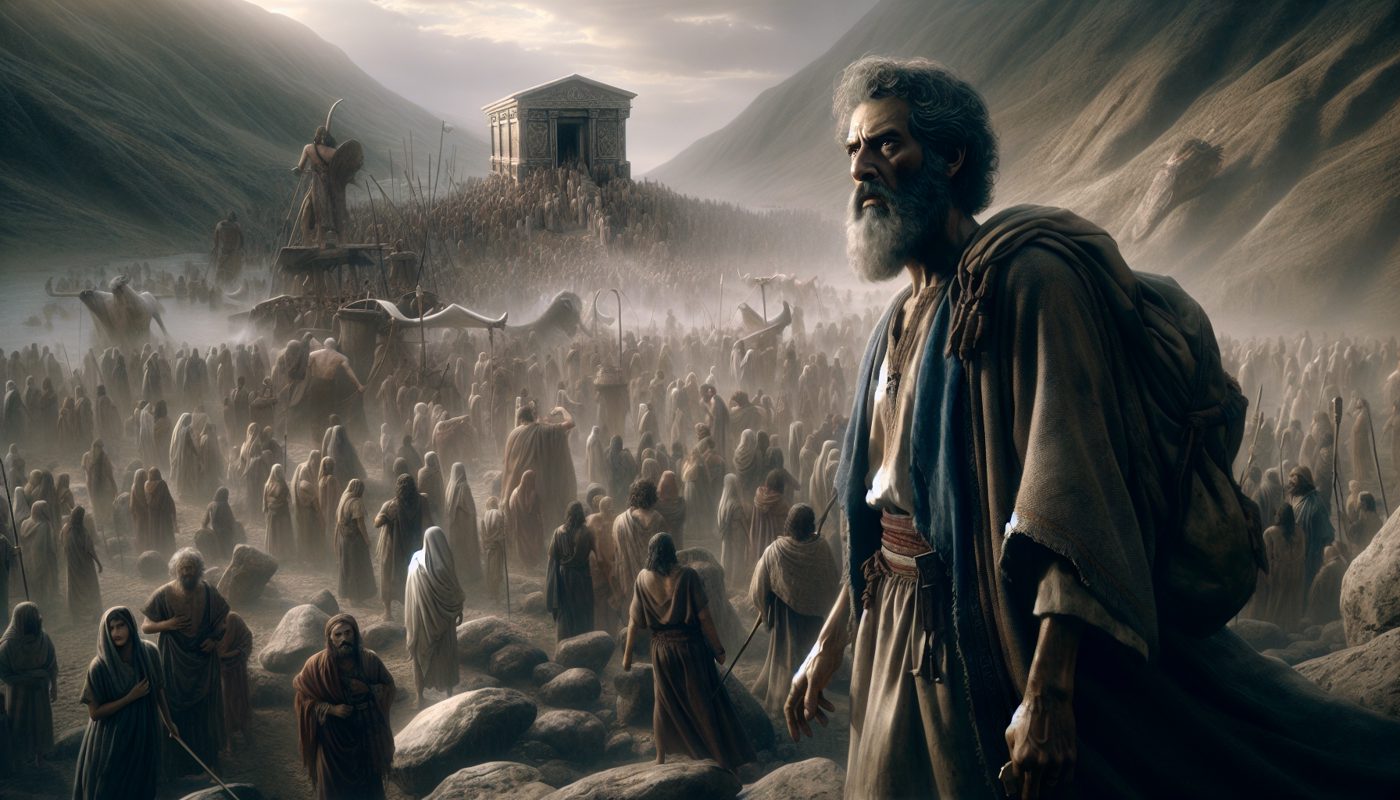
The ark had been in Kiriath-jearim for twenty years. That is the first thing the chapter tells us, and it does not soften the weight of it. Twenty years is not a round number of waiting; it is a generation of silence. The ark was not lost, but it was not active. It sat in the house of Abinadab on the hill, guarded by a consecrated son, while Israel lived under Philistine pressure. The text says the house of Israel lamented after the Lord. That lament was not a ritual. It was the sound of a people who had run out of other options.
Samuel broke the silence. He did not begin with a vision or a dramatic sign. He began with a condition. If you are returning to the Lord with all your heart, he said, then put away the foreign gods and the Ashtoreths. Direct your hearts to the Lord and serve him only. That was the whole of it. No middle ground. No blended worship. The people had been carrying Baal and Ashtoreth alongside the Lord for so long that the line between them had blurred. Samuel drew the line again, sharp and clean.
The people did what he said. They put away the Baalim and the Ashtaroth. The text does not describe a ceremony or a dramatic burning at this point. It simply says they did it and served the Lord only. That is the kind of obedience that does not need a crowd to witness it. It happens in the quiet, in the hands of men and women who finally understand that the old gods had given them nothing but a long defeat.
Samuel called them to Mizpah. He said he would pray for them there. They gathered, and they drew water and poured it out before the Lord. That pouring of water is a strange act. It is not a sacrifice of blood. It is a pouring out of something common, something that costs nothing but the effort to carry it. It is an act of emptiness. They poured out water, and they fasted, and they said, We have sinned against the Lord. That was the confession. No excuses. No blaming the Philistines. Just the admission that the trouble had come from inside, not from outside.
Samuel judged them there at Mizpah. The word judged here does not mean he condemned them. It means he governed, he set things right, he gave them order. He was the hinge between their confession and what came next.
What came next was the Philistines. They heard that Israel had gathered at Mizpah, and they took it as a military assembly. The lords of the Philistines went up against Israel. And Israel was afraid. That fear is honest. They had just confessed their sins. They had just emptied themselves before the Lord. And now the enemy was coming. The timing felt cruel. They did not ask Samuel to fight. They asked him to cry out to the Lord. Cease not to cry for us, they said. They knew their own prayers were weak. They needed someone to stand in the gap.
Samuel took a sucking lamb and offered it as a whole burnt offering. He cried out to the Lord, and the Lord answered him. The answer came while the offering was still burning. The Philistines drew near to battle, and the Lord thundered with a great thunder on that day. The thunder discomfited them. It broke their formation, their courage, their will. They were smitten down before Israel. The men of Israel went out from Mizpah and pursued them as far as Beth-car.
Then Samuel took a stone. He set it up between Mizpah and Shen. He named it Ebenezer, which means stone of help. He said, Hitherto hath the Lord helped us. The word hitherto is important. It means up to this point. It does not promise that everything from now on will be easy. It marks the place where help arrived. The stone was a witness, not a guarantee. It stood there in the open country, visible to anyone who passed, saying that on this ground the Lord had acted.
The chapter closes with a quiet restoration. The cities that the Philistines had taken were returned, from Ekron to Gath. The border was delivered. There was peace between Israel and the Amorites. Samuel judged Israel all the days of his life, going in a circuit from Bethel to Gilgal to Mizpah, returning to Ramah where his house was. He built an altar there to the Lord. The altar was not built on the battlefield. It was built at home, in the place where he lived. That is where the worship continued after the thunder faded.
Comments
Comments 0
Read the discussion and add your voice.
Members only
Sign in to join the conversation
We keep comments tied to real accounts so the discussion stays clean and trustworthy.
No comments yet. Be the first to add one.