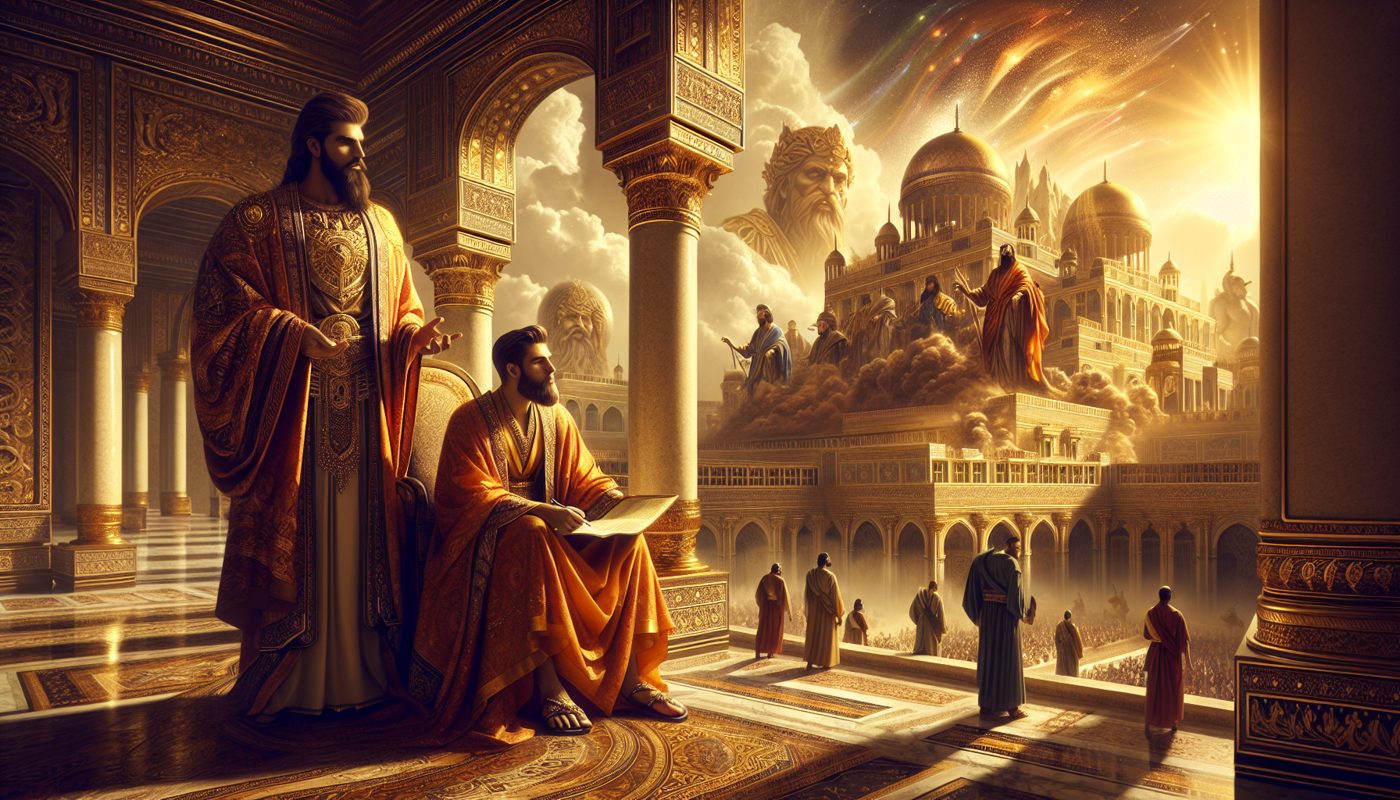
The final chapter of Esther is brief. It does not describe a celebration, a feast, or a new decree. It records three facts: a tribute, a chronicle, and a man’s position.
King Ahasuerus laid a tribute upon the land and upon the isles of the sea. The verse does not say whether this tax was heavy or light, whether it caused hardship or was simply absorbed into the empire’s routine. It states only that the king acted, and the land and the distant coastlands paid.
The second verse turns to the record. All the acts of the king’s power and might, and the full account of the greatness of Mordecai, whereunto the king advanced him—these things, the writer says, are written in the book of the chronicles of the kings of Media and Persia. The chapter does not quote those chronicles. It does not summarize them. It simply points to their existence, as if to say: the full story is there, in the official archive, for anyone who cares to look.
Then the final verse gives the lasting image. Mordecai the Jew was next unto King Ahasuerus. Not a servant at the gate, not a man hiding his identity, but second in the empire. He was great among the Jews, and accepted of the multitude of his brethren. The chapter does not explain how he earned that acceptance. It does not mention the earlier plot against the king, the confrontation with Haman, or the decree that saved the Jews. Those events belong to earlier chapters. Here, only the outcome stands.
The verse adds two phrases that define Mordecai’s conduct. He sought the good of his people. He spoke peace to all his seed. The language is plain. He did not seek his own advancement beyond the position the king had given him. He did not use his power to settle scores or enrich himself at the expense of others. He worked for the welfare of the Jewish people, and he spoke words that made for peace among his own kindred.
The chapter offers no moral commentary. It does not say that Mordecai was humble or wise or righteous. It does not compare him to anyone else. It simply reports what the chronicles recorded and what the writer judged worth preserving: that a Jew from the dispersion rose to the highest rank under a Persian king, that his own people accepted him, and that he used his position for their good and their peace.
That is the end of the book. No epilogue. No final speech from Esther. No summary of the king’s later reign. The story stops with Mordecai in his office, the tribute collected, the chronicles closed.
Comments
Comments 0
Read the discussion and add your voice.
Members only
Sign in to join the conversation
We keep comments tied to real accounts so the discussion stays clean and trustworthy.
No comments yet. Be the first to add one.