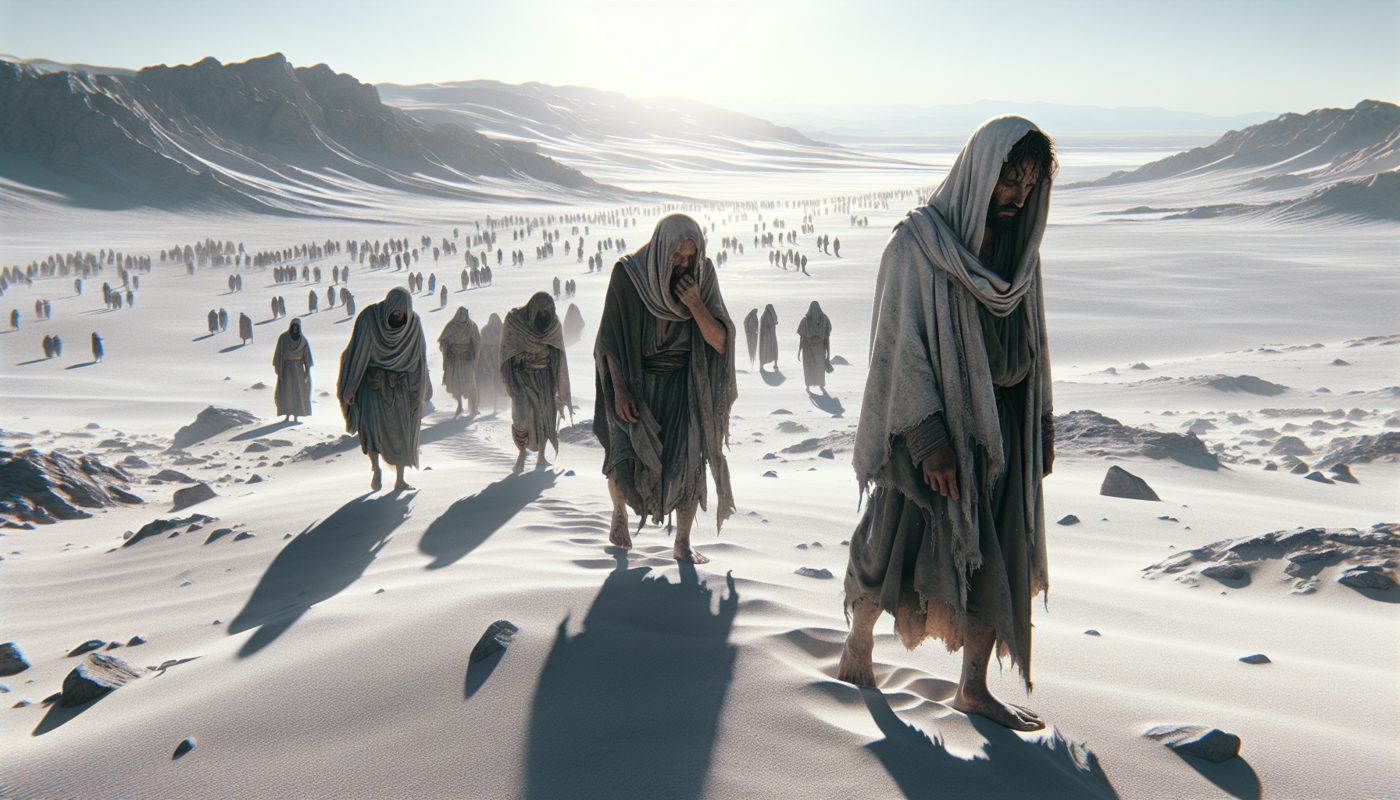
The psalm does not begin with a memory of water. It begins with a statement of search. The speaker names God as his God and then says he will seek him earnestly. The word earnestly carries the weight of a man who has no time for half-measures. He is not in a temple. He is not in a place of comfort. He is in a dry and weary land where no water is. The physical condition and the spiritual condition are not separate here. The thirst of the body becomes the metaphor for the longing of the soul. The speaker does not explain the metaphor. He lives it.
The speaker says his soul thirsts and his flesh longs. This is not a polite request. It is a craving that presses from the inside out. The land around him is described as dry and weary. The word weary suggests a land that itself is exhausted, a place that gives nothing. The speaker does not ask for deliverance from the land. He does not ask for water. He asks for God. The request is direct and unadorned. There is no bargaining and no complaint. There is only the raw acknowledgment that without God, the speaker is as empty as the wilderness around him.
The speaker then shifts to a memory. He says he has looked upon God in the sanctuary. He saw God's power and glory there. The sanctuary is not described in detail. There is no mention of priests or sacrifices or the ark. The focus is on the sight itself. The speaker saw something in that place that he cannot see now. But the memory of it is enough to sustain him. He does not say he longs to return to the sanctuary. He says he longs for God. The sanctuary was the place where the seeing happened, but the object of the longing is not the place.
Then comes a statement that cuts through everything else. The speaker says God's lovingkindness is better than life. This is not a casual comparison. Life in the ancient world was the highest good. To say that something is better than life is to say that it is worth more than existence itself. The speaker does not explain why. He simply declares it and then says his lips shall praise God. The praise is not a response to circumstances. It is a response to a conviction that holds even in the wilderness.
The speaker says he will bless God while he lives and lift up his hands in God's name. This is a posture of worship. Lifting the hands was a gesture of petition and praise. The speaker is not waiting for better conditions. He is worshiping in the middle of the dry land. He says his soul shall be satisfied as with marrow and fatness. Marrow and fatness were the richest parts of a meal, the parts reserved for celebration. The speaker is saying that the satisfaction he finds in God is as rich as the best feast. But he is not at a feast. He is in a wilderness. The satisfaction comes from the act of praise itself.
The speaker mentions remembering God upon his bed and meditating on him in the night-watches. The night-watches were the periods of the night when a guard would be on duty. The speaker is not sleeping peacefully. He is awake in the dark, and in that wakefulness, he turns his mind to God. This is not a casual thought. It is a deliberate meditation. The night is often a time of fear or loneliness. The speaker uses it as a time of focus.
The speaker says God has been his help and that he will rejoice in the shadow of God's wings. The image of wings suggests protection, like a bird covering its young. The speaker does not say he is safe from all harm. He says he will rejoice in that shadow. The rejoicing is an act of will, not a feeling that comes naturally. He says his soul follows hard after God. The phrase follow hard means to cling or to pursue with determination. The speaker is not passively waiting. He is actively holding on. And he says God's right hand upholds him. The hand is not a distant symbol. It is the immediate support that keeps him from falling.
The psalm then turns to the speaker's enemies. He does not name them or describe their actions in detail. He says those who seek his soul to destroy it shall go into the lower parts of the earth. They shall be given over to the power of the sword and become a portion for foxes. The language is stark. The enemies will not simply be defeated. They will be consumed and forgotten. The speaker does not gloat. He states it as a certainty. The enemies are not the focus of the psalm. They are a footnote to the larger reality of God's justice.
The psalm ends with the king rejoicing in God. The speaker refers to himself in the third person. Every one who swears by God shall glory, but the mouth of those who speak lies shall be stopped. The final note is not about the speaker's victory. It is about the vindication of those who are faithful. The liars will be silenced. The king will rejoice. The psalm closes with the same certainty with which it opened. The thirst remains, but the satisfaction is already declared.
Comments
Comments 0
Read the discussion and add your voice.
Members only
Sign in to join the conversation
We keep comments tied to real accounts so the discussion stays clean and trustworthy.
No comments yet. Be the first to add one.