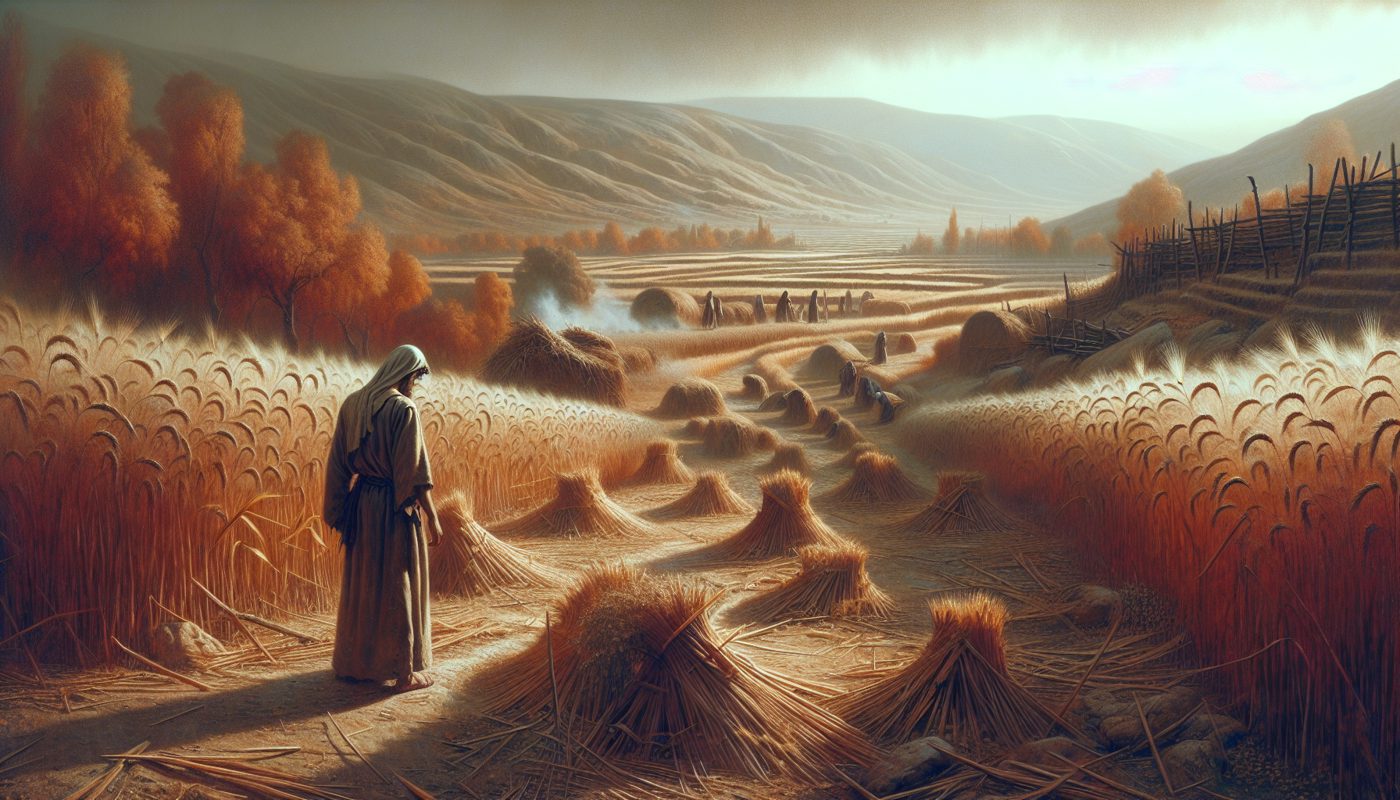
The Feast of Ingathering had come, but the threshing floors stood empty. Hosea’s words cut through the festival like a dry wind: Rejoice not, O Israel, for joy like the peoples. The harvest celebration that should have been a time of gladness had become a hollow ritual. The Lord had already spoken through the prophet: the threshing floor and the winepress would not feed them, and the new wine would fail. The grain that remained was not an offering but a bitter meal.
What kind of feast could they hold when the bread itself was defiled? Hosea told them plainly: their sacrifices had become like the bread of mourners. All who ate it were polluted. The food went only into their own stomachs; it would not enter the house of the Lord. The solemn assembly had become a ghost of itself, a gathering without the presence of the One who had once called Israel His own.
The prophet pressed the question deeper: What will you do in the day of the feast of the Lord? The answer was not comfort but judgment. Egypt would gather them; Memphis would bury them. Their pleasant things of silver would be overgrown with nettles, and thorns would fill their tents. The land that had been their inheritance would become a place of exile and decay.
Hosea did not soften the message. The days of visitation had come, the days of recompense. Israel would know what it meant to be held accountable. And in that moment, the prophet himself would be called a fool, the man of the spirit would be dismissed as mad. The abundance of iniquity had twisted their perception so thoroughly that the one speaking truth appeared to be the one out of his senses.
Ephraim had once stood as a watchman with God, but now the prophet was treated as a fowler’s snare, an object of enmity even in the house of his own God. The corruption ran deep, as deep as the days of Gibeah. The Lord would remember their iniquity and visit their sins. There would be no forgetting, no sweeping the offense under the altar.
The Lord’s own memory of Israel was tender once. He had found them like grapes in the wilderness, like the first ripe fruit on a fig tree at its first season. But they had gone to Baal-peor, consecrating themselves to the shameful thing. They became abominable like the idol they loved. The glory that had marked them flew away like a bird, and with it went the hope of generations: no birth, no conception, no children to carry the name forward.
Even if they raised children, the Lord said He would bereave them until not a man was left. Woe to them when He departed from them. Ephraim, planted in a pleasant place like Tyre, would bring out his children to the slayer. The prophet’s cry turned raw: Give them a miscarrying womb and dry breasts. It was not a prayer of malice but of judgment already in motion.
All their wickedness was concentrated in Gilgal. There the Lord said He hated them. Because of their wickedness He would drive them out of His house and love them no more. Their princes were revolters, and the root of Ephraim was dried up. They would bear no fruit, and even the beloved fruit of the womb would be slain.
The final word of the chapter was not a promise of restoration but of casting away. My God will cast them away, because they did not hearken unto Him, and they shall be wanderers among the nations. The feast was over. The land was no longer theirs. And the prophet who had warned them stood alone, called a fool, while the people drifted toward the silence of exile.
Comments
Comments 0
Read the discussion and add your voice.
Members only
Sign in to join the conversation
We keep comments tied to real accounts so the discussion stays clean and trustworthy.
No comments yet. Be the first to add one.