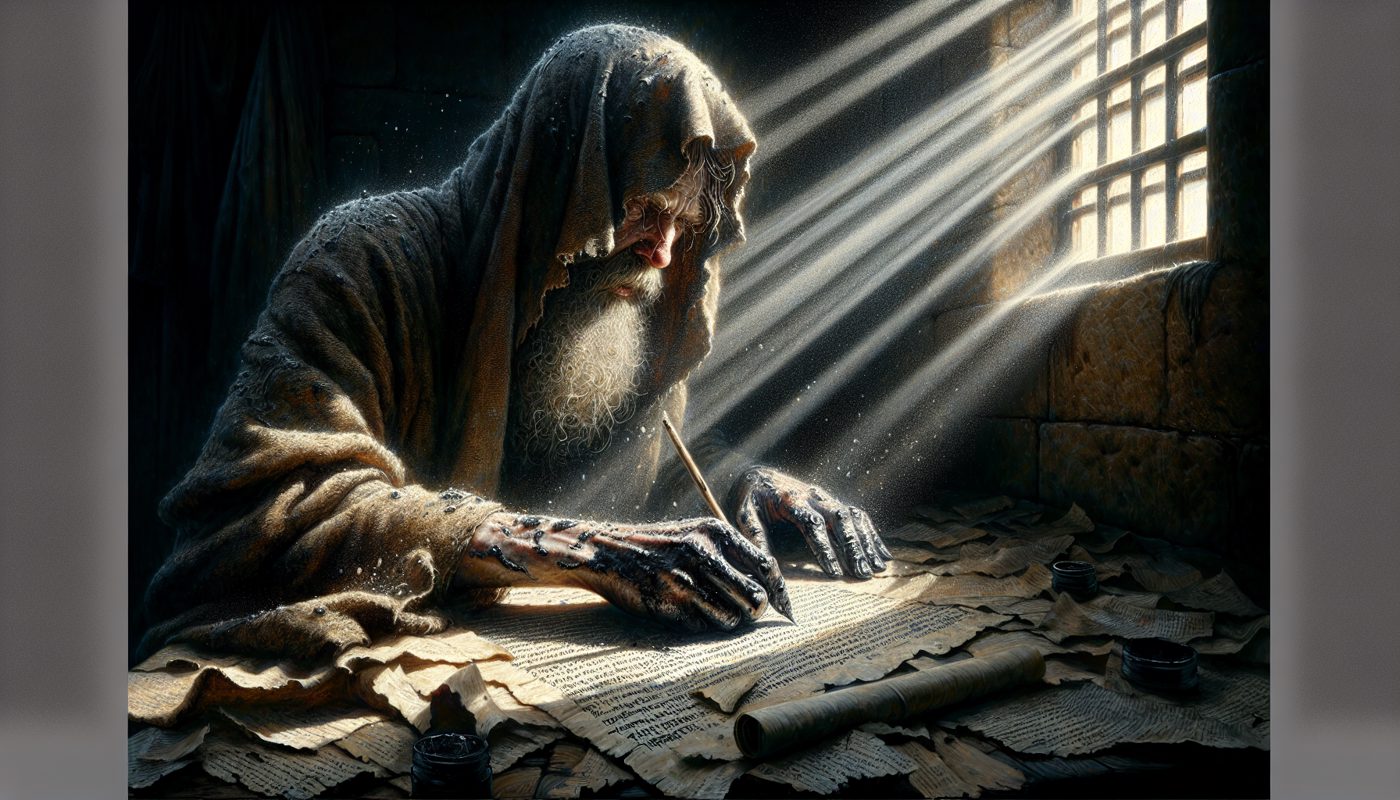
The chapter opens with a command that is itself a kind of promise. The Lord tells Jeremiah to write all the words that have been spoken into a book. Not a prophecy for the moment only, but a record meant to outlast the events it describes. The act of writing becomes a gesture of certainty: the words will hold true beyond the present collapse.
What follows is a voice of trembling, of fear, and not of peace. The image is visceral and strange: men with their hands on their loins like women in labor, faces turned to paleness. It is the time of Jacob's trouble, a day so severe that no other day can compare. The language does not soften the blow. The wound is incurable, the hurt grievous. There is no one to plead the case, no healing medicines. The lovers who once courted Judah have forgotten her entirely.
The Lord himself takes responsibility for the wound. He has struck with the wound of an enemy, the chastisement of a cruel one. The reason is stated plainly: the greatness of iniquity, the increase of sin. The chapter does not allow the reader to look away from the cause. The pain is not random; it is measured, deliberate, and deserved.
Yet the same Lord who wounds also binds. The chapter turns on a hinge that is not logical but covenantal. Because the punishment is just, the restoration can be sure. The yoke will be broken from the neck. The bonds will burst. Strangers will no longer make Jacob their bondman. The people will serve the Lord and David their king, whom the Lord will raise up.
The command to fear not is grounded in the Lord's presence. He will save from afar, and the seed will return from the land of captivity. Jacob will be quiet and at ease, with no one to make him afraid. The promise is not that the people will be sinless but that the Lord will make a full end of the nations that scattered them, while correcting his own people in measure. He will not leave them unpunished, but he will not make a full end of them either.
The restoration is described in concrete terms. The city will be built on its own hill. The palace will be inhabited after its own manner. Thanksgiving and the voice of merrymaking will proceed from the people. They will be multiplied, glorified, and their children will be as before. The congregation will be established before the Lord, and he will punish all who oppress them.
Then comes a detail that carries weight beyond its brevity. Their prince will be from among themselves, their ruler from their own midst. The Lord will cause him to draw near, and he will approach the Lord. The question is asked: who has had the boldness to approach the Lord? The answer is implied in the promise itself. This ruler will be one whom the Lord brings close, a figure of access and intimacy that the old order could not sustain.
The chapter closes with a tempest. The wrath of the Lord goes forth as a sweeping storm that bursts upon the head of the wicked. The fierce anger will not return until it has executed the intents of the Lord's heart. And then a final note: in the latter days, you shall understand it. The full meaning of the wound and the bandage, the judgment and the restoration, will only become clear when the story has run its course.
The chapter does not resolve the tension between the incurable wound and the promised healing. It holds both in place, refusing to flatten the terror into comfort or the comfort into sentimentality. The wound is real, and the bandage is real. The Lord who strikes is the Lord who heals. That is the weight of the chapter, and it does not lift.
Comments
Comments 0
Read the discussion and add your voice.
Members only
Sign in to join the conversation
We keep comments tied to real accounts so the discussion stays clean and trustworthy.
No comments yet. Be the first to add one.