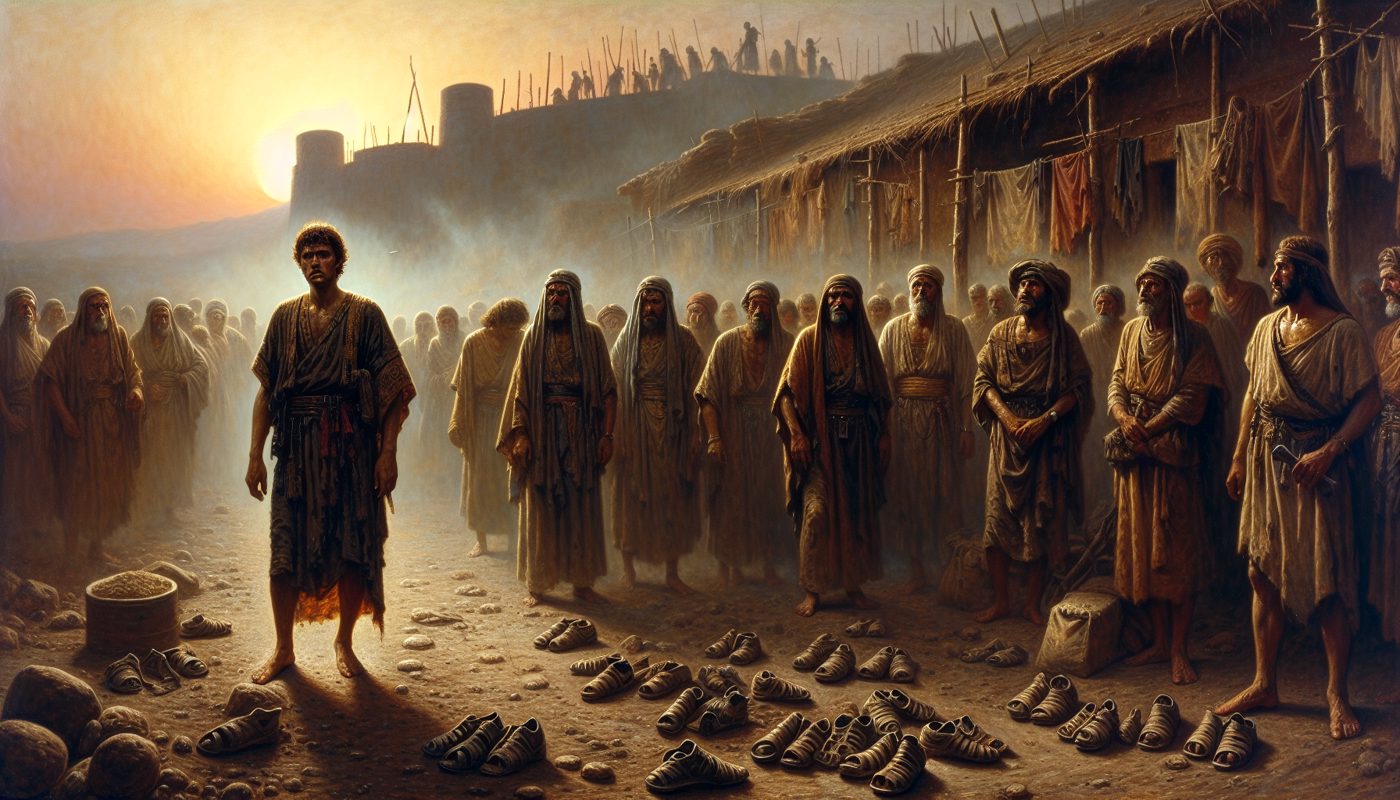
The remnant of Judah gathered outside Jeremiah’s lodging in Mizpah, and they did not come as a proud assembly. Johanan son of Kareah stood at the front with Jezaniah son of Hoshaiah and all the army officers, and behind them pressed every soul left in the land, from the least to the greatest. They were the overlooked fragments of a nation, the ones who had not been dragged to Babylon, the ones who had watched Gedaliah die and now felt the heat of Babylonian suspicion closing in. Fear moved among them like a dry wind, and they wanted a word from the Lord.
They asked Jeremiah to pray for them. Their request was precise: they wanted the Lord to show them the way they should walk and the thing they should do. They called the Lord “Jehovah thy God,” as if to keep a careful distance, but they wanted his direction. Jeremiah agreed without hesitation. He said he would pray, and he promised to declare the whole answer, keeping nothing back.
Then the remnant made a vow. They called on the Lord to be a true and faithful witness against them if they did not obey every word Jeremiah brought back. They said they would obey whether the answer was good or evil, because they wanted it to be well with them. It was a solemn pledge, spoken in the presence of the prophet and before God, and it bound them to whatever came next.
Then the word did not come. Ten days passed. The text does not say what the remnant did during those ten days, whether they waited in silence or argued among themselves or packed their belongings. But the delay itself was a test. The Lord did not answer on the first day or the second. The remnant had to sit in their fear and their uncertainty, holding the vow they had made, while the prophet waited for the word that would decide their future.
When the word finally came, Jeremiah called Johanan, all the captains, and all the people from the least to the greatest. He delivered the message directly. The Lord said that if they would stay in the land, he would build them and not pull them down, plant them and not pluck them up. He said he had relented of the disaster he had brought on them. He told them not to fear the king of Babylon, because the Lord was with them to save and deliver them. He promised to grant them mercy so that the king of Babylon would have mercy on them and let them return to their own land.
But the Lord also gave the alternative. If they set their faces to go to Egypt, if they said they wanted to see no war, hear no trumpet, and suffer no hunger, then the sword they feared would overtake them there. The famine they dreaded would follow them into Egypt. They would die by sword, famine, and pestilence, and none of them would escape. The wrath that had been poured out on Jerusalem would be poured out on them in Egypt, and they would become an execration, an astonishment, a curse, and a reproach. They would never see the land of Judah again.
The Lord then accused them directly. He said they had dealt deceitfully against their own souls. They had sent Jeremiah to pray, and they had promised to obey whatever the Lord said, but they had not obeyed in anything. The Lord had testified to them that day: do not go to Egypt. And yet the Lord already knew what they would choose. The chapter ends with the Lord’s final word: they would die by sword, famine, and pestilence in the place where they desired to go.
The remnant had asked for the way they should walk, and they had received it. But the way they wanted was not the way the Lord gave. They wanted safety in Egypt, a land of visible bread and silence from trumpets. The Lord offered them a harder path: stay in the ruined land, trust his mercy, and face the king of Babylon without fear. The remnant had sworn to obey whether the answer was good or evil, but when the answer came, they found it evil in their eyes. The vow they made so solemnly was already cracking under the weight of their own fear.
The chapter does not record their response. It ends with the Lord’s accusation and the certainty of judgment. The reader is left to wonder whether the remnant kept their vow or broke it, whether they stayed or fled. But the silence of the text is itself a judgment. The remnant had heard the word, and the word had exposed what was already in their hearts. They had not come to obey. They had come to have their own plan blessed.
Comments
Comments 0
Read the discussion and add your voice.
Members only
Sign in to join the conversation
We keep comments tied to real accounts so the discussion stays clean and trustworthy.
No comments yet. Be the first to add one.