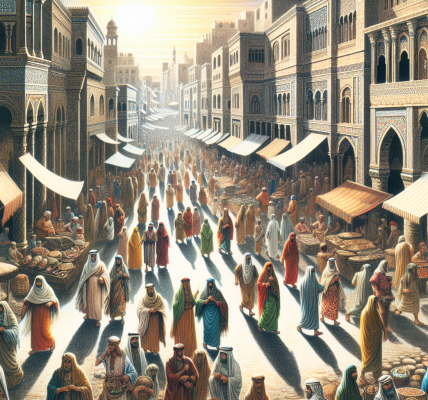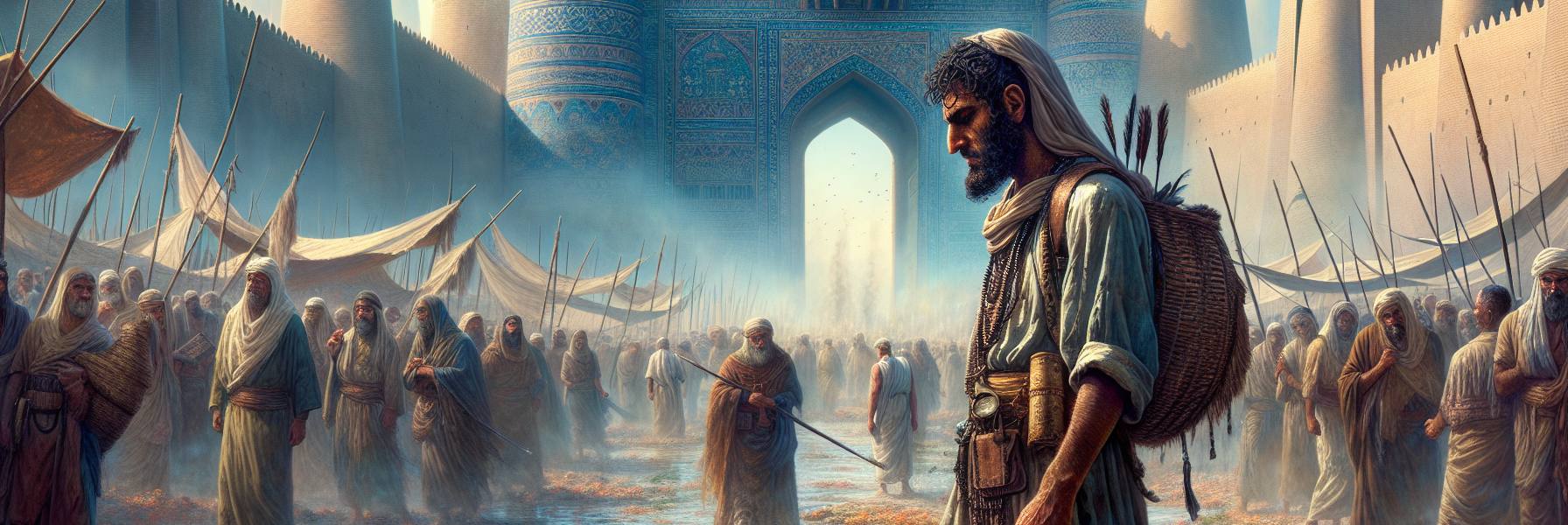

The air in Babylon hung thick, a greasy, perfumed haze that did nothing to mask the underlying stench of the Euphrates at low tide—a smell of dead fish and wet earth. Ezra ben Levi felt it in his lungs as he walked the Processional Way, the Ishtar Gate towering behind him in glazed blue arrogance. He was a scribe, a man of numbers and inventories for a Chaldean grain merchant, but in his heart, he carried the bruised memory of Zion, a song he forced himself to hum only at night, in the cramped silence of his rented room.
Lately, a different word had begun to echo in that silence, a word that felt like a stone dropped into the still pond of his exile: *shavar*. To break. It came to him not in a vision, but in the marketplace chatter. A merchant from the north, his face pinched with worry, spoke of a rising power beyond the Medes, a people of fierce mountains and unblinking discipline. The guards at the city gates drank more, their laughter sharper, edged with a tension that hadn’t been there before. Babylon continued its feasting, its gardens dripping with stolen splendor, but Ezra began to see the cracks in the mortar.
He remembered the words of the prophet Jeremiah, scrolls read in a Jerusalem now dust. Words about a cup of wrath, about a hammer shattered. He’d thought them the agonized poetry of a dying nation. But now, watching a Babylonian magistrate cruelly short-change a Syrian trader, a cold certainty settled in him. The cruelty was not strength; it was a kind of forgetting. Babylon had forgotten that empires are not permanent things. They are vessels. And vessels can be dropped.
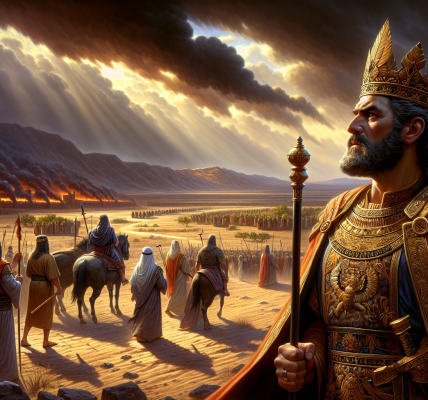
The unraveling started at the edges. A report of a rebel garrison in the eastern provinces, wiped out not by the usual slow-moving Babylonian legions, but with a swift, terrifying finality. Rumors became whispers, whispers became shouts. The name “Cyrus” was breathed like a desert wind. Then came the refugees, straggling in from the countryside with eyes hollow from seeing things they could not describe. “They move like a storm from the north,” one old farmer croaked, clutching a empty waterskin. “Their arrows are a cloud that blots out the sun. And their leader… he does not come to conquer. He comes to break.”
*Shavar.*
Panic, when it finally arrived in the heart of the city, was a silent thing at first. The great markets grew quiet. The canals, usually choked with barges, lay strangely empty. Then the king’s court fled. Just… disappeared one night, a caravan of gold and terrified nobility slinking out toward the southern marshes. The paralysis that followed was worse than any battle cry. The mighty army, the terror of nations, milled about like leaderless sheep, every man’s heart melting, turning to water. Ezra saw a captain of the guard sitting on the steps of a temple, his ornate helmet in his hands, staring at nothing.
The siege, when it came, was not the grand affair of legend. It was a tightening, a slow, relentless choking. The Medes and Persians didn’t waste men on the walls. They diverted the river. They watched. And from the walls, Ezra, now just another starving face in a doomed city, saw the impossible: the gates were left unguarded. In their pride, or their panic, they had abandoned the very mechanisms of their defense. It was as if the city itself had decided to open its mouth and swallow the poison.
The night the enemy entered, the sky was the colour of a fresh bruise. There was no glorious last stand. There was fire, and screaming that seemed to come from the stones themselves. Ezra huddled with others in a cellar, the thunder of hooves and the chilling, disciplined shouts of the conquerors above them. He thought of Jeremiah’s words: “Flee out of the midst of Babylon, go out of the land of the Chaldeans.” But there was no fleeing now. The punishment was upon the whole place.
In the strange, smoke-tainted dawn, Ezra crawled out. Babylon was a broken vessel. A golden cup dashed upon the stones. Soldiers moved with methodical purpose, herding captives, cataloguing loot. He saw a Persian officer carefully roll a looted tapestry, while beside him, a statue of Marduk lay face-down in the mud, its stone head cracked clean off. *Their idols are put to shame*, Ezra thought, the old words rising in him with a terrible, undeniable truth. *The thing they feared has come upon them.*
He wandered, unmolested, through the carnage. He was a Judahite, a known captive, and the new masters had issued strange proclamations about letting such people go. Near the shattered gate, he saw a group of his countrymen—a potter from Anathoth, a weaver from Hebron—standing together, their faces pale with ash and awe. They were speaking of Zion. Not as a memory, but as a destination. A road home was being drawn in the rubble.
A Persian soldier, his armour dented but his eyes clear, approached them. He did not brandish a sword. He held a clay tablet. In halting Aramaic, he said, “You are from Judah? You are free to go. Take what you can carry. Go to your own land and your own God.”
The words hung in the air, more miraculous than any thunder. Ezra looked back at the smouldering city, at the proud towers now shrouded in the smoke of their own burning. Babylon had been a hammer to the nations. Now it was a desolation among the nations, a haunt for jackals. Its sin had reached to heaven; its arrogance had been its architecture, and that architecture was now undone.
He turned his face west, toward the setting sun, toward the hills he had not seen since he was a boy. A road was opening through the wilderness, a highway for the remnant. The vengeance of the Lord, the plea of his people, the restoration of Israel—it was not a neat story. It was messy, and bloody, and smelled of smoke and liberation. It was a broken hammer, and in its shattered pieces, he could finally see the shape of home. He joined the others, and without a backward glance, they began to walk.