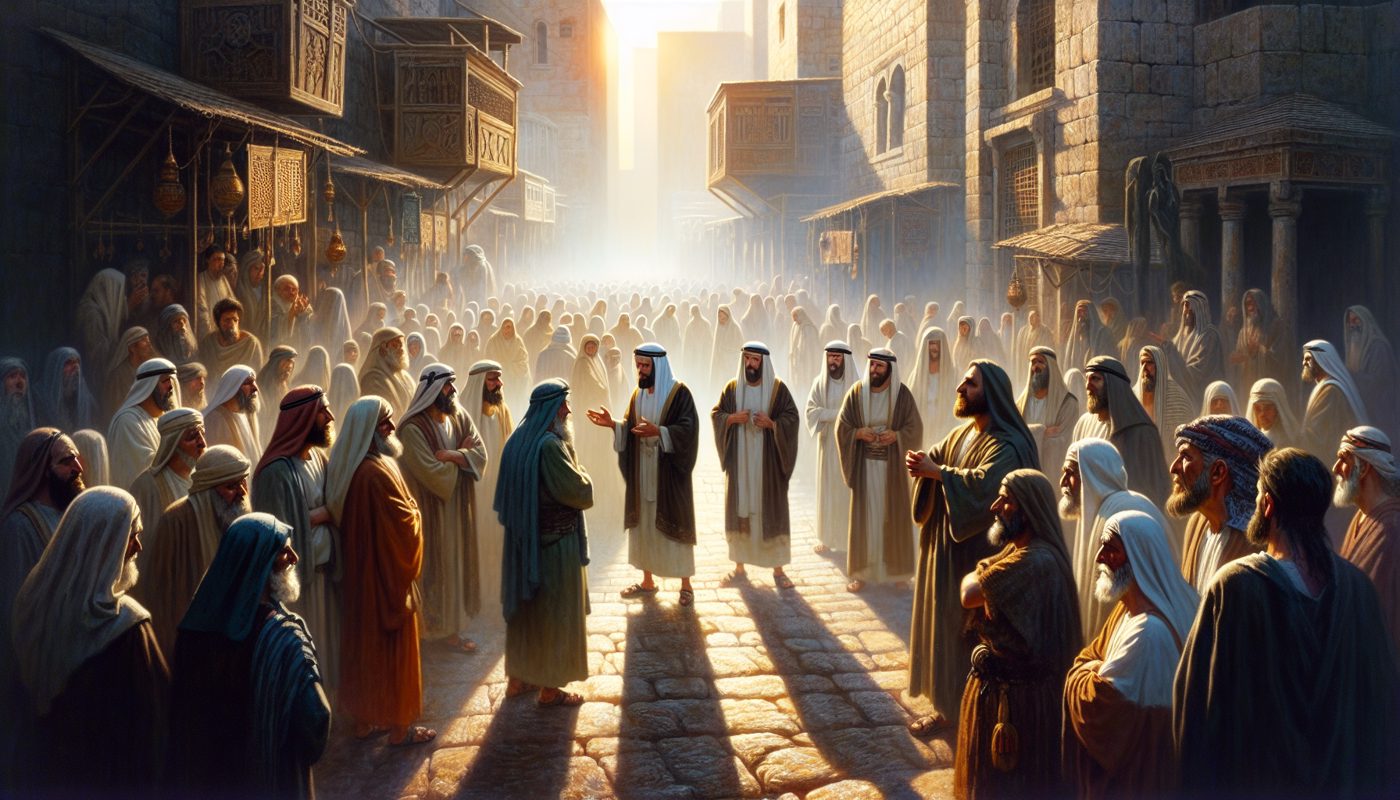
The chapter opens with a single object: the bronze altar. Its dimensions are given without ceremony: twenty cubits square, ten cubits high. This was not an altar for incense but for the burnt offering, and the scale of it is the first thing the text insists on. The priests would approach it daily, but the chapter does not describe their movements or the fire. It records the size and leaves the reader to measure the weight of that much bronze.
Then comes the molten sea. The description is precise: ten cubits from brim to brim, thirty cubits around, five cubits high. It stood on twelve oxen, three facing each direction, with their hind parts turned inward. The brim was shaped like a lily cup, a handbreadth thick. The sea held three thousand baths of water. The chapter does not explain the symbolism of the oxen or the lily. It simply reports what Huram cast and where he placed it.
Ten lavers of bronze were made, five on the right and five on the left. They were for washing the things used in the burnt offering. The great sea was for the priests to wash in. The distinction is clean: one for the utensils, one for the men. The chapter does not elaborate on the ritual. It states the arrangement and moves on.
Ten golden candlesticks were made according to the ordinance. They were set in the temple, five on the right and five on the left. Ten tables were placed the same way. A hundred basins of gold were also made. The numbers accumulate: ten, ten, a hundred. The chapter does not pause to admire the gold. It records the inventory.
The court of the priests and the great court were built, and their doors were overlaid with bronze. The sea was set on the right side of the house, eastward, toward the south. These are not decorative details. They are the final coordinates of a structure that had been measured and placed with care.
Huram is named as the craftsman who made the pots, shovels, and basins. He finished the work he had undertaken for King Solomon in the house of God. The chapter lists what he made: the two pillars, the bowls, the capitals, the networks, the four hundred pomegranates in two rows for each network, the bases, the lavers, the sea, and the twelve oxen under it. The list is thorough and unembellished.
The pots, shovels, and flesh-hooks were also made by Huram, whom the text calls his father, for King Solomon, all of bright brass. The casting was done in the plain of the Jordan, in the clay ground between Succoth and Zeredah. The chapter gives the location without explanation. The clay ground was where the bronze was shaped.
Solomon made all these vessels in great abundance. The weight of the brass could not be found out. The chapter does not say the bronze was beyond measure because of Solomon's wealth. It simply states that the weight could not be determined. The fact stands without moralizing.
Then the vessels for the house of God are listed again: the golden altar, the tables for the showbread, the candlesticks with their lamps of pure gold to burn before the oracle, the flowers, lamps, tongs, snuffers, basins, spoons, and firepans, all of pure gold. The inner doors for the most holy place and the doors of the temple were also of gold. The chapter ends with the gold, not with a ceremony or a prayer. The inventory is complete.
Comments
Comments 0
Read the discussion and add your voice.
Members only
Sign in to join the conversation
We keep comments tied to real accounts so the discussion stays clean and trustworthy.
No comments yet. Be the first to add one.