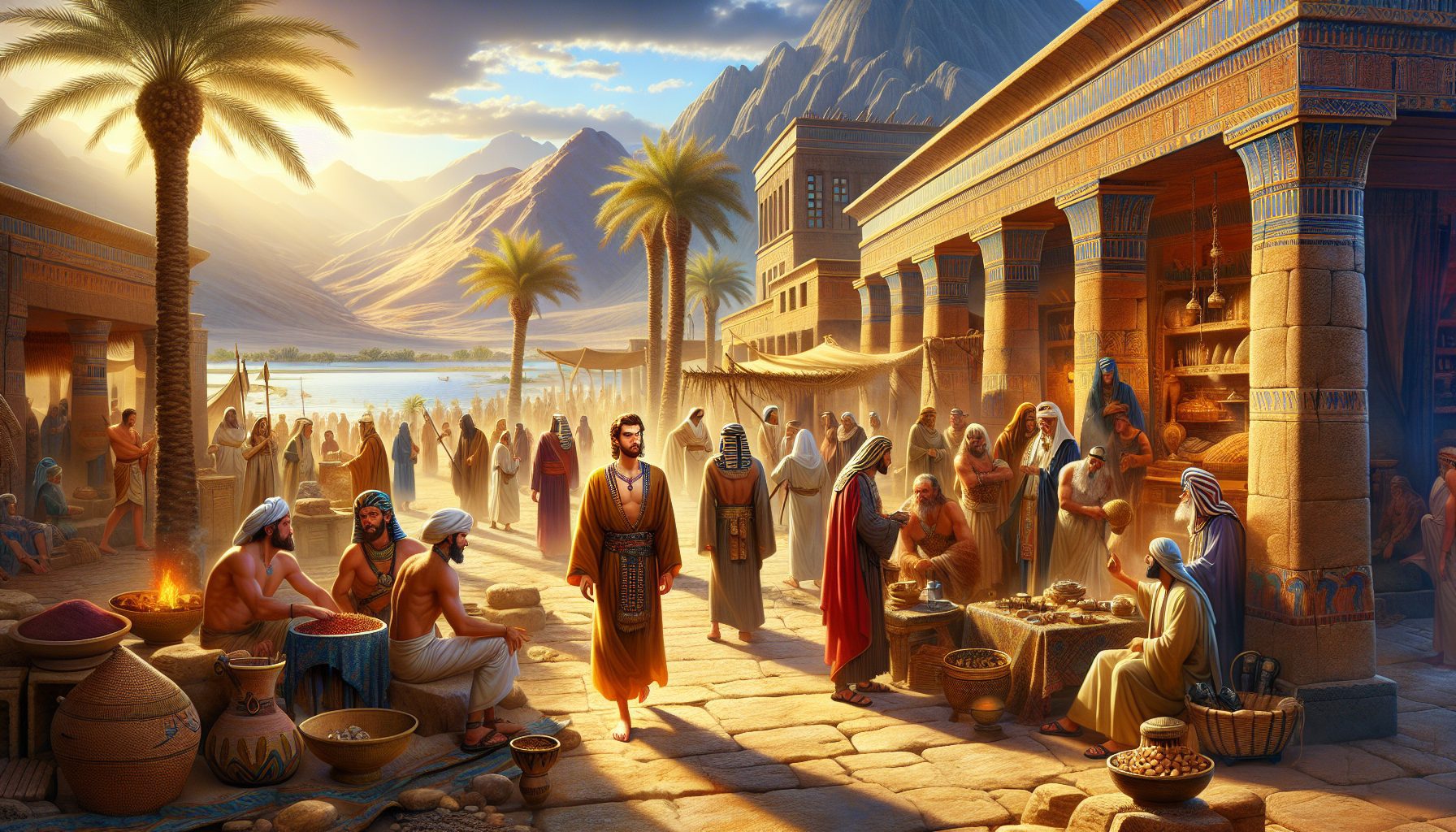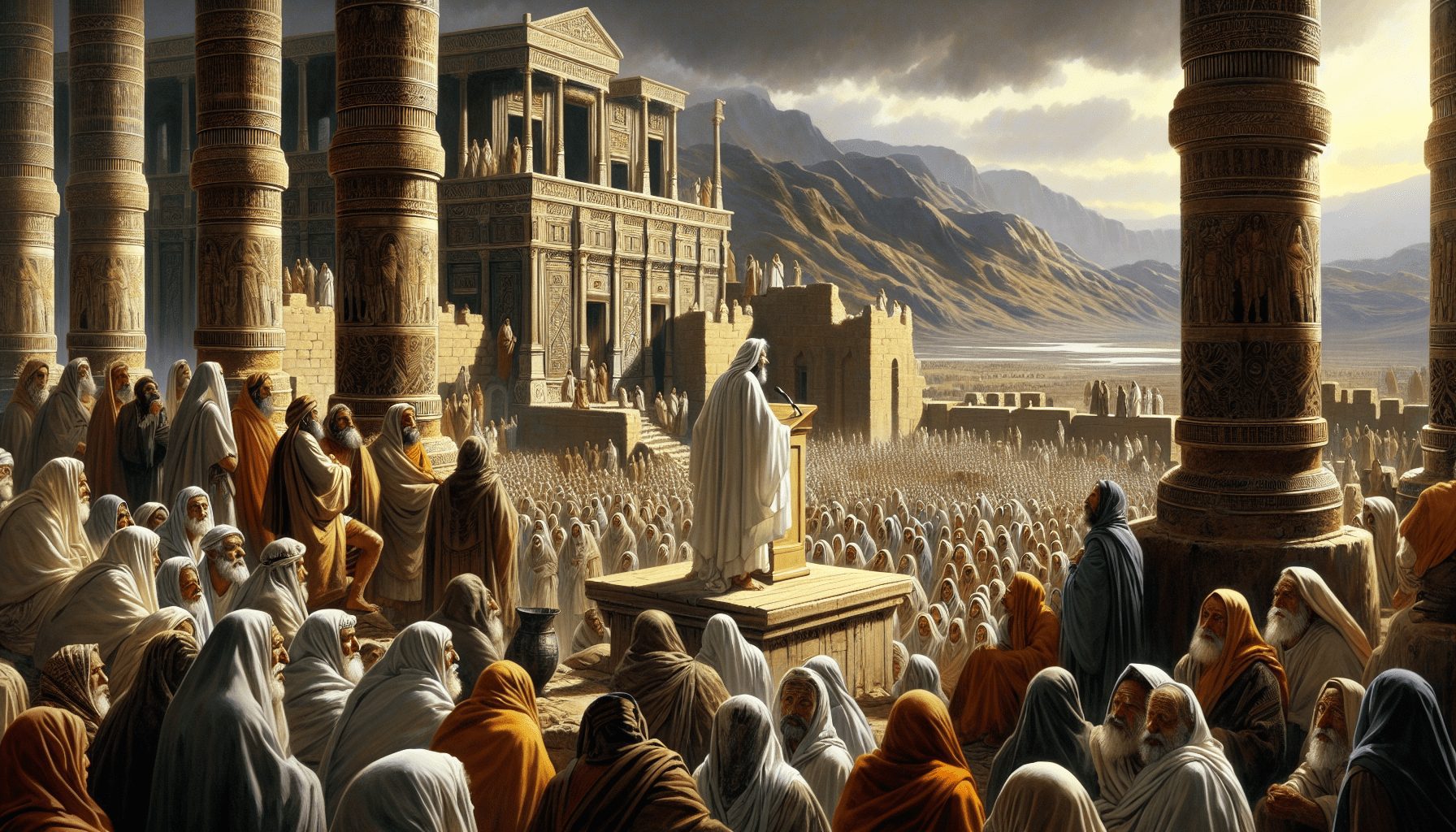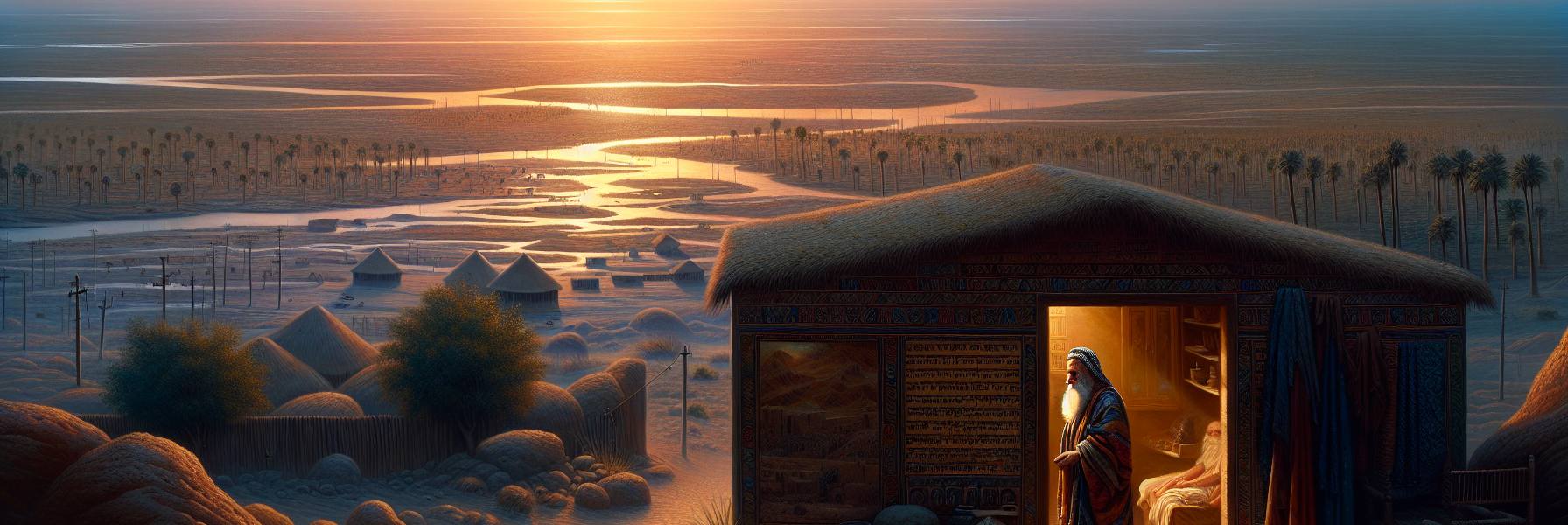

The air in Babylon tasted of dust and distant river mud. It was a thick taste, one that clung to the beard and settled in the folds of the robe. Elior felt it now, standing at the threshold of his small dwelling, watching the sunset bleed into the flat, Mesopotamian sky. Twenty years. Twenty years of this taste, this flat horizon, this heaviness in the soul that no amount of commerce or compromise could lift. He was a man of Judah, a son of Jerusalem, but his muscles remembered the ache of Babylonian brick, and his ears were too accustomed to the sing-song cadence of a language not his own.
Inside, the murmur of his family was a comfortable sound. But a deeper silence echoed beneath it—the silence of Zion. Sometimes, in the deep watch of the night, it felt less like a memory and more like a limb long amputated, a phantom pain of temple songs and the scent of rain on Mount Moriah.
He leaned against the doorframe, the clay still warm from the day’s sun. A scroll lay half-unrolled on a low table nearby, words of the prophet Isaiah, saved and re-saved through the long journey into exile. His eyes, tired from a day of accounts, fell upon it. Not with scholarly intent, but with the weary hunger of a thirsty man glancing at a dry well.
His finger traced the lines, the Hebrew script a familiar topography in a foreign land. The words began, not with thunder, but with a summons to the coastlands, to the far, silent places. “*Keep silence before me, you islands; and let the peoples renew their strength…*” It was an odd start. A courtroom scene, but one convened on the scale of creation. Elior could almost feel the hush, the gathering of shadows and shorelines, the sea itself holding its breath.
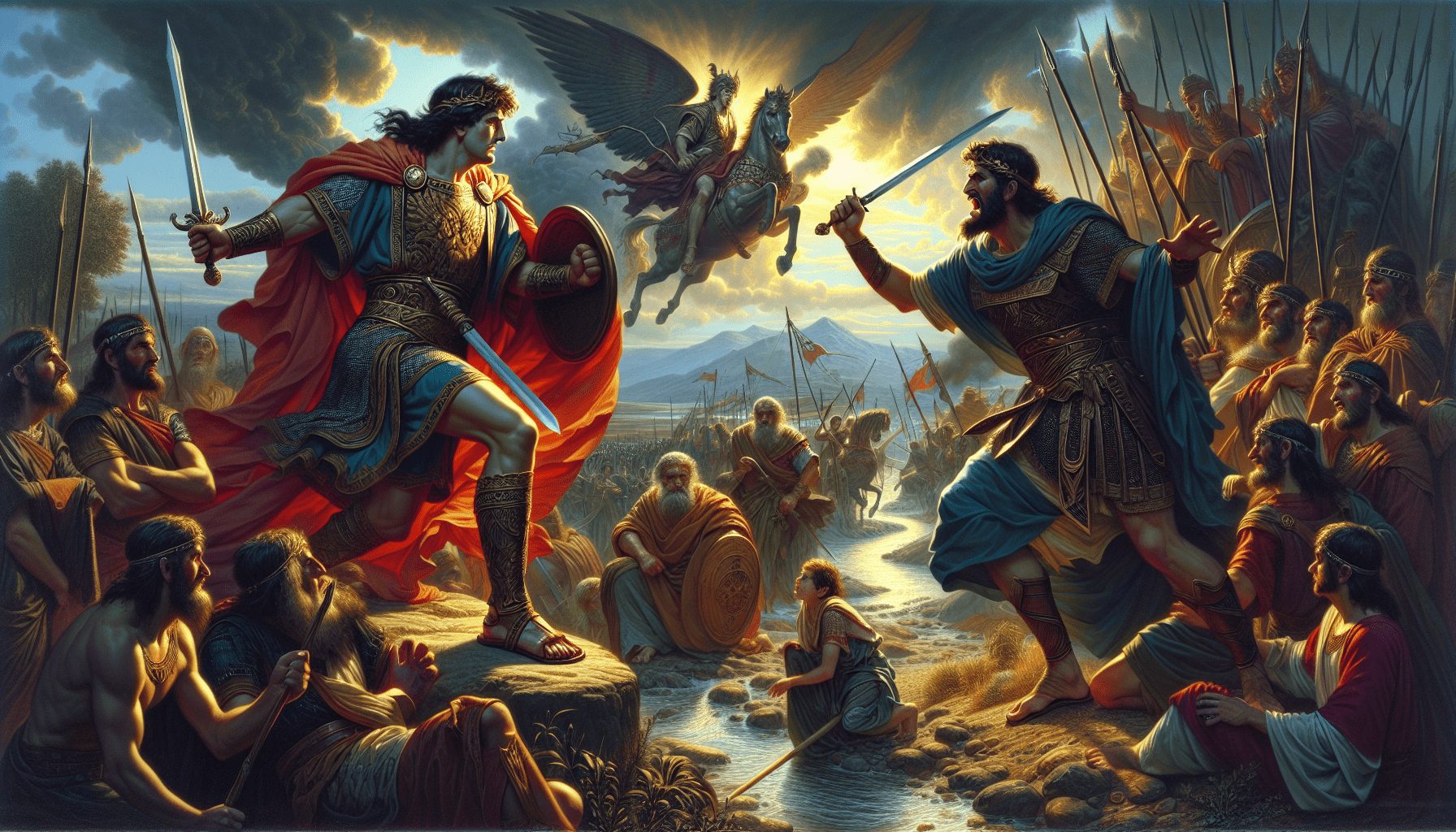
Then the voice, the one voice that could command such a silence, spoke. It spoke of a stirring from the east, a champion called in righteousness. A conqueror. Elior’s breath caught. Every exile knew the rumors, the whispers from the east of a rising Persian power, a king named Cyrus. Was this… him? The text seemed to say it without saying it, a divine hint wrapped in historical inevitability. This Cyrus would trample kings, pursue them, pass through in safety where there was no path. A tool, but a tool in whose hand?
The answer came, not in the rattling of sabers, but in a shift of address so intimate it made Elior’s throat tighten. The voice of the courtroom turned, and its focus narrowed from the sweep of empires to a single, trembling people.
“*But you, Israel, my servant, Jacob, whom I have chosen, you offspring of Abraham, my friend…*”
The words landed not as a title of honor, but as a lifeline thrown into the abyss of his longing. *Servant. Chosen. Friend.* They were dust-covered words, tarnished by failure and exile. Yet here they were, polished anew, not as a reward for merit, but as a declaration of identity. A fixed point in a spinning world.
Elior read on, his heart a drum against his ribs. The voice dismantled fear with a craftsman’s patience. “*Do not fear, for I am with you; do not be dismayed, for I am your God. I will strengthen you, I will help you, I will uphold you with my righteous right hand.*” The promises piled up, not as vague comforts, but as specific, muscular actions. *Strengthen. Help. Uphold.* The right hand was not merely for blessing, but for gripping, for holding fast against a torrent.
He saw them then, the enemies of his people—the taunters, the makers of idols, the ones who said Judah was forgotten. The text painted them not as mighty warriors, but as frightened men, huddling together, urging each other to be strong, their courage a brittle thing. And their gods? The voice treated them with a devastating, quiet ridicule. The carpenter encourages the goldsmith; the one who flattens the metal with a hammer urges on the one who strikes the anvil. They nail the idol down so it will not topple. It was a farce. A lifeless thing, secured against wobbling, called upon to save.
A dry, almost forgotten laugh escaped Elior’s lips. It was so true. The emptiness of the idols of Babylon was their defining feature, their profound *nothingness*. They were theology in reverse: worship as an act of perpetual maintenance of the void.
Then, the voice returned to him—to Israel. And the tone changed from defense to a tender, almost unimaginable promise. “*I, the Lord, will answer them; I, the God of Israel, will not forsake them. I will open rivers on the bare heights, and fountains in the midst of the valleys. I will make the wilderness a pool of water, and the dry land springs of water.*”
Elior’s eyes burned. He was not seeing Babylonian canals, clever works of human engineering. He was seeing the Judean hills, stark and brown under the summer sun. He was seeing water burst from rock where no water was, life erupting from sheer barrenness because the Speaker willed it so. It was a promise of homecoming, yes, but more than that—a promise of transformation. The return would not be a mere political event. It would be a re-creation, a Genesis for a broken people.
The scroll ended with a challenge, a final invitation to look at the idols and see their emptiness, and to look at the history of Israel and see the undeniable hand. “*Declare what is to be, that we may know you are gods,*” the voice taunted the silent idols. They could do nothing. They were less than nothing.
But the Lord? He had stirred a king from the sunrise. He called a people from the ends of the earth. He said, “You are mine.”
Elior let the scroll roll closed. The room was dark now, the family sounds settled into the soft rhythm of night. The taste of Babylonian dust was still in the air. But it was different. It was no longer the taste of permanence, but of temporary dwelling. The heaviness in his soul had not vanished, but it had been joined by a strange, solid lightness—the sensation of being *held*. Of being a thread in a tapestry whose pattern was vast and assured.
He stepped out into the full darkness. The stars of Babylon shone, the same stars that shone over Jerusalem. The voice from the scroll echoed, not as a shout, but as the deep, low hum of the universe itself: *Do not fear. I will help you.*
For the first time in many years, Elior believed it. Not as a theory, but as a fact as present as the ground beneath his feet. The journey home had not yet begun for his feet, but it had begun, irrevocably, in his heart. The river was coming to the bare heights. And he would see it flow.