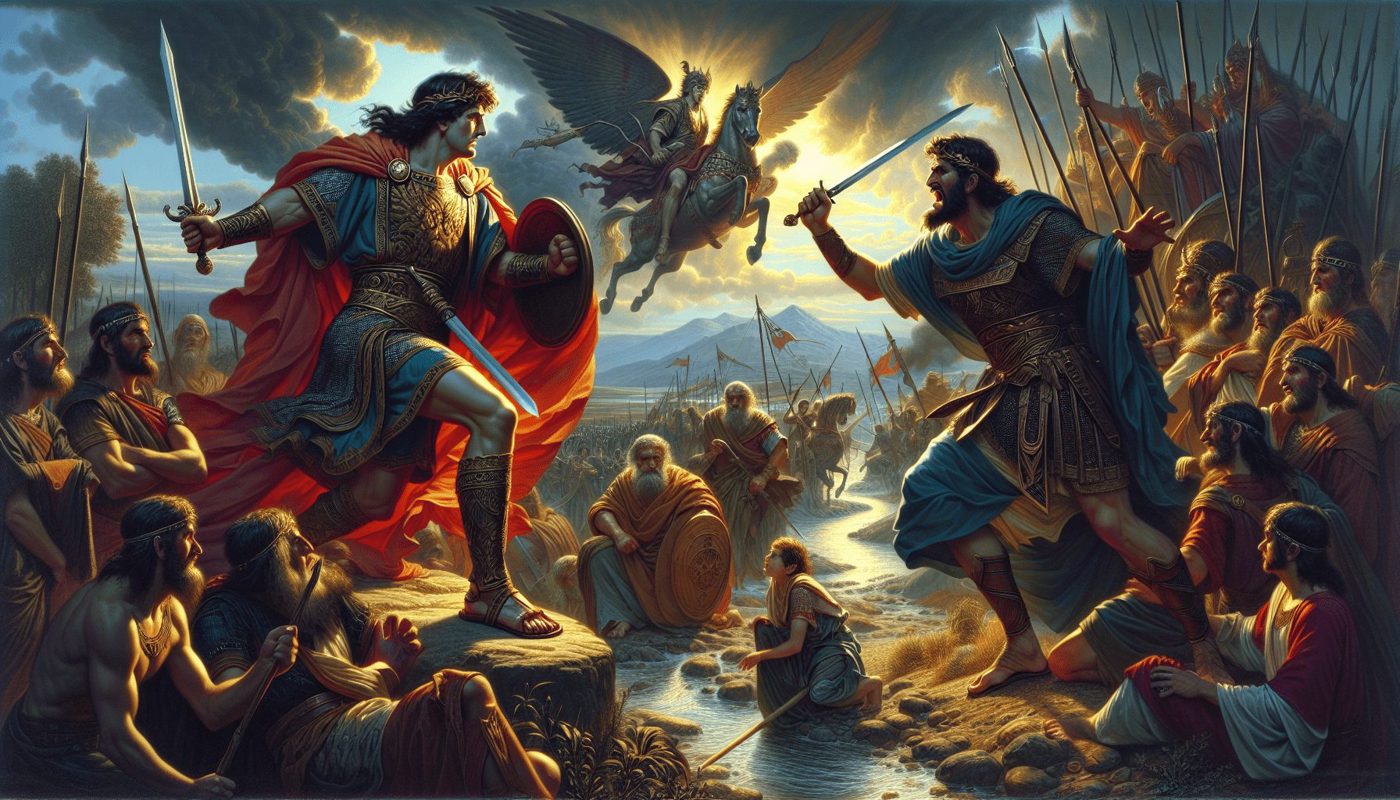
Ahithophel spoke first, and his plan was surgical. Twelve thousand men, a night pursuit, a single targeted kill, and the whole kingdom would return to Absalom like a bride to her husband. The proposal pleased Absalom and all the elders of Israel. It was clean, fast, and final. But Absalom, for reasons the text does not explain, called also for Hushai the Archite. That second opinion changed everything.
Hushai, David's friend who had stayed behind to spy, did not attack Ahithophel's logic head-on. Instead, he painted a different picture of David. He told Absalom that his father was a man of war, chafed in mind like a bear robbed of her cubs, and that he would not be caught sleeping with the troops. David would be hidden in a pit or some other place, Hushai said, and if the first attack failed and a few of Absalom's men fell, the rumor of a slaughter would melt even the bravest heart.
Hushai then offered his own counsel: gather all Israel from Dan to Beersheba, as many as the sand by the sea, and let Absalom himself lead them. They would fall on David like dew on the ground and leave not one man alive. If David took refuge in a city, all Israel would drag that city into the river with ropes until not a small stone remained. It was grandiose, slow, and flattering to Absalom's vanity.
Absalom and all the men of Israel declared Hushai's counsel better than Ahithophel's. The narrator gives the reason plainly: the Lord had ordained to defeat the good counsel of Ahithophel, in order to bring evil upon Absalom. The decision was not a matter of superior strategy. It was a divine intervention that looked like a political miscalculation.
Hushai wasted no time. He went to the priests Zadok and Abiathar and told them exactly what he had counseled and what Ahithophel had counseled. He sent word to David: do not lodge tonight at the fords of the wilderness. Cross the Jordan immediately, or the king and all his people will be swallowed up.
The messengers, Jonathan and Ahimaaz, stayed at En-rogel, and a servant girl carried word between them and the priests. But a boy saw them and told Absalom. The two men fled to Bahurim, to a house with a well in its courtyard. The woman of the house spread a covering over the well's mouth and scattered bruised grain on top of it, hiding the men completely.
When Absalom's servants came asking, the woman said the men had crossed the brook. The servants searched, found nothing, and returned to Jerusalem. Only after they left did Jonathan and Ahimaaz climb out of the well, go to David, and deliver the warning: arise and pass quickly over the water, for Ahithophel has counseled against you.
David and all his people crossed the Jordan that night. By morning light, not one of them was missing. The escape was complete, and the army remained intact. But the cost of the failed counsel fell on Ahithophel. When he saw that his advice had been rejected, he saddled his donkey, went home to his city, set his house in order, and hanged himself. He was buried in his father's tomb.
David reached Mahanaim. Absalom crossed the Jordan with all the men of Israel and set Amasa over the army in place of Joab. Israel encamped in the land of Gilead. Meanwhile, three men—Shobi the son of Nahash from Rabbah, Machir the son of Ammiel from Lodebar, and Barzillai the Gileadite from Rogelim—brought beds, basins, earthen vessels, wheat, barley, meal, parched grain, beans, lentils, honey, butter, sheep, and cheese for David and his people. They said the people were hungry, weary, and thirsty in the wilderness.
The chapter closes with David provisioned and Absalom encamped. The Lord had used one man's flattery, a woman's quick lie, and a well with a grain-covered mouth to preserve the king. Ahithophel's rope was the only thing that held.
Comments
Comments 0
Read the discussion and add your voice.
Members only
Sign in to join the conversation
We keep comments tied to real accounts so the discussion stays clean and trustworthy.
No comments yet. Be the first to add one.