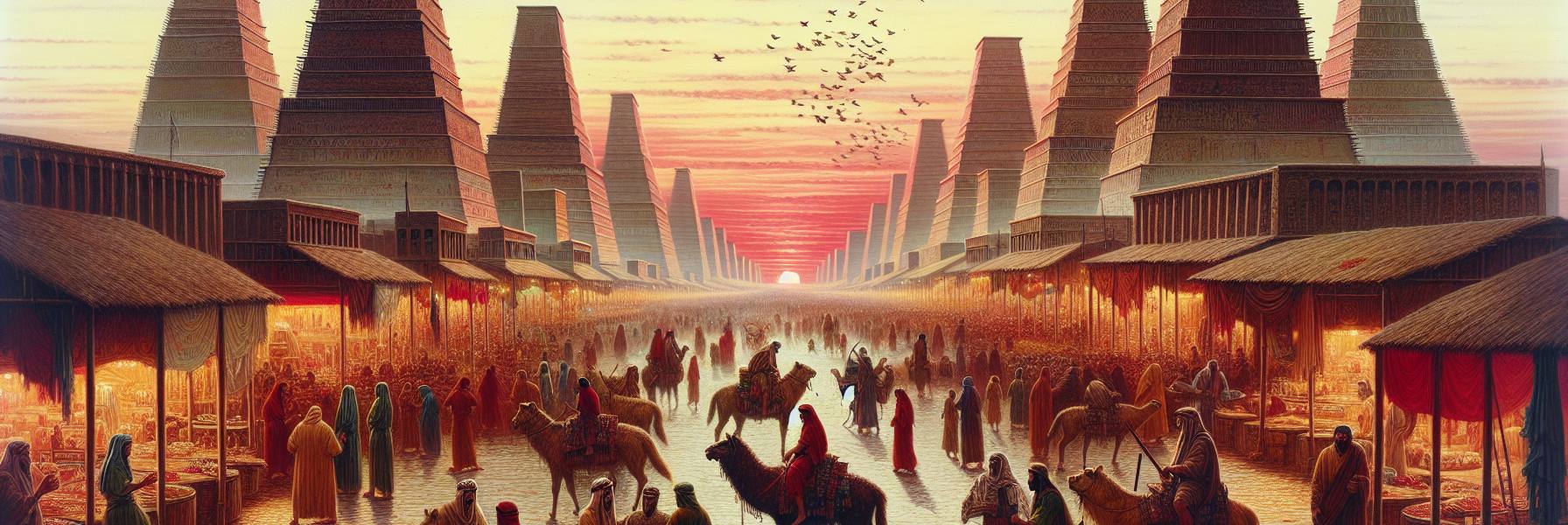

In the ancient city of Ur of the Chaldeans, where ziggurats pierced the hazy sky and merchants traded spices along dusty caravan routes, there lived a man named Abram. He walked through crowded marketplaces where the scent of incense mingled with animal sacrifices to moon gods, his heart strangely restless amid the pagan chants. One evening, as the sun bled crimson over the Mesopotamian plains, a voice clearer than temple bells spoke to his spirit: “Leave your country, your people, and your father’s household, and go to the land I will show you.”
Without maps or military escort, Abram gathered his wife Sarai, his nephew Lot, and all their possessions. Their caravan moved westward through unforgiving deserts where mirages danced on heat-shimmering horizons. For years they dwelled in tents, strangers in Canaanite territory, while God promised this foreign land would belong to his descendants. Yet as seasons turned, Abram watched Sarai’s face grow lined with grief, their tent remaining silent of children’s laughter.
Decades later, beneath a night sky ablaze with desert stars, God led the aged man outside his tent. “Look up at the heavens and count the stars—if indeed you can count them.” The celestial fire seemed to pulse with divine promise. “So shall your offspring be.” In that moment, something miraculous unfolded in Abram’s heart—not calculation or doubt, but a profound trust that the One who hung stars could breathe life into dead wombs. This faith, simple yet unshakable as bedrock, was accounted to him as righteousness, a sacred exchange where trust became currency in heaven’s courts.
Years rolled on like desert winds. Abram became Abraham, “father of multitudes,” yet still childless. Sarai became Sarah, “princess,” her once-smooth hands now veined and frail. When divine visitors announced she would bear a son within the year, Abraham’s laughter echoed through the terebinth trees not in mockery, but in bewildered joy. True to promise, Isaac’s cries soon pierced the dawn, his tiny fingers curling around Abraham’s calloused thumb—a living monument to faith rewarded.
The ultimate test came on Mount Moriah’s rocky slopes. As Abraham bound his son upon an altar, every fiber of human instinct screamed against the sacrifice. Yet his faith had learned to see beyond visible reality—to trust that the God who resurrects hopes could resurrect lives. When the ram appeared tangled in thickets, its horns catching the morning light, Abraham understood: righteousness had never been his to earn, only to receive through unwavering trust in the Promise-Keeper.
Centuries later, in Roman-ruled Judea where temple sacrifices continued daily, a Pharisee named Saul encountered the resurrected Christ on Damascus Road. Transformed into Paul the apostle, he would pen these truths to the fledgling church in Rome: “Abraham’s blessing came not through circumcision—for he was declared righteous while still uncircumcised—nor through law-keeping, which came 430 years later. He received the promise through the righteousness that comes by faith.”
And so the story continues through ages, where tax collectors and fishermen, Gentiles and Jews, all who dare to believe in Him who justifies the ungodly—who raised Jesus our Lord from the dead, delivered over to death for our sins and raised to life for our justification—become children of Abraham. Not by bloodline or ritual, but through that same ancient faith that looks upon the stars and trusts the Promise-Maker.