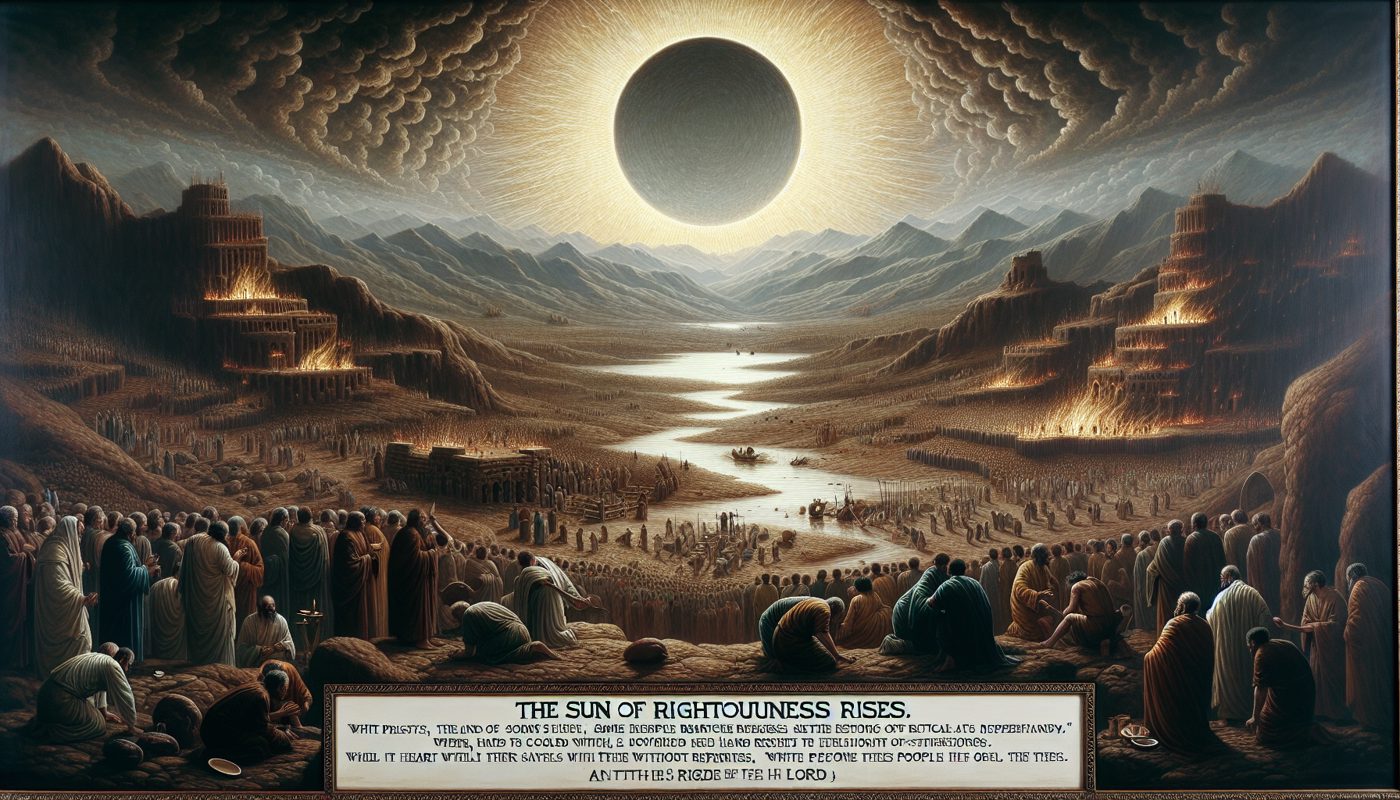
The final chapter of Malachi opens with a furnace. The day of the Lord is not a distant metaphor; it burns. Every proud man and every worker of wickedness becomes stubble, consumed so completely that neither root nor branch remains. The Lord of Hosts speaks this directly, and the language leaves no room for ambiguity. The fire is not corrective; it is terminal.
But the chapter pivots on a single word: “But.” For those who fear the Lord’s name, the same day brings something else entirely. The sun of righteousness rises with healing in its wings. This is not a general sunrise for everyone. It is specific, conditional, and personal. The image is of a stall animal released, leaping and gamboling freely. The fear of the Lord, far from being cowering dread, becomes the ground for joy that moves the body.
The healing that comes with that rising sun is not merely physical. The chapter gives no list of ailments cured or wounds dressed. The healing is in the wings of the sun itself, and it sets the healed free to move with unguarded strength. The contrast with the burning furnace could not be sharper. One group is consumed; the other is liberated into motion.
Then the chapter turns grim again. Those who fear the Lord will tread down the wicked. The wicked become ashes under their feet. The Lord makes this day, and He names it. There is no negotiation in the imagery. The same fire that burns the proud becomes the ash beneath the feet of the righteous. The victory is not achieved by human effort; it is given by the Lord on the day He makes.
After this vision of fire and healing, the chapter shifts to a command. Remember the law of Moses. The Lord specifies that this law was commanded at Horeb for all Israel, including the statutes and ordinances. The memory of the law is not optional. It is the anchor before the fire. Without it, the coming day has no context.
Then comes the final promise. The Lord will send Elijah the prophet before the great and terrible day. This is not a vague hope. It is a specific sending. Elijah will come ahead of the day, and his work is named: he will turn the heart of the fathers to the children and the heart of the children to their fathers. The healing in the sun’s wings has a counterpart in the turning of hearts within families.
The chapter ends with a warning. If that turning does not happen, the Lord will come and strike the earth with a curse. The final word of the Old Testament is not a benediction. It is a condition. The curse is not abstract; it is the alternative to the turning of hearts. The book closes on that edge, with the furnace still burning and the sun still rising, but the outcome depending on whether the hearts turn.
Malachi gives no timeline. He does not say when the day will come or how long the waiting will last. He only names the two realities: the furnace for the proud and the healing sun for those who fear the Lord. And he leaves the law and the prophet as the signposts. The chapter is short, but it carries the full weight of the covenant’s end and the promise of what comes after.
Comments
Comments 0
Read the discussion and add your voice.
Members only
Sign in to join the conversation
We keep comments tied to real accounts so the discussion stays clean and trustworthy.
No comments yet. Be the first to add one.