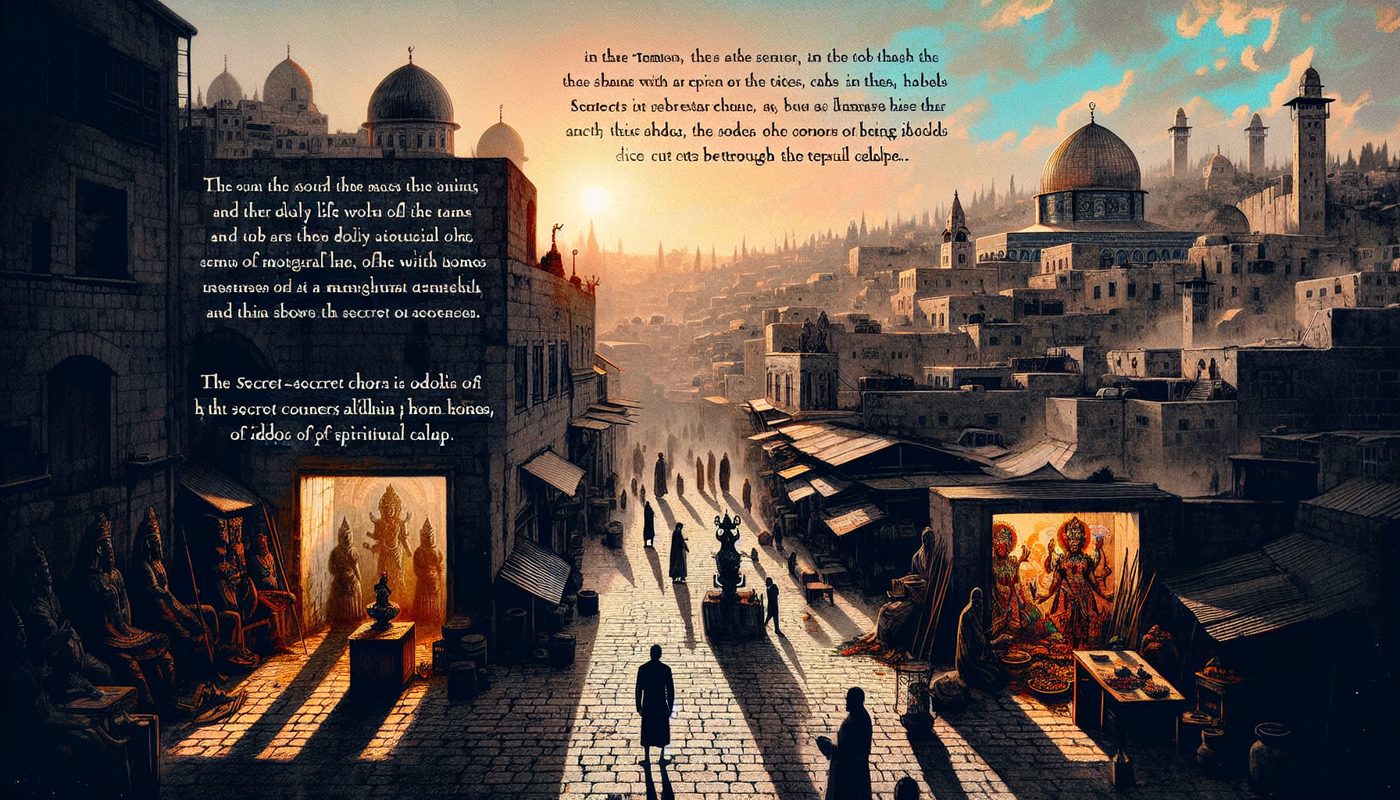
The word of the Lord came to Zephaniah, a son of Cushi, son of Gedaliah, son of Amariah, son of Hezekiah, in the days of Josiah son of Amon, king of Judah. The prophet did not open with a call to repentance or a promise of restoration. He opened with a total sweep: the Lord would consume everything from the face of the ground—man and beast, birds of the heavens, fish of the sea, the stumbling blocks with the wicked. No corner of creation would escape. The language is absolute, and it is the first thing the reader hears.
The Lord then narrowed the target. He would stretch out his hand against Judah and against all the inhabitants of Jerusalem. The judgment was not aimed at distant nations but at the covenant city itself. The Lord would cut off the remnant of Baal from that place, and the name of the Chemarim—the idolatrous priests—along with the priests of the Lord who had turned to other gods. The indictment was specific: those who worshiped the host of heaven on the housetops, those who swore by the Lord and also swore by Malcam, those who turned back from following the Lord, and those who had not sought him nor inquired of him.
The chapter then commanded silence. The day of the Lord was at hand. The Lord had prepared a sacrifice, and he had consecrated his guests. The language of sacrifice carries the weight of a solemn ritual, but the guests are not willing worshipers. They are the objects of the slaughter. The day of the Lord's sacrifice would punish the princes, the king's sons, and all who wore foreign apparel—a sign of adopting foreign ways and foreign loyalties. The Lord would also punish those who leaped over the threshold, a practice tied to Philistine or other pagan customs, and those who filled their master's house with violence and deceit.
The prophet then described the sounds of that day. A cry would come from the Fish Gate, a wailing from the Second Quarter, and a great crashing from the hills. The inhabitants of Maktesh—a district in Jerusalem, likely the mortar-shaped valley where merchants gathered—were told to wail, for all the people of Canaan were undone. Those who were laden with silver would be cut off. The wealth that had been accumulated through trade and oppression would become spoil, and the houses built with it would become desolation. They would build houses but not inhabit them; they would plant vineyards but not drink the wine.
The Lord would search Jerusalem with lamps. This is not a search for the righteous. It is a search for the complacent—the men who were settled on their lees, like wine left undisturbed, thick and stagnant. These men said in their hearts, “The Lord will not do good, neither will he do evil.” They had concluded that the Lord was indifferent, that he would neither reward nor punish. That indifference was the root of their corruption, and the Lord would expose it with light.
The great day of the Lord was near, hastening greatly. The prophet heard the voice of that day, and the mighty man cried out bitterly. The day was described in a series of hammer blows: a day of wrath, a day of trouble and distress, a day of wasteness and desolation, a day of darkness and gloominess, a day of clouds and thick darkness, a day of the trumpet and alarm against the fortified cities and against the high battlements. The language is not metaphorical comfort. It is the vocabulary of total military defeat.
The Lord would bring distress upon men so that they would walk like blind men, because they had sinned against him. Their blood would be poured out as dust, and their flesh as dung. Neither their silver nor their gold would be able to deliver them in the day of the Lord's wrath. The whole land would be devoured by the fire of his jealousy. The chapter closes with a final, terrible note: the Lord would make an end, a terrible end, of all who dwell in the land.
The chapter does not offer a way out. It does not name a remnant or a future hope. It does not call for fasting or sackcloth. It simply announces that the day is near, that the sacrifice is prepared, and that the Lord will search Jerusalem with lamps. The only response the text demands is silence before the presence of the Lord Jehovah.
Comments
Comments 0
Read the discussion and add your voice.
Members only
Sign in to join the conversation
We keep comments tied to real accounts so the discussion stays clean and trustworthy.
No comments yet. Be the first to add one.