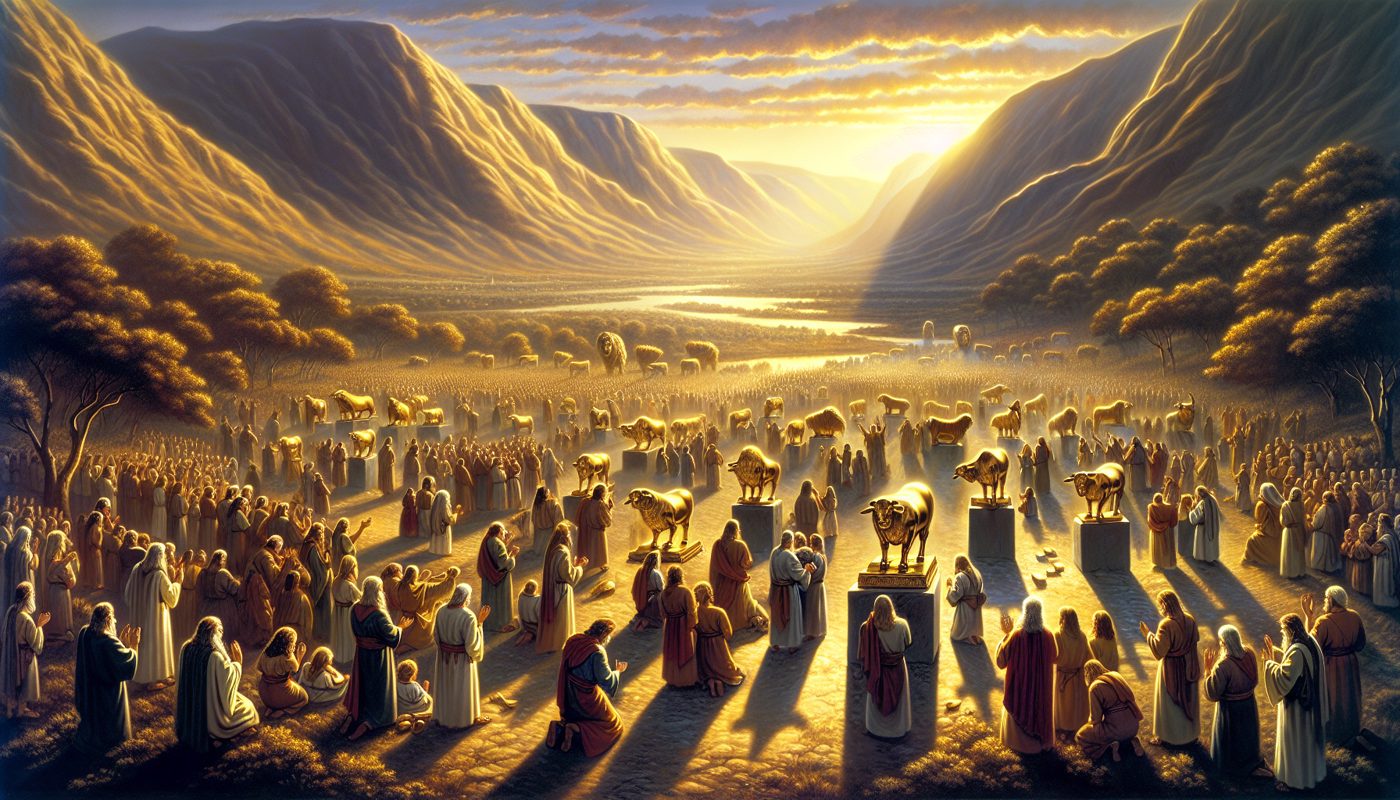
Hosea 13 opens with a memory of power. When Ephraim spoke, people trembled. The tribe had weight in Israel. But that weight turned to death when Ephraim crossed into Baal worship. The chapter does not linger on the past. It moves straight into the present: the people are sinning more and more, making molten images from their own silver, idols designed by their own understanding, crafted by their own artisans. And the worshippers kiss the calves.
The kiss is the detail that matters. These are not distant gods. The people press their mouths to the metal. They honor what they made. The Lord does not argue theology with them. He describes what they will become: a morning cloud, dew that burns off early, chaff blown from the threshing floor, smoke rising and gone. Four images of disappearance. Israel’s substance will not last longer than a breath.
Then the Lord speaks directly. He is their God from the land of Egypt. They are to know no god but him. There is no savior besides him. He knew them in the wilderness, in the land of great drought. That knowledge was not abstract. He fed them in the pasture. They were filled. And when they were filled, their heart was exalted, and they forgot him.
The forgetting is not passive. It is the direct result of prosperity. The pasture made them full; fullness made them proud; pride made them blind. The Lord does not describe himself as a patient teacher waiting for them to remember. He becomes a lion, a leopard crouching by the road, a bear robbed of her cubs. He will tear the caul of their heart. The wild beast will finish the work.
The accusation is precise. Israel’s destruction is not something that happens to them. It is the shape of their own position: they are against their help. The Lord is their help. They are against him. That is the destruction.
He asks where their king is now. They demanded a king and princes. He gave them a king in his anger and took him away in his wrath. The monarchy, which they thought would save them, is exposed as a judgment, not a rescue. Ephraim’s iniquity is bound up, stored like grain in a silo, waiting. The sorrows of a woman in labor will come. But Ephraim is an unwise son, stuck at the birth canal, refusing to come out when it is time.
Then the chapter turns. The Lord says he will ransom them from the power of Sheol. He will redeem them from death. He taunts death and the grave: where are your plagues? where is your destruction? The repentance that would change this outcome is hidden from his eyes. The promise of ransom stands, but the path back is not open the way Israel expects.
The east wind comes. The breath of the Lord rises from the wilderness. The spring goes dry. The fountain dries up. The treasure of goodly vessels is plundered. Samaria bears her guilt because she rebelled against her God. The last verse is brutal: they fall by the sword, infants dashed in pieces, pregnant women ripped open. The chapter does not soften the end. The calf-kissers meet the east wind, and nothing holds.
Comments
Comments 0
Read the discussion and add your voice.
Members only
Sign in to join the conversation
We keep comments tied to real accounts so the discussion stays clean and trustworthy.
No comments yet. Be the first to add one.