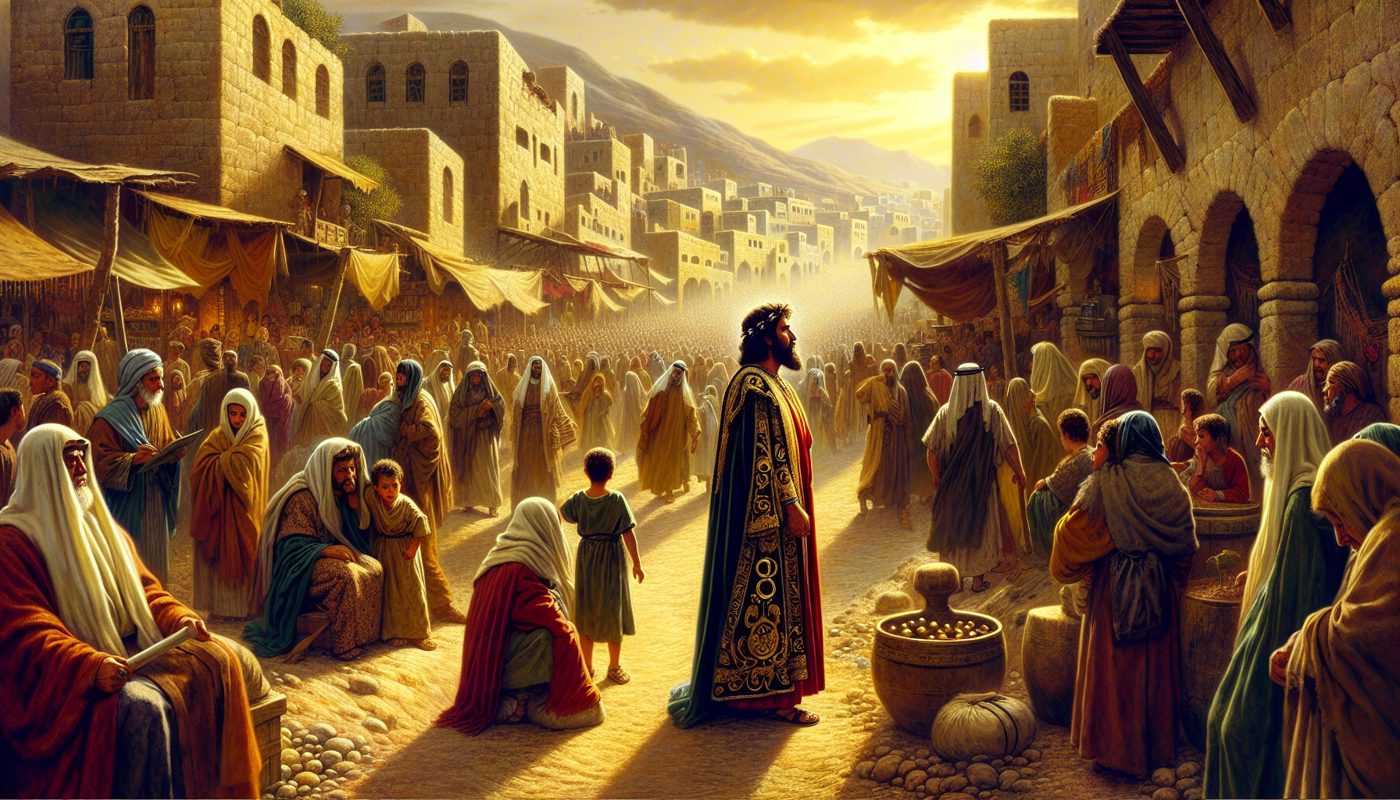
Luke 19 opens with Jesus passing through Jericho, and the first thing that happens is a man named Zacchaeus. He is a chief tax collector, and he is rich. The chapter does not explain why he became a tax collector or how the town treated him, but it does say he wanted to see Jesus and could not because of the crowd and his short stature. So he ran ahead and climbed a sycamore tree. That is the only detail the text gives about his effort: running and climbing, nothing more elaborate.
When Jesus reached the tree, He looked up and told Zacchaeus to come down quickly, because He must stay at his house that day. Zacchaeus came down at once and received Him joyfully. The crowd saw this and murmured that Jesus had gone to lodge with a man who was a sinner. The chapter does not say the crowd was wrong about Zacchaeus being a sinner, but it does not elaborate on his sins either. It simply records the murmuring.
Zacchaeus then stood and said to the Lord that he would give half of his goods to the poor, and if he had wrongfully exacted anything from anyone, he would restore it fourfold. Jesus responded that salvation had come to that house that day, because Zacchaeus also was a son of Abraham. Then Jesus added the statement that the Son of Man came to seek and to save that which was lost. The chapter does not say Zacchaeus was saved because of his generosity; it says salvation came to his house, and the reason given is that he was a son of Abraham and that Jesus came to seek the lost.
Immediately after that exchange, because Jesus was near Jerusalem and because the people supposed the kingdom of God was about to appear immediately, He told a parable. A nobleman went to a far country to receive a kingdom and then return. He gave ten servants ten pounds each and told them to trade until he came back. But his citizens hated him and sent a delegation saying they would not have him reign over them.
When the nobleman returned as king, he called the servants to account. The first had made ten pounds more from his one pound, and the nobleman put him over ten cities. The second had made five pounds, and he was put over five cities. Another servant came and said he had kept the pound wrapped in a napkin because he feared the nobleman, whom he described as an austere man who reaps where he did not sow. The nobleman judged him from his own words and took the pound away, giving it to the one who had ten. The bystanders objected that the first servant already had ten, but the nobleman said that to everyone who has, more will be given, but from the one who has not, even what he has will be taken away. Then he ordered that his enemies who did not want him to reign be brought and slain before him.
After the parable, Jesus went on ahead toward Jerusalem. When He drew near Bethphage and Bethany at the Mount of Olives, He sent two disciples to find a colt that had never been ridden, telling them that if anyone asked why they were untying it, they should say the Lord had need of it. They found it exactly as He had said, and the owners let it go when they heard the same phrase. The disciples threw their garments on the colt and set Jesus on it.
As He rode down the Mount of Olives, the whole multitude of disciples began to praise God loudly for all the mighty works they had seen. They shouted, “Blessed is the King that cometh in the name of the Lord: peace in heaven, and glory in the highest.” Some Pharisees in the crowd told Jesus to rebuke His disciples. He answered that if they kept silent, the stones would cry out.
Then Jesus saw the city and wept over it. He said that if Jerusalem had known the things that belong to peace on that day, but now they were hidden from its eyes. He predicted that enemies would build a bank around the city, surround it, and dash it and its children to the ground, leaving not one stone on another, because the city did not know the time of its visitation.
He entered the temple and began driving out those who sold, saying that the house of God should be a house of prayer, but they had made it a den of robbers. He taught daily in the temple, and the chief priests, scribes, and principal men of the people sought to destroy Him, but they could not find a way to do it because the people all hung on His words.
Comments
Comments 0
Read the discussion and add your voice.
Members only
Sign in to join the conversation
We keep comments tied to real accounts so the discussion stays clean and trustworthy.
No comments yet. Be the first to add one.