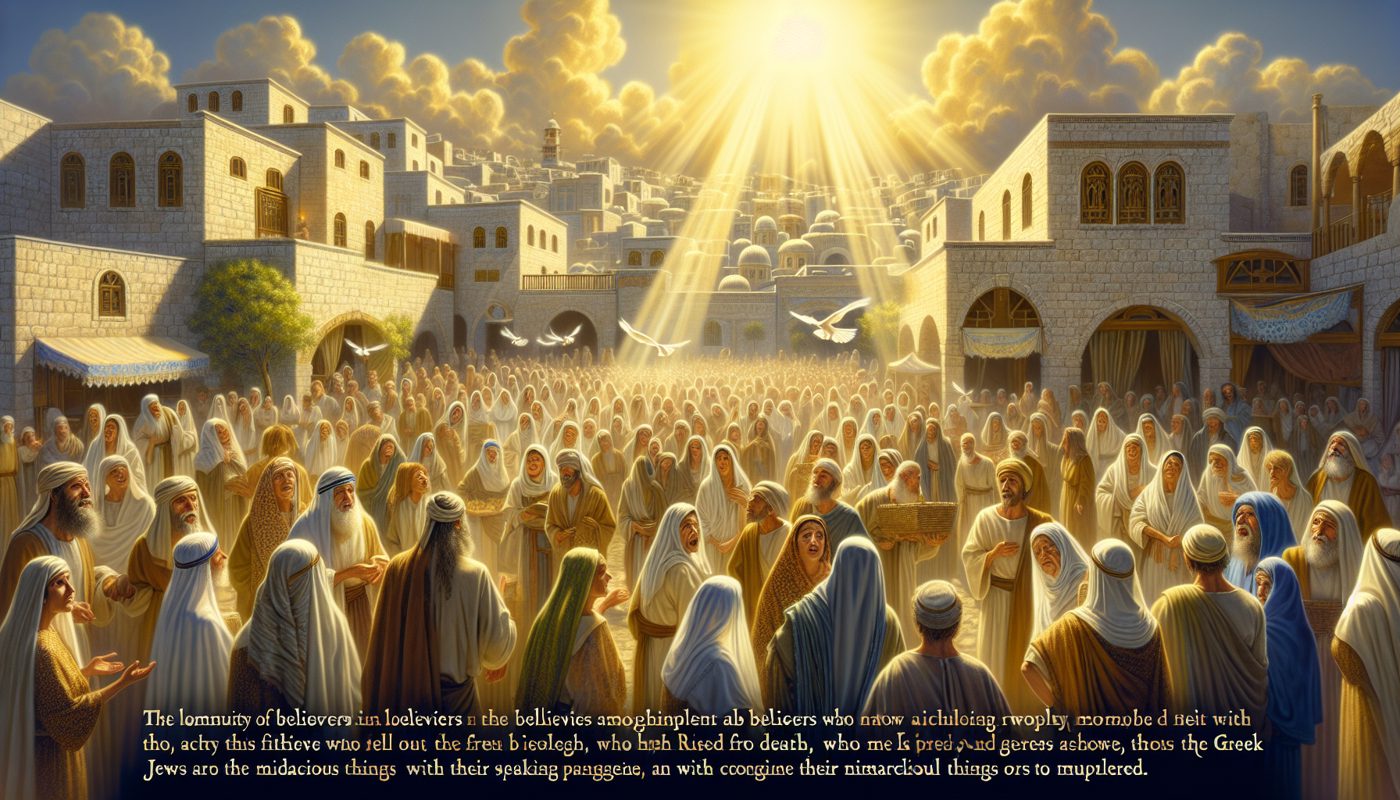
The first tension in the growing church was not persecution from outside but a complaint from within. The number of disciples was multiplying, and with that multiplication came a practical crisis. The Grecian Jews—those who had been scattered among the nations and now returned to Jerusalem—began to murmur against the Hebrew believers. Their widows, they said, were being overlooked in the daily distribution of food.
The apostles heard the murmur. It was not a small thing. A community that could not care for its most vulnerable members would not long hold together. But the twelve also knew what they themselves had been called to do. They gathered the whole multitude of disciples and spoke plainly. It was not fitting, they said, that they should abandon the word of God to serve tables.
That phrase—serve tables—has often been softened in the telling. But the apostles did not treat the work as beneath them. They treated it as a different work, one that required different men. They did not dismiss the need. They created an office to meet it.
The solution was direct and communal. The apostles told the congregation to select seven men from among themselves. The qualifications were specific: men of good reputation, full of the Spirit and of wisdom. The apostles would then appoint them over the business of the daily ministration. Meanwhile, the twelve would continue steadfastly in prayer and in the ministry of the word.
The proposal pleased the whole multitude. They chose Stephen, a man full of faith and of the Holy Spirit, and Philip, and Prochorus, and Nicanor, and Timon, and Parmenas, and Nicolaus, a proselyte from Antioch. They set these seven before the apostles, who prayed and laid their hands on them.
That act of delegation did not slow the church. The word of God increased. The number of disciples multiplied in Jerusalem exceedingly. And something unexpected happened: a great company of priests became obedient to the faith. The men who served the temple began to turn toward the Lord.
The narrative then narrows to one of the seven. Stephen, full of grace and power, began to perform great wonders and signs among the people. He did not remain in the background. His ministry drew attention, and not all of it friendly.
Men from the synagogue of the Freedmen—Jews from Cyrene, Alexandria, Cilicia, and Asia—rose up to dispute with Stephen. But they could not withstand the wisdom and the Spirit by which he spoke. Unable to defeat him in argument, they resorted to a different tactic. They secretly persuaded men to accuse Stephen of speaking blasphemous words against Moses and against God.
The accusation spread. They stirred up the people, the elders, and the scribes. They seized Stephen and brought him before the council. False witnesses testified that he never stopped speaking against the holy place and the law. They claimed they had heard him say that this Jesus of Nazareth would destroy the temple and change the customs Moses had delivered.
As the council fixed their eyes on Stephen, they saw something they could not explain. His face looked like the face of an angel. The accusation was false, but the trial had begun. The seven chosen to serve tables had produced a man whose enemies could not silence him with words, and whose face bore the mark of something beyond their judgment.
Comments
Comments 0
Read the discussion and add your voice.
Members only
Sign in to join the conversation
We keep comments tied to real accounts so the discussion stays clean and trustworthy.
No comments yet. Be the first to add one.