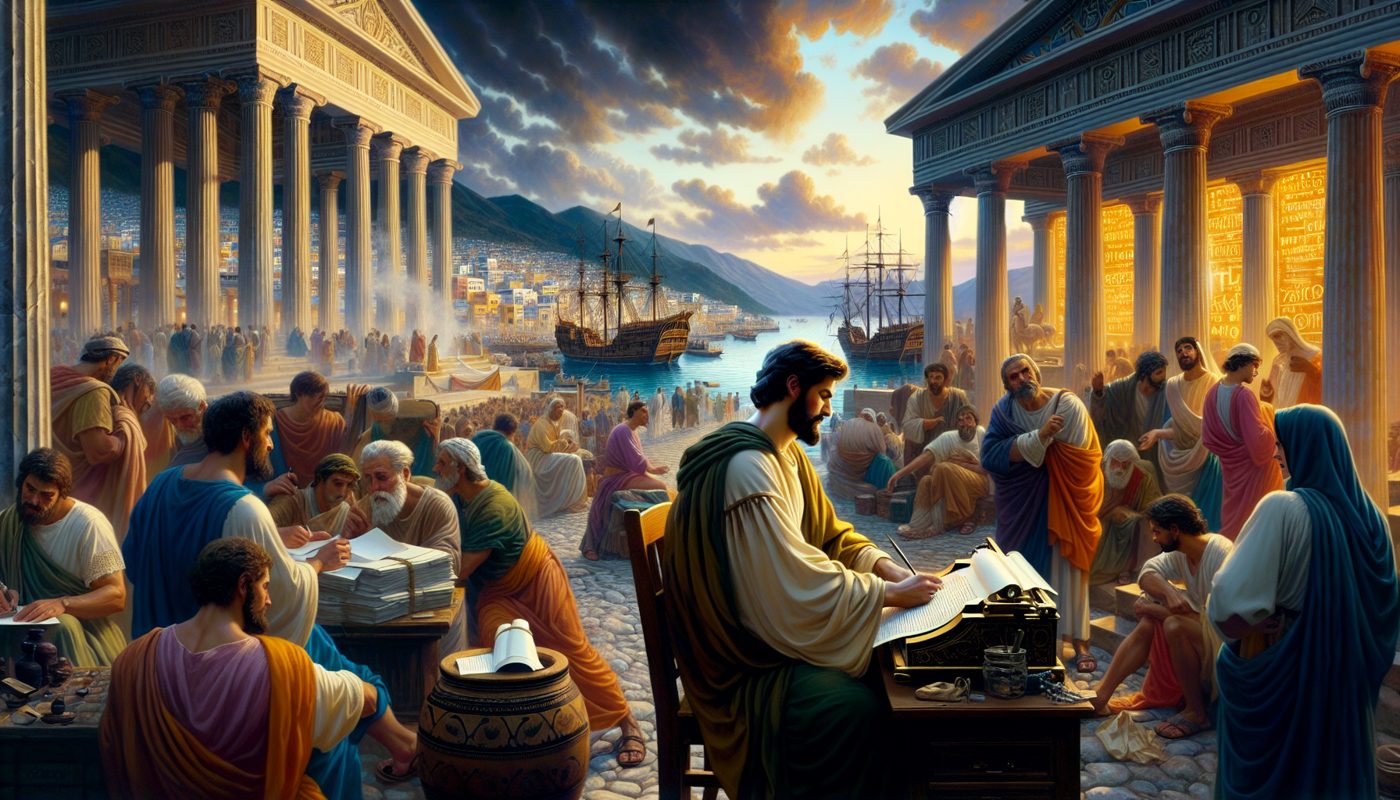
Paul opened the chapter not with a greeting but with a reminder. He made known to the Corinthians the gospel he had preached to them, the gospel they had received, the gospel by which they stood and by which they were being saved—if they held fast to the word he had preached, unless they had believed in vain. That gospel, he said, was of first importance: Christ died for sins according to the Scriptures, he was buried, he was raised on the third day according to the Scriptures, and he appeared to Cephas, then to the twelve, then to more than five hundred brothers at once, most of whom were still alive though some had fallen asleep, then to James, then to all the apostles, and last of all, as to one untimely born, he appeared to Paul himself.
Paul called himself the least of the apostles, not worthy to be called an apostle because he had persecuted the church of God. But by the grace of God he was what he was, and that grace had not been vain. He labored more abundantly than all the others—yet not he, but the grace of God with him. Whether it was he or they, he said, so they preached, and so the Corinthians believed.
Then Paul turned to the problem. If Christ was preached as raised from the dead, how could some among them say there is no resurrection of the dead? If there is no resurrection of the dead, he argued, then Christ has not been raised. And if Christ has not been raised, their preaching is vain, their faith is vain, and they are false witnesses of God, because they testified that God raised Christ when he did not raise him—if the dead are not raised. If the dead are not raised, Christ has not been raised, their faith is vain, they are still in their sins, and those who have fallen asleep in Christ have perished. If they have hoped in Christ only in this life, they are of all men most pitiable.
But now, Paul declared, Christ has been raised from the dead, the firstfruits of those who have fallen asleep. Since death came through a man, the resurrection of the dead also came through a man. In Adam all die, and in Christ all will be made alive, each in his own order: Christ the firstfruits, then those who are Christ's at his coming. Then comes the end, when he delivers the kingdom to God the Father, after abolishing all rule, authority, and power. He must reign until he has put all enemies under his feet. The last enemy to be abolished is death.
Paul quoted Scripture: God has put all things in subjection under Christ's feet. But when it says all things are subjected, the one who subjected all things to him is excepted. Then when all things are subjected to him, the Son himself will be subjected to the one who subjected all things to him, so that God may be all in all.
Paul pressed the logic further. If the dead are not raised, why are people baptized for the dead? Why do he and the others stand in jeopardy every hour? He protested by the boasting he had in Christ Jesus: he died daily. If he fought with beasts at Ephesus after the manner of men, what profit was it? If the dead are not raised, let them eat and drink, for tomorrow they die. But they were not to be deceived: evil companionships corrupt good morals. They were to awake to soberness righteously and not sin, for some had no knowledge of God—Paul said this to move them to shame.
Someone would ask, How are the dead raised? With what kind of body do they come? Paul called that person foolish. What is sown is not made alive unless it dies. What is sown is not the body that will be, but a bare grain—perhaps of wheat or some other kind. God gives it a body as he pleases, and to each seed a body of its own. All flesh is not the same flesh: there is flesh of men, flesh of beasts, flesh of birds, flesh of fish. There are celestial bodies and terrestrial bodies, with different glories. The sun has one glory, the moon another, the stars another—star differs from star in glory.
So it is with the resurrection of the dead. It is sown in corruption, raised in incorruption. It is sown in dishonor, raised in glory. It is sown in weakness, raised in power. It is sown a natural body, raised a spiritual body. If there is a natural body, there is also a spiritual body. As it is written, the first man Adam became a living soul; the last Adam became a life-giving spirit. The spiritual is not first, but the natural; then the spiritual. The first man is of the earth, earthy; the second man is of heaven. As the earthy man is, so are those who are earthy; as the heavenly man is, so are those who are heavenly. As they have borne the image of the earthy, they will also bear the image of the heavenly.
Paul told them a mystery: not all will sleep, but all will be changed—in a moment, in the twinkling of an eye, at the last trumpet. The trumpet will sound, the dead will be raised incorruptible, and they will be changed. This corruptible must put on incorruption, this mortal must put on immortality. When that happens, the saying that is written will come to pass: Death is swallowed up in victory. Where, O death, is your victory? Where, O death, is your sting? The sting of death is sin, and the power of sin is the law. But thanks be to God, who gives them the victory through the Lord Jesus Christ.
Therefore, Paul concluded, his beloved brethren were to be steadfast, unmovable, always abounding in the work of the Lord, knowing that their labor is not vain in the Lord.
Comments
Comments 0
Read the discussion and add your voice.
Members only
Sign in to join the conversation
We keep comments tied to real accounts so the discussion stays clean and trustworthy.
No comments yet. Be the first to add one.