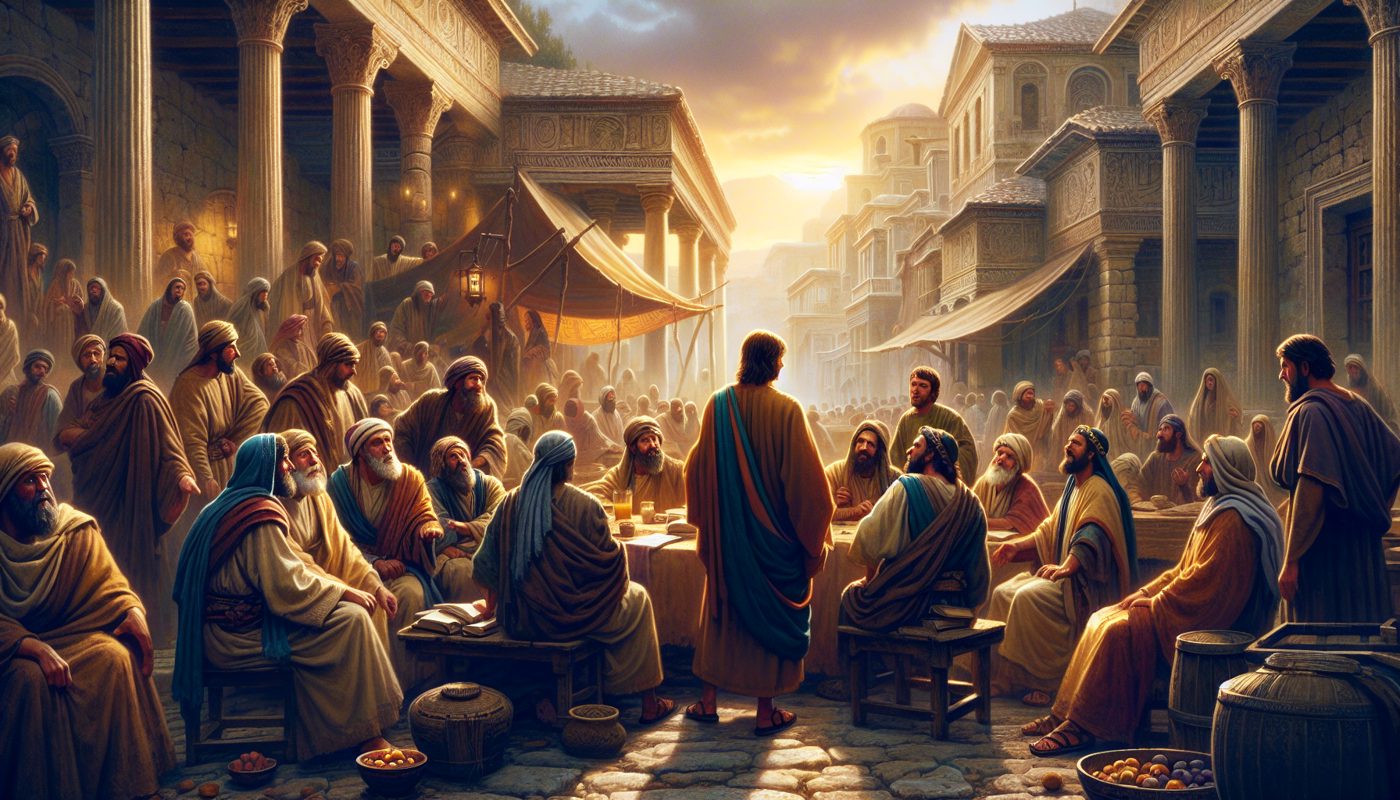
The Corinthian believers had divided themselves into factions, each claiming allegiance to a different teacher. Some said they followed Paul, others Apollos, still others Cephas. Paul refused to indulge this. He told them plainly that they were acting like ordinary people, not like people shaped by the Spirit. Jealousy and strife among them proved it. They were still infants, unable to handle solid food, still drinking milk.
Paul did not flatter them. He said he had fed them with milk because they could not bear anything more. And even now, he wrote, they were not able. The problem was not that they lacked information. It was that they were still carnal, still walking by the standards of the world. Their quarrels over which teacher was greatest were evidence enough.
He asked a direct question: What is Apollos? What is Paul? He answered it himself. They were servants, ministers through whom the Corinthians had believed. Each one worked as the Lord gave him the ability. Paul planted, Apollos watered, but God gave the growth. The one who plants and the one who waters are nothing compared to the God who makes things grow.
Paul and Apollos were not rivals. They were fellow workers, and the Corinthians were God's field, God's building. Paul had laid the foundation as a wise master builder, by the grace given to him. Someone else was building on that foundation. But every builder had to be careful how he built.
The foundation was already laid. No one could lay another. That foundation was Jesus Christ. On top of that foundation, a builder could use gold, silver, costly stones, or he could use wood, hay, straw. The quality of each man's work would be tested on the day when fire would reveal what it was made of.
If the work survived the fire, the builder would receive a reward. If the work burned up, the builder would suffer loss. He himself would be saved, but only as through fire. Paul was not speaking about salvation by works. He was speaking about the judgment of what believers build with their lives and teaching after they are saved.
Then Paul turned the image. He told the Corinthians that they themselves were God's temple. The Spirit of God lived in them. If anyone destroyed that temple, God would destroy him. The temple was holy, and that is what the Corinthians were. The warning was severe, and it was directed at anyone who would tear down the community that belonged to God.
Paul warned them not to deceive themselves. If anyone among them thought he was wise in this age, he needed to become a fool so that he could become truly wise. The wisdom of this world is foolishness to God. Paul quoted Scripture: God catches the wise in their own craftiness. The Lord knows that the reasoning of the wise is empty.
So no one should boast in human leaders. Paul told them that everything belongs to them. Whether Paul or Apollos or Cephas, whether the world or life or death, whether the present or the future, everything belongs to them. And they belong to Christ, and Christ belongs to God. The divisions made no sense. The teachers were not the owners of the believers. The believers owned the teachers, because everything was theirs in Christ.
The chapter ends with that sweeping claim. All things are yours. Not because the Corinthians were powerful, but because they were in Christ, and Christ was in God. The factions that had seemed so important were trivial. The foundation was the only thing that mattered, and the fire would test everything else.
Comments
Comments 0
Read the discussion and add your voice.
Members only
Sign in to join the conversation
We keep comments tied to real accounts so the discussion stays clean and trustworthy.
No comments yet. Be the first to add one.