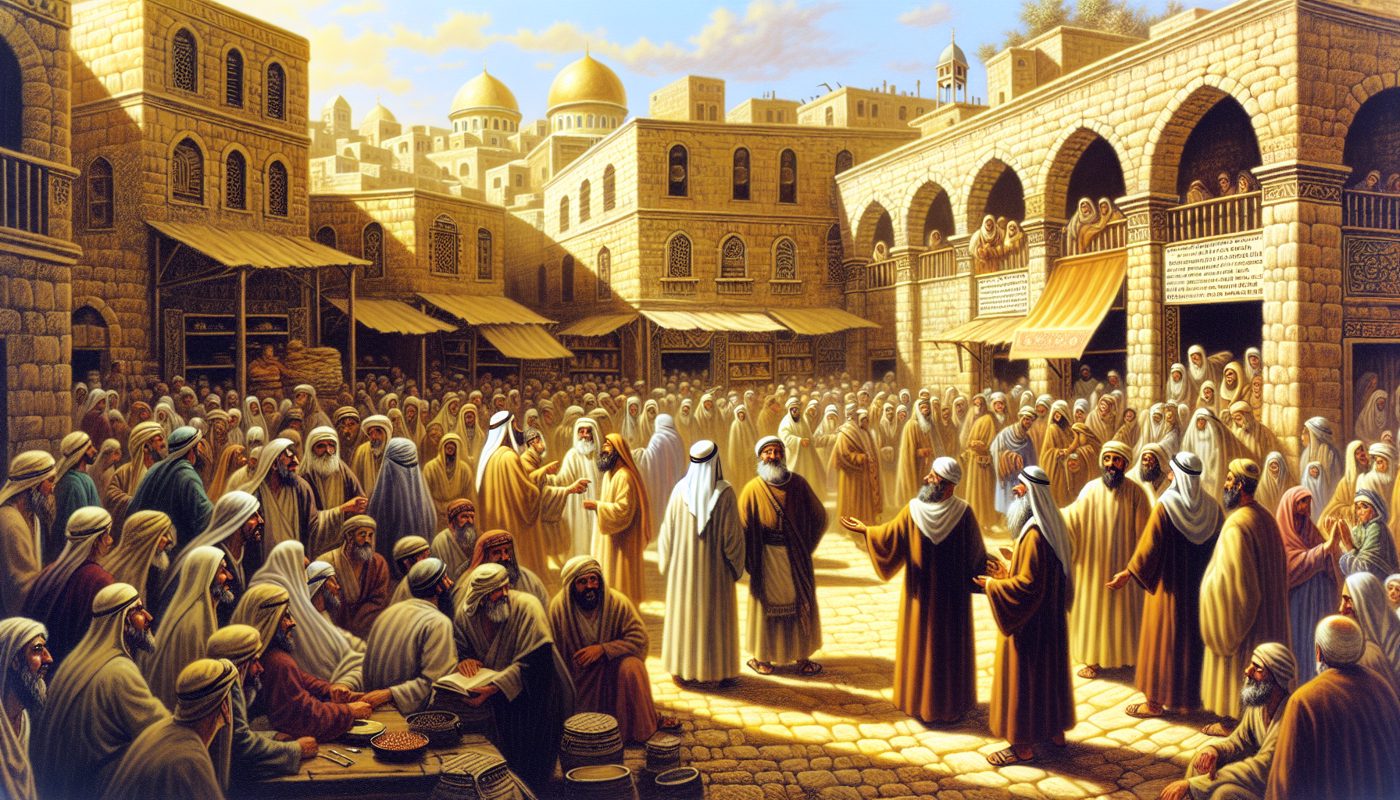
The dispute that reached Antioch was not a matter of custom but of salvation. Certain men from Judea had arrived teaching the Gentile believers that unless they were circumcised according to the law of Moses, they could not be saved. Paul and Barnabas did not let this pass quietly. They engaged in no small dissension and questioning with these men, and the church in Antioch decided to send Paul, Barnabas, and some others up to Jerusalem to lay the question before the apostles and elders.
As they traveled through Phoenicia and Samaria, Paul and Barnabas did not keep silent about what had happened. They declared the conversion of the Gentiles, and the report caused great joy among all the brethren along the way. The journey was not simply a travelogue; it was a public testimony that the work among the Gentiles was real and that God had been active in it.
When they arrived in Jerusalem, they were received by the church, the apostles, and the elders. Paul and Barnabas rehearsed all that God had done with them. But then certain believers who belonged to the sect of the Pharisees stood up and insisted that it was necessary to circumcise the Gentile converts and to charge them to keep the law of Moses. The matter was not settled by emotion or by past friendship. The apostles and elders gathered to consider it.
After much questioning, Peter rose and reminded them that God had made a choice among them long ago: that by his mouth the Gentiles should hear the gospel and believe. God, who knows the heart, bore witness to the Gentiles by giving them the Holy Spirit just as he had given it to the Jewish believers. He made no distinction between them, cleansing their hearts by faith. Peter asked why they would put God to the test by placing a yoke on the disciples that neither their fathers nor they themselves had been able to bear. He concluded plainly: they believed they would be saved through the grace of the Lord Jesus, in the same manner as the Gentiles.
The whole multitude fell silent. Then they listened to Barnabas and Paul as they rehearsed the signs and wonders God had done among the Gentiles through them. The silence was not empty; it was the quiet of men who were being forced to reconsider what they thought they knew.
After they had finished, James spoke. He addressed them as brethren and referred to Peter's report as Symeon's account of how God first visited the Gentiles to take out of them a people for his name. James then quoted the prophets, citing Amos, to show that the restoration of David's fallen tabernacle would include the Gentiles seeking the Lord. His judgment was clear: they should not trouble those Gentiles who were turning to God. Instead, they should write to them, instructing them to abstain from the pollutions of idols, from fornication, from what is strangled, and from blood.
The apostles and the elders, with the whole church, decided to choose men from among them and send them to Antioch with Paul and Barnabas. They selected Judas called Barsabbas and Silas, chief men among the brethren. They wrote a letter addressing the Gentile brethren in Antioch, Syria, and Cilicia. The letter stated plainly that certain men who had gone out from them had troubled the Gentiles with words that subverted their souls, and that those men had no commandment from the apostles. The letter declared that it seemed good to the Holy Spirit and to them to lay no greater burden than these necessary things: abstaining from things sacrificed to idols, from blood, from things strangled, and from fornication.
When the delegation arrived in Antioch, they gathered the multitude and delivered the letter. The Gentiles read it and rejoiced at the consolation it brought. Judas and Silas, who were themselves prophets, exhorted the brethren with many words and confirmed them. After spending some time there, they were dismissed in peace to return to those who had sent them.
Paul and Barnabas stayed on in Antioch, teaching and preaching the word of the Lord along with many others. But after some days, Paul proposed to Barnabas that they return and visit the brethren in every city where they had proclaimed the word, to see how they fared. Barnabas wanted to take John Mark with them, but Paul did not think it good to take the man who had withdrawn from them in Pamphylia and had not continued in the work. The sharp contention that arose between them was real, and they parted ways. Barnabas took Mark and sailed to Cyprus. Paul chose Silas and went forth, commended by the brethren to the grace of the Lord. He went through Syria and Cilicia, confirming the churches.
Comments
Comments 0
Read the discussion and add your voice.
Members only
Sign in to join the conversation
We keep comments tied to real accounts so the discussion stays clean and trustworthy.
No comments yet. Be the first to add one.