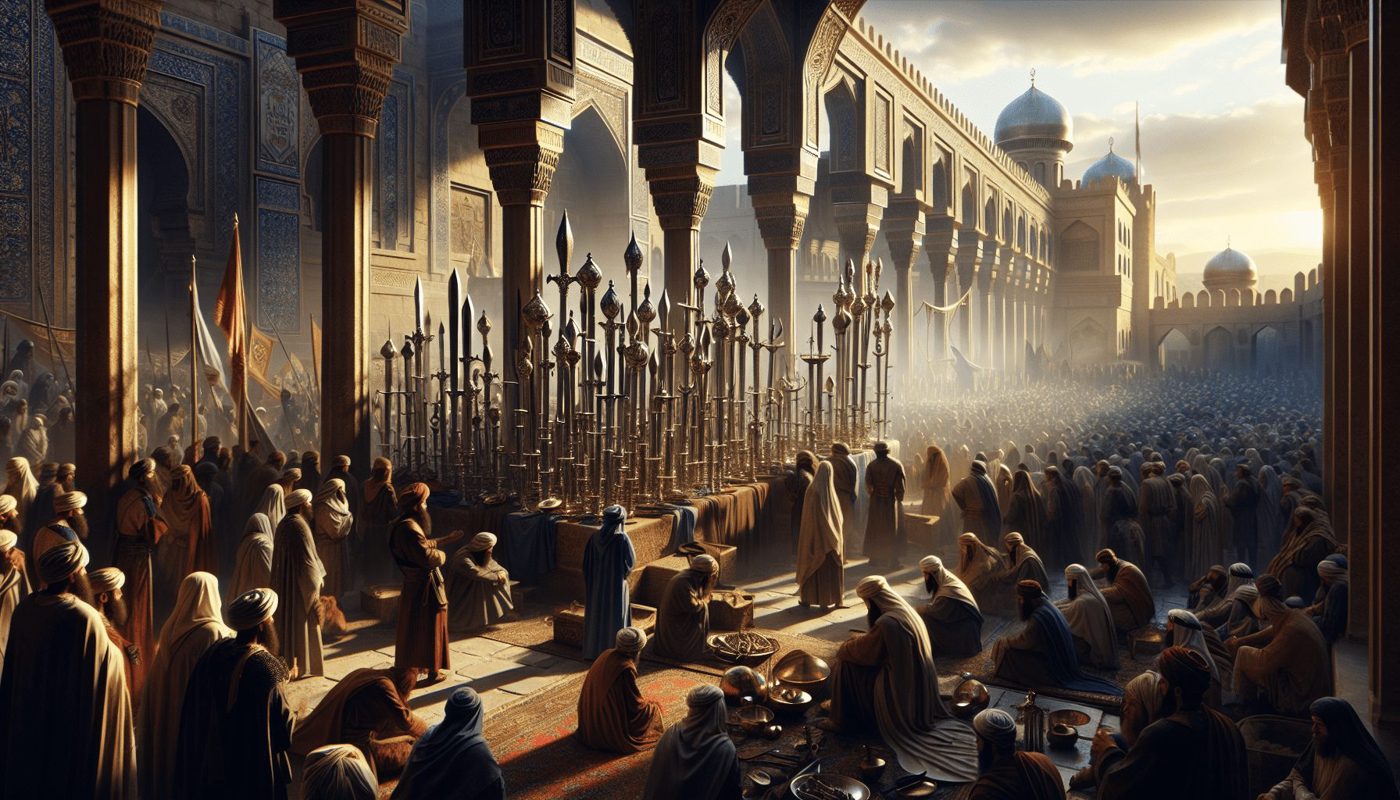
The thirteenth day of Adar arrived, and the Jews gathered in their cities across all one hundred twenty-seven provinces of Ahasuerus. The king’s decree had turned the day from one of destruction into one of defense. The enemies of the Jews had hoped to rule over them, but the opposite happened: the Jews ruled over those who hated them. No man could withstand them, for fear of them had fallen on all the peoples.
The princes, satraps, governors, and all who did the king’s business helped the Jews. They did this because the fear of Mordecai had fallen on them. Mordecai had grown great in the king’s house, and his fame spread through every province. The man Mordecai waxed greater and greater.
The Jews struck their enemies with the sword, with slaughter and destruction. They did what they wished to those who hated them. In Shushan the palace alone, they killed five hundred men. They also killed the ten sons of Haman: Parshandatha, Dalphon, Aspatha, Poratha, Adalia, Aridatha, Parmashta, Arisai, Aridai, and Vaizatha. But on the spoil they did not lay their hands.
The king said to Esther, “The Jews have slain five hundred men in Shushan the palace and the ten sons of Haman. What have they done in the rest of the provinces? What is your petition? It will be granted. What is your further request? It will be done.”
Esther answered, “If it pleases the king, let the Jews in Shushan do tomorrow also according to this day’s decree. And let Haman’s ten sons be hanged on the gallows.” The king commanded it. A decree was given out in Shushan, and they hanged Haman’s ten sons.
On the fourteenth day of Adar, the Jews in Shushan gathered again and killed three hundred men. Again, they did not lay their hands on the spoil. The other Jews in the provinces had gathered on the thirteenth day, stood for their lives, and had rest from their enemies. They killed seventy-five thousand of those who hated them, but they did not touch the spoil.
On the fourteenth day, the Jews in the provinces rested and made it a day of feasting and gladness. But the Jews in Shushan assembled on the thirteenth and fourteenth, and rested on the fifteenth, making that a day of feasting and gladness. Therefore the Jews of the villages, those who lived in unwalled towns, kept the fourteenth day of Adar as a day of gladness, feasting, and sending portions to one another.
Mordecai wrote these things down and sent letters to all the Jews in every province, near and far. He commanded them to keep the fourteenth and fifteenth days of Adar every year. These were the days when the Jews had rest from their enemies, the month that was turned from sorrow to gladness and from mourning into a good day. They were to make them days of feasting, gladness, sending portions to one another, and gifts to the poor.
The Jews undertook to do as they had begun and as Mordecai had written. They remembered that Haman the Agagite, the enemy of all the Jews, had plotted against them and cast Pur—that is, the lot—to destroy them. But when the matter came before the king, he commanded by letters that Haman’s wicked device should return on his own head, and that he and his sons should be hanged on the gallows.
Because of this, they called these days Purim, after the name Pur. The Jews ordained and took upon themselves and their seed and all who joined them that they would keep these two days every year according to the writing and the appointed time. These days were to be remembered and kept throughout every generation, every family, every province, and every city. The days of Purim were not to fail from among the Jews, nor the remembrance of them perish from their seed.
Esther the queen, daughter of Abihail, and Mordecai the Jew wrote with all authority to confirm this second letter of Purim. Mordecai sent letters to all the Jews in the one hundred twenty-seven provinces of Ahasuerus with words of peace and truth, to confirm these days of Purim in their appointed times, as they had ordained for themselves and their seed in the matter of the fastings and their cry. The commandment of Esther confirmed these matters of Purim, and it was written in the book.
Comments
Comments 0
Read the discussion and add your voice.
Members only
Sign in to join the conversation
We keep comments tied to real accounts so the discussion stays clean and trustworthy.
No comments yet. Be the first to add one.