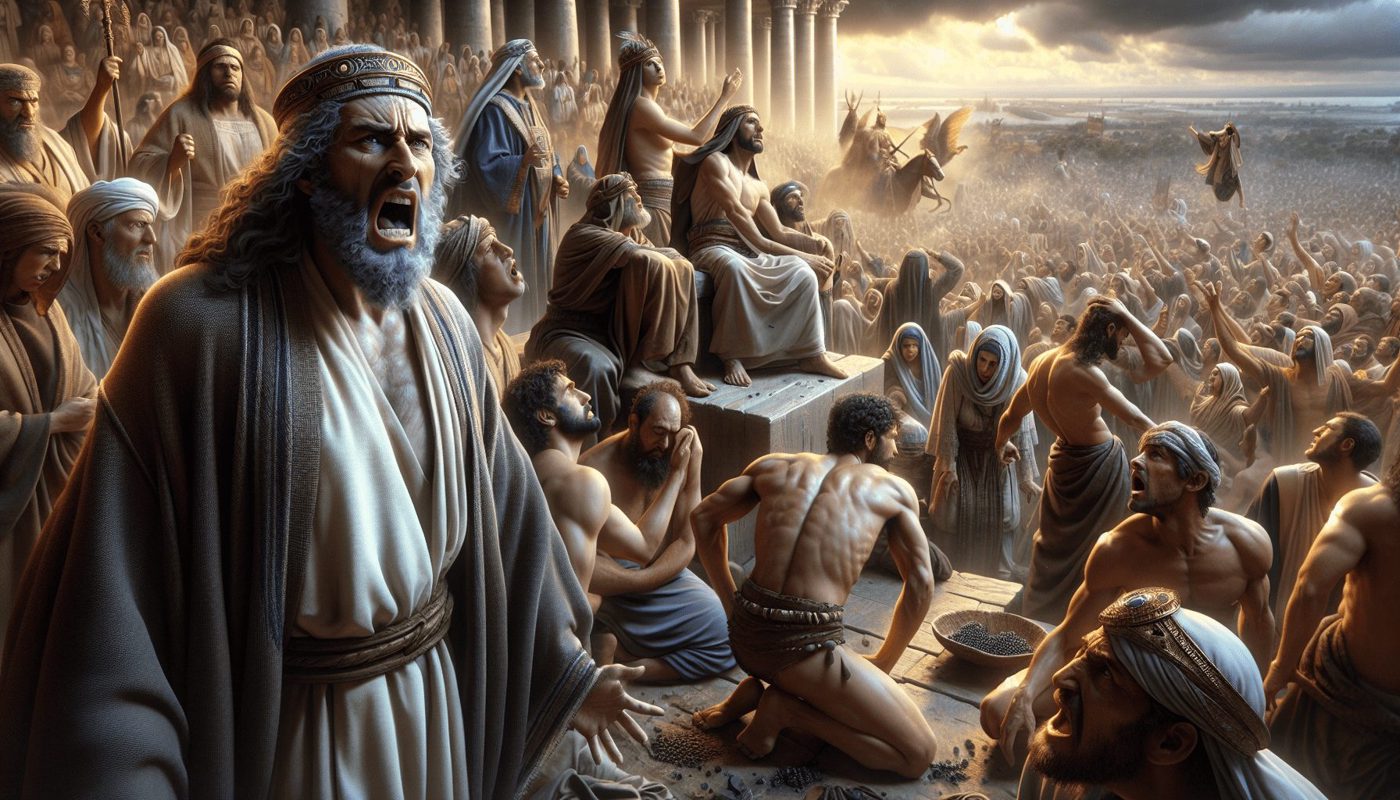
Jonah was angry. The chapter opens with that blunt fact: it displeased Jonah exceedingly, and he was angry. The great city had repented, the Lord had relented, and the prophet who had delivered the warning was not relieved or grateful. He was furious.
Jonah prayed, but his prayer was not a plea for understanding or a confession of weakness. It was a complaint. He told the Lord that this was exactly what he had feared when he was still in his own country. He had fled to Tarshish, he said, because he knew the Lord was a gracious God, merciful, slow to anger, abundant in lovingkindness, and one who relents from sending calamity. Jonah knew the character of the Lord, and he resented it.
He wanted to die. He asked the Lord to take his life, saying it was better for him to die than to live. The Lord answered with a question: Do you do well to be angry? Jonah did not answer. He walked out of the city, sat down on the east side, built a booth for himself, and sat in its shade, waiting to see what would become of Nineveh. He still wanted to watch the city fall.
The Lord prepared a plant, a gourd, and made it grow up over Jonah to shade his head and deliver him from his discomfort. Jonah was exceedingly glad because of the gourd. The chapter does not say he thanked the Lord. It says he was glad for the plant.
Then the Lord prepared a worm. The next morning, the worm attacked the gourd, and it withered. Then the Lord prepared a sultry east wind. The sun beat on Jonah's head, and he fainted. Again he asked to die, saying it was better for him to die than to live.
The Lord asked Jonah another question: Do you do well to be angry for the gourd? Jonah answered this time. He said he did well to be angry, even to death. He was willing to die over a withered plant that had shaded him for a single day.
The Lord drew the comparison. Jonah had regard for the gourd, for which he had not labored and which he had not made grow. It came up in a night and perished in a night. Should the Lord not have regard for Nineveh, that great city, with more than one hundred twenty thousand persons who could not discern between their right hand and their left hand, and also much cattle?
The chapter ends there. The Lord does not answer his own question. He does not explain further. He does not rebuke Jonah beyond the question. The prophet is left sitting in the heat, angry about a plant, while the Lord points to a city full of people who do not know their right hand from their left, and to the cattle as well.
The argument is not about whether Jonah had a right to be angry. The argument is about what deserves regard. Jonah regarded a plant that cost him nothing. The Lord regarded a city that cost him nothing but his own compassion.
Comments
Comments 0
Read the discussion and add your voice.
Members only
Sign in to join the conversation
We keep comments tied to real accounts so the discussion stays clean and trustworthy.
No comments yet. Be the first to add one.