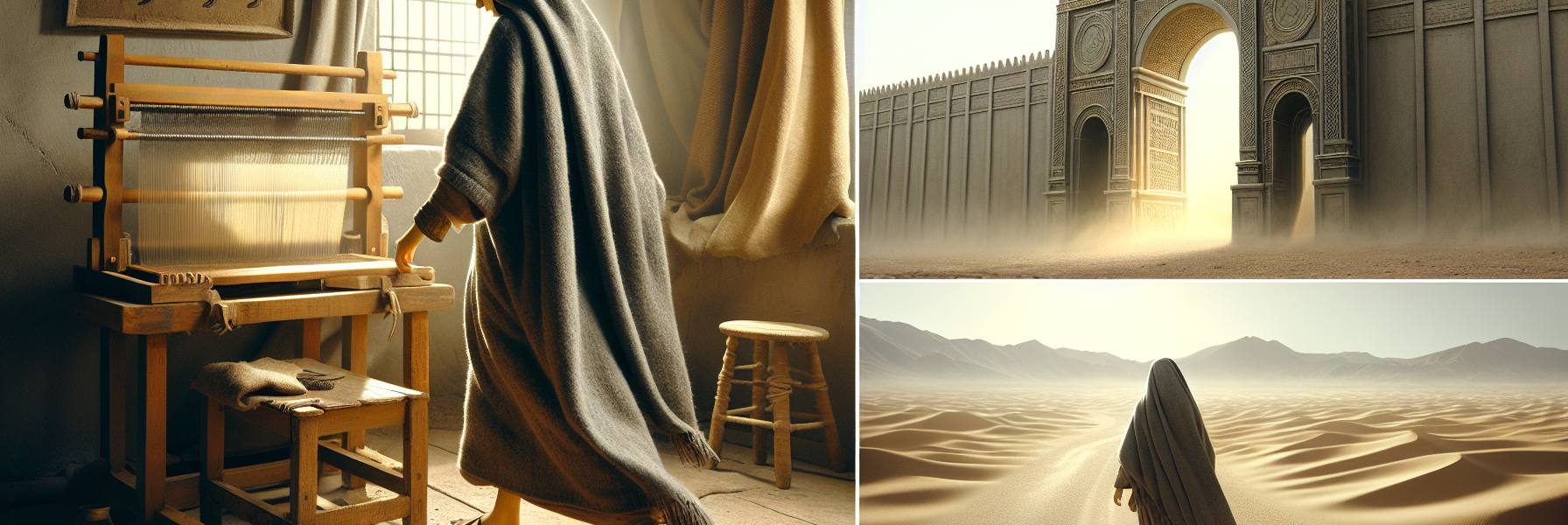

The dust of the road was a fine, pale gold, the color of forgotten things. It coated Shilha’s sandals and the hem of her grey woolen robe as she walked the path back to the city. For fifty years, this walk had been her penance. Not a mandated one, but one she had carved for herself from the granite of her own grief. The city gates, once a symbol of community, were to her merely a mouth that swallowed her each morning and expelled her each evening, unchanged.
Her home was a single room at the edge of the potters’ quarter. It was tidy, quiet, and empty in a way that echoed. A small loom sat in the corner, a half-finished piece of rough cloth waiting for hands that had lost their conviction. The silence was her most constant companion. It wasn’t peaceful; it was the silence of a house where no footstep ever answered, where no young voice ever called, where the space set aside for a cradle had long ago been filled with a storage jar for grain. She was the barren one. The word had defined her, shaped the sideways glances in the marketplace, the hushed conversations that stilled when she approached. It was a fact as immovable as the hills surrounding Jerusalem.
That evening, as she lit her single lamp, the flame sputtered and cast frantic shadows. A wind had picked up, a *shamal* from the east, hot and insistent. It whistled through a crack in her shutter, a mournful sound. She went to secure it, her hand on the dry wood, and looked out. The sky was a turbulent tapestry of purple and bruised orange. It felt like a pressure, not in the air, but in her bones. A line from a prophet, heard decades ago in the crowded Temple court, surfaced unbidden in her mind: *“For a brief moment I forsook you…”* She shook her head, as if to dislodge a fly. Prophecy was for nations, for Jerusalem itself, not for the cramped sorrow of a single barren woman.
Sleep, when it came, was thin and filled with dreams of widening cracks in dry earth.
The next day, the market was unusually agitated. Talk was of returning exiles, of caravans from Babylon snaking through the passes. A man with a northern accent was selling dates, his voice booming over the din. As Shilha examined some thread, she overheard two elders speaking in low, urgent tones.
“It is as the word said,” one murmured, his beard wagging. “The afflicted city, storm-tossed and not comforted. That is our Zion.”
“And the promise?” the other asked.
“Lengthen your cords, strengthen your stakes… for you will spread abroad. Your descendants will dispossess nations.”
Shilha’s hand, holding a skein of blue yarn, went still. *Descendants.* The word was a thorn. She moved away, but the phrases clung to her like burrs. *“For you will forget the shame of your youth… For your Maker is your husband…”* They swirled in her head, disconnected, accusatory, tantalizing.
Weeks passed, and the strange unrest within her did not. It was a low, persistent ache, different from the old, familiar numbness of her barrenness. One afternoon, she found herself not at her loom, but clearing a corner of her room. She moved the grain jar, sweeping the floor beneath it with a violent, inexplicable energy. She did not know why.
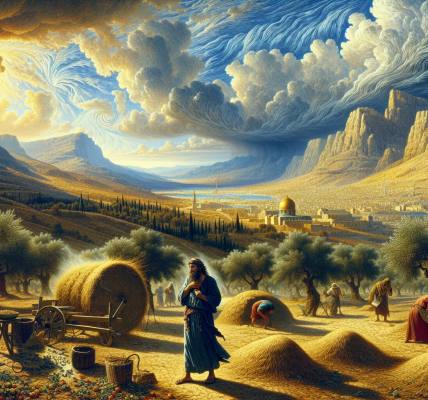
The rains came then, the latter rains, gentle and soaking. They washed the gold dust from the roads and turned the world a hopeful, gleaming green. One morning, in a quiet moment after the rain, Shilha stood at her doorway. A brilliant, complete rainbow arced over the Mount of Olives, its colors so vivid they seemed painted on the slate-grey retreating clouds. And it was as if the voice that had been whispering in fragments in her soul for months suddenly spoke a whole sentence, clear and direct, not in her ears but in the very center of her being.
*This is the covenant of my peace.*
It was not an audible sound. It was a knowing. A deep, tectonic shift.
Tears came, not the hot, bitter tears of loneliness, but a silent, steady stream that felt like a release of something ancient and dammed up. The shame of her youth—the years of hoping, pleading, and finally hardening—it didn’t vanish, but it suddenly seemed small, a distant country she had left. Her Maker… her husband. The words were no longer a theological concept for a nation, but a devastating, personal reality. Her emptiness had not been a punishment, but a prelude. Her solitary existence was not her final story.
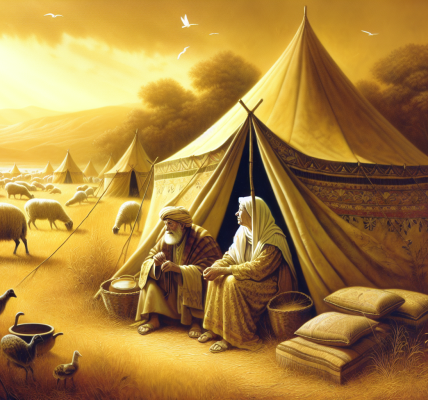
She looked at the empty corner she had cleared. A wild, impossible thought, fragrant as myrrh, bloomed in her mind. She saw, not with her eyes, but with a hope reforged in a hidden fire, children there. Not one, but many. Laughter where silence had reigned. She saw her small room as a tent, its canvas walls straining, needing longer cords, stronger stakes to hold the joy that was to come.
Shilha walked back into her house. Her movements were different. The weight was gone. She picked up the abandoned cloth on her loom. It was serviceable, grey. With deliberate hands, she selected a new weft thread from her basket—a vibrant crimson, the color of covenant, of a vow written not on stone but on the heart. She began to weave it in.
Outside, the city of Jerusalem, still partly in ruins, stirred with the sounds of rebuilding. Stones were being set upon stones. For the first time, Shilha heard the noise not as a disruption, but as a symphony. It was the sound of foundations being relaid with sapphires, battlements made of rubies, gates of crystal. A city built not just of limestone, but of mercy.
Her story was being rewritten. The barren one was now the mother of a multitude, her tent pegs driven deep into the promise, her desolate places too narrow for the children who would come. The mountains of her sorrow had departed; the hills of her shame had been removed. And the peace of it, a deep, settling peace like the still waters of Siloam after the rain, was the unwavering knowledge that it would not be shaken.