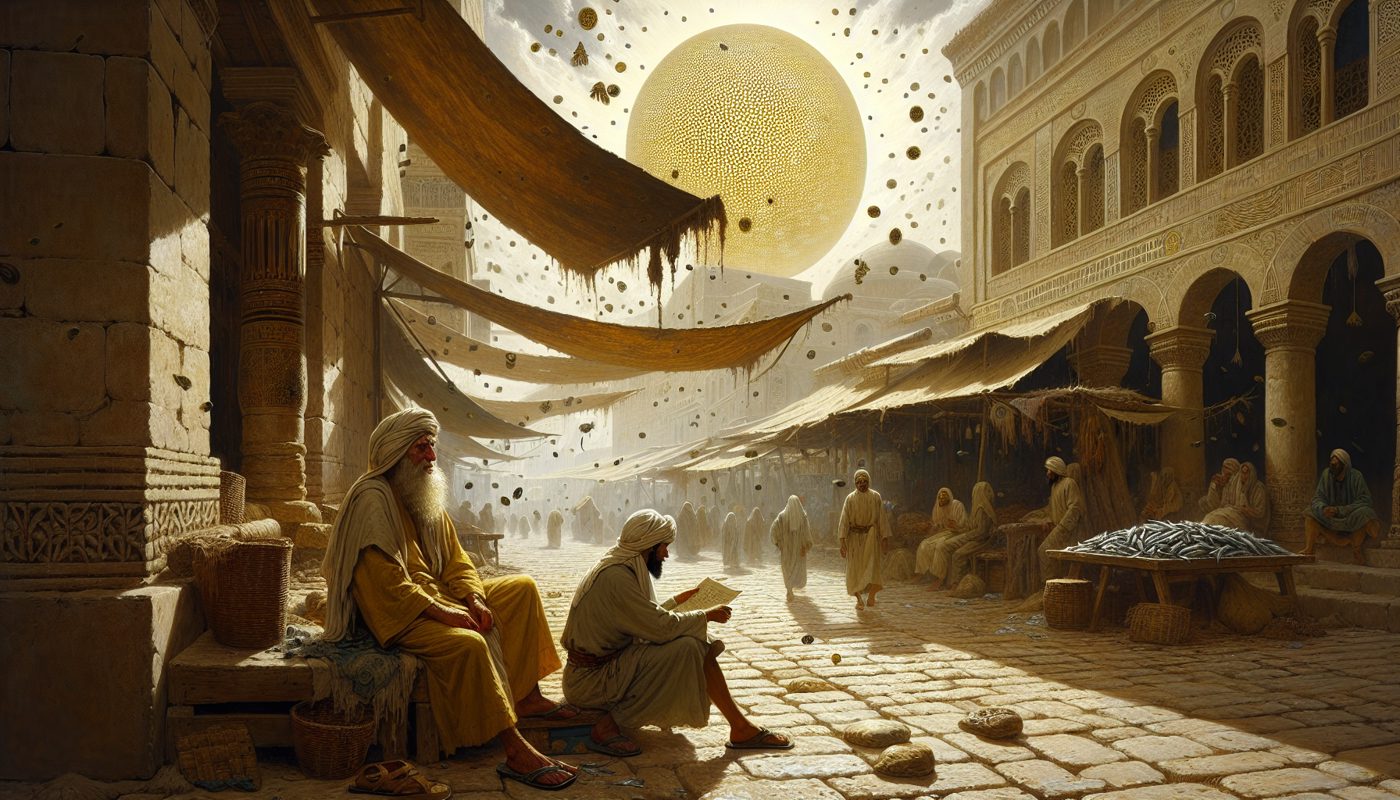
Ecclesiastes 10 opens with an image that is both homely and devastating: a few dead flies spoil the perfumer's oil. The point is not the flies themselves but the disproportion between cause and effect. A small piece of folly, the Teacher says, outweighs wisdom and honor. The entire chapter is a collection of observations about how easily things go wrong, how quickly the careful work of the wise is undone by the careless or the corrupt.
The wise man's heart is at his right hand, the fool's at his left. This is not a literal geography of the body but a metaphor for readiness and orientation. The wise man is prepared, his faculties ordered toward what is good. The fool, by contrast, cannot even walk down the street without betraying his condition. When he walks by the way, his understanding fails him, and he announces to everyone that he is a fool. The chapter is blunt: folly is not a private failing but a public spectacle.
Yet the Teacher is not simply moralizing. He has seen an evil under the sun, an error that proceeds from the ruler. Folly is set in great dignity, while the rich sit in a low place. He has seen servants on horses and princes walking like servants on the earth. The world is upside down. Authority does not guarantee wisdom, and high position does not protect against absurdity. The chapter does not explain why this happens; it simply records the observation.
The advice that follows is practical and hard-won. If the spirit of a ruler rises up against you, do not leave your post. Gentleness allays great offenses. This is not flattery but survival. The wise know when to hold their ground quietly and when to speak softly. The fool, by contrast, multiplies words, and his talk ends in mischievous madness. He talks endlessly about what will happen, but no one knows what shall be, and no one can tell him what comes after.
The Teacher turns to the dangers of ordinary work. He who digs a pit may fall into it. He who breaks through a wall may be bitten by a serpent. He who hews stones may be hurt by them. He who cleaves wood is endangered. The world is full of hidden hazards, and the wise do not pretend otherwise. They sharpen their tools before they work. If the iron is blunt and one does not whet the edge, then he must put out more strength. Wisdom is profitable to direct, not because it eliminates risk but because it reduces unnecessary effort and injury.
The chapter then shifts to the condition of the land. Woe to you, O land, when your king is a child and your princes eat in the morning. Happy are you, O land, when your king is the son of nobles and your princes eat at the proper time, for strength and not for drunkenness. The contrast is not about age but about maturity and discipline. A child-king lacks judgment; princes who feast at dawn are not governing but indulging. A land suffers under such rule. But when those in authority eat for strength, the land is blessed.
Slothfulness brings its own ruin. By slothfulness the roof sinks in, and through idleness of the hands the house leaks. The image is concrete: a neglected roof collapses, a leak goes unrepaired, and the whole house decays. The Teacher does not romanticize poverty or excuse laziness. He sees the connection between neglect and disaster.
Money, he says, answers all things. This is not an endorsement of greed but a recognition of how the world works. A feast is made for laughter, wine makes life glad, but money is what makes the feast possible. The Teacher is not cynical; he is realistic. He knows that resources matter and that pretending otherwise is foolish.
The chapter ends with a warning that sounds almost paranoid but is rooted in experience. Do not revile the king, not even in your thoughts. Do not revile the rich in your bedchamber. For a bird of the heavens will carry the voice, and that which has wings will tell the matter. The point is not that God is listening in a petty way but that secrets have a way of leaking. Walls have ears. Words spoken in private can become public, and the consequences can be severe. The wise know when to keep silent.
Ecclesiastes 10 does not offer a system or a solution. It offers a series of sharp, unsentimental observations about how folly works, how power misaligns, and how the world punishes carelessness. The Teacher has seen too much to be naive. He knows that a little folly can ruin a reputation, that a bad ruler can waste a nation, and that a careless word can destroy a life. But he also knows that wisdom is profitable to direct, that gentleness allays offenses, and that sharpening the iron saves strength. The chapter is not a lament but a manual for those who want to live without making things worse than they already are.
Comments
Comments 0
Read the discussion and add your voice.
Members only
Sign in to join the conversation
We keep comments tied to real accounts so the discussion stays clean and trustworthy.
No comments yet. Be the first to add one.