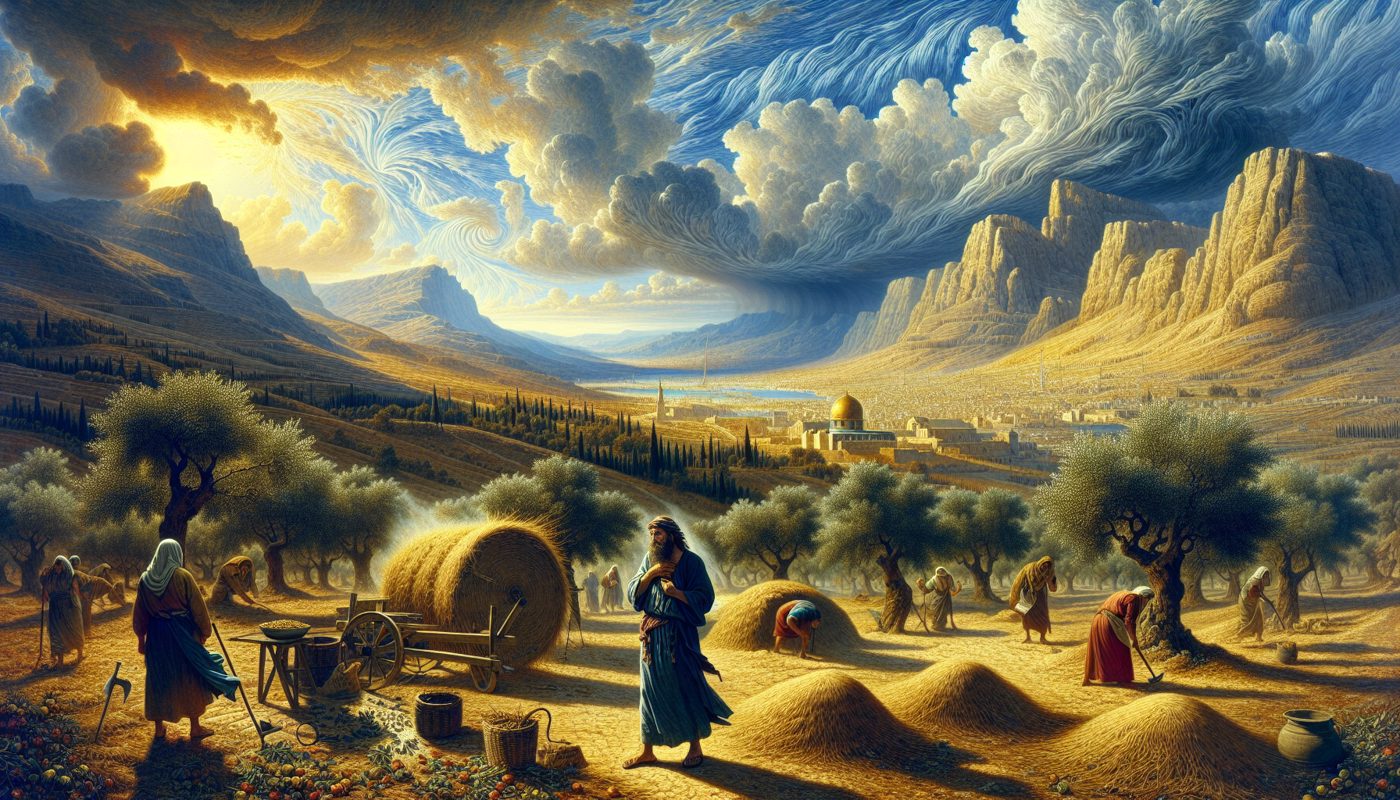
The psalm does not begin with a prayer. It begins with a statement of fact about the Lord and about those who trust him. They are like Mount Zion itself: immovable, permanent. The image is not sentimental. Mount Zion in this song is a specific piece of stone and earth, a hill that has stood through sieges, famines, and the tramp of armies. The psalmist does not say the trusters are safe from attack. He says they cannot be moved. That is a different claim.
The second verse expands the image. The mountains are round about Jerusalem. The psalmist looks outward from the city and sees the ridges that enclose it. He does not name them. He does not need to. The point is the circle. The Lord surrounds his people the way those hills surround the city. Not from one side only. From every side. Now and forever. The geography of the psalm is not decorative. It is the argument.
Then the psalm shifts. The sceptre of wickedness. That phrase lands with a different weight. The mountains are silent. The sceptre is active. It is a rod of rule, a symbol of authority. The psalmist says this sceptre will not rest upon the lot of the righteous. The word “rest” matters. A sceptre that does not rest is a sceptre that cannot settle. It may strike. It may threaten. But it will not stay. The psalmist gives the reason: so that the righteous do not put forth their hands to iniquity. The pressure of oppression is real. The psalmist knows that prolonged wicked rule corrupts even the upright. The promise is not that the sceptre will never appear. The promise is that it will not stay long enough to make the righteous reach for evil as a survival tool.
The psalmist prays next. Do good, O Lord, to those who are good, to those who are upright in their hearts. This is not a general blessing on the virtuous. It is a specific petition for the ones who have held steady under the sceptre. The upright heart is the heart that has not reached for iniquity. The psalmist asks the Lord to match his goodness to their goodness. That is a risky prayer. It assumes that the Lord sees the heart and that he will act accordingly.
Then the turn. Those who turn aside to their crooked ways. The psalmist does not describe them as enemies from outside. They are people who have twisted off the path. They are not the sceptre-bearers. They are the ones who bent under the pressure. The Lord will lead them forth with the workers of iniquity. The same Lord who surrounds his people like mountains will expose the crooked and lead them out to face the judgment they share with the wicked. The psalm does not say how or when. It simply states the outcome.
The final line is a benediction. Peace be upon Israel. Not peace upon the righteous only. Peace upon the whole people. The psalm ends where it began, with the community. The trusters, the upright, the crooked, the workers of iniquity—all are within Israel. The psalm is not a comfort to individuals alone. It is a declaration about the people as a whole. The mountains stand. The sceptre does not rest. The Lord does good. The crooked are led out. Peace is spoken over the nation.
The psalm does not explain how the mountains protect. It does not describe the mechanism of divine surrounding. It does not tell the reader what to do. It simply places the truster inside the circle of the hills and says: this is what the Lord is like. The work of the psalm is not to instruct but to locate. The truster is not told to climb the mountain. The truster is told that he is the mountain.
Comments
Comments 0
Read the discussion and add your voice.
Members only
Sign in to join the conversation
We keep comments tied to real accounts so the discussion stays clean and trustworthy.
No comments yet. Be the first to add one.