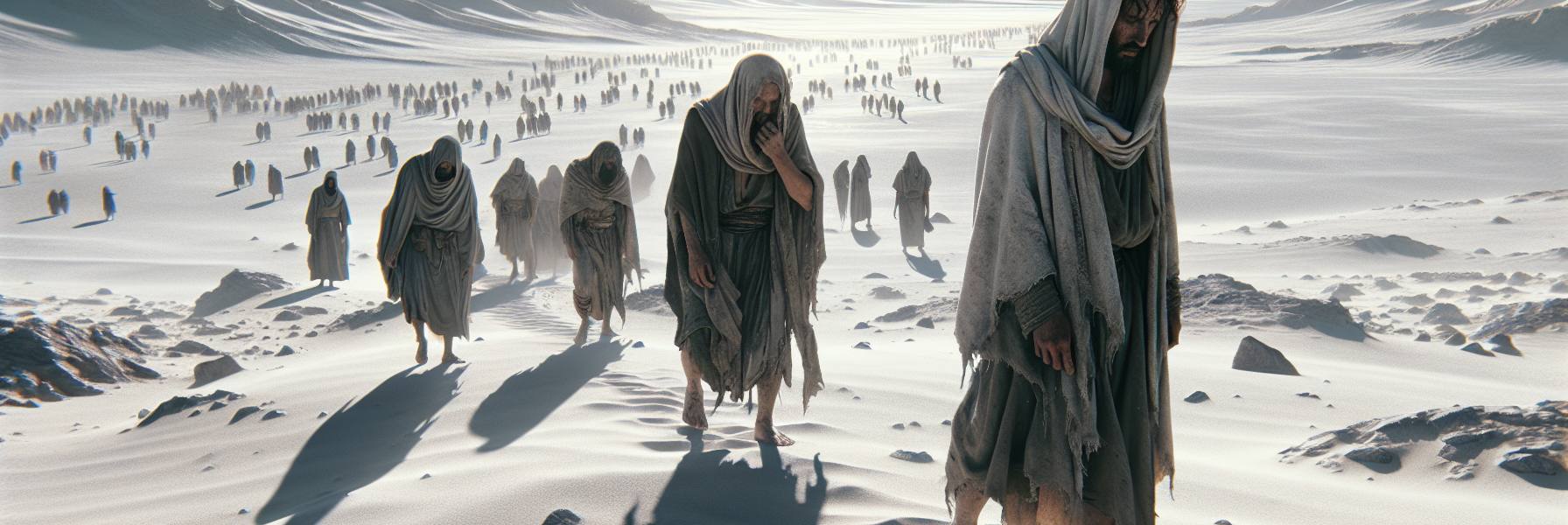

The third day without a well was the hardest. Not because the thirst was worse—though it was, a dry scraping at the throat—but because the mind begins to turn in on itself. The wilderness of Judah is not a place of soft edges. The sun hammers the limestone into a blinding white glare, and the heat doesn’t rise from the ground so much as it presses down from a vast, empty sky. It’s a weight on the shoulders. My cloak was heavy with dust, my sandals worn thin against the relentless stone.
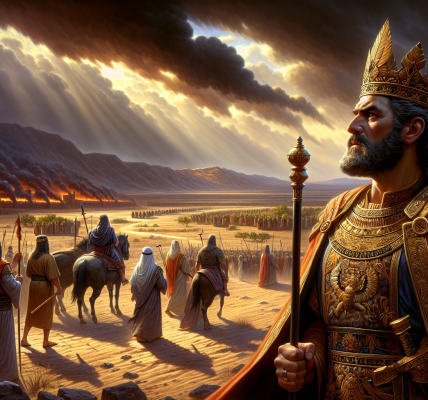
We were hiding in the cracks of the land, my men and I, a scattered band of desperate souls fleeing the king’s envy. Saul’s fury was a hotter, more immediate fire than this desert sun. Here, there was only a vast, silent thirst. A body can crave water until the thought of it is a constant, dull pain. But that day, a different ache surfaced, clearer and sharper.
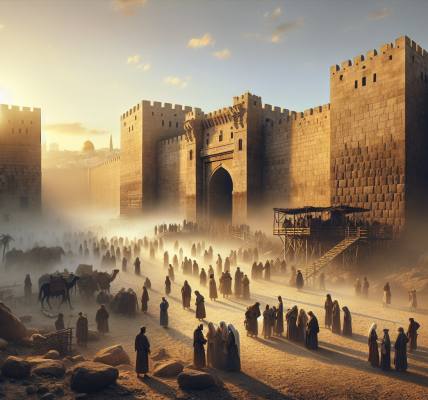
I found a sliver of shade beneath an overhang of rock, my back against the warm stone. Closing my eyes didn’t help. The darkness behind my lids only made the inner vision clearer. I remembered the sanctuary. Not just the building, the gold and the smoke, but the *feel* of it. The deep, resonant quiet that was different from this desert silence. That quiet was full. It was the quiet of a presence so immense it absorbed all other sound. I used to seek it in the watches of the night, before the politics, before the running.
And there, in that ragged scrap of shade, the memory became a prayer. It wasn’t elegant. It was the grunt of a man pushing against a heavy weight.
“You, God. You are my God.”
The words were dry chips of wood from my mouth. But as I said them, the focus shifted. The craving of my body became a metaphor for something else, something deeper that my soul had been ignoring in the frenzy of survival.
“I seek you. My soul thirsts for you, my flesh faints for you, as in a dry and weary land where no water is.”
It felt like that. Exactly like that. This wilderness wasn’t just outside me; it was inside. A landscape of fear, of uncertainty, of royal betrayal. And the only well that could possibly matter was the one I couldn’t see.
I thought of the few times I had felt that thirst slacken. In the sanctuary. It wasn’t about seeing a vision or hearing a voice. It was about seeing *Him*. His power, his steadfast love—his *hesed*—which is a thicker, more substantial thing than mere kindness. It’s a covenant loyalty that holds fast when everything else falls apart. To see that, even with the eyes of the heart, was better than life itself. Better than a crown, better than safety, better than a cool draught from a spring. The realization was so stark it was almost painful.
My lips were cracked, but they moved into a shape that was not a frown. A kind of praise began, not with singing, but with a whispered declaration to the empty air. “So I will bless you as long as I live; in your name I will lift up my hands.”
I didn’t actually lift them. I was too weary. But in my spirit, I did. It was a surrender of my cramped, fearful posture. My soul, which had been curled tight around its own anxiety, felt as if it could stretch out, like a man standing upright after being long bent over.
The hunger pangs came then, a hollow grip in my stomach. We had little bread. Yet the strange thought came: “My soul will be satisfied as with fat and rich food.” It was absurd. But it felt true. The memory of God’s *hesed* was more nourishing, more sustaining, than the king’s feast I had left behind in the palace. There was a joy in it, a sober joy that came not from circumstance but from a source beneath circumstance. My mouth began to praise, the words forming with a will of their own, a quiet litany in the wilderness afternoon.
Then the night came, the sudden, cool blanket of the desert night. The blackness was total, a velvet press. In the palace, night was for scheming or for restless sleep. Here, it was different. The fears returned, of course—Saul’s army, the treachery of informants, the sheer precariousness of our existence. But lying on my back, looking up at the relentless scatter of stars, the day’s meditation held.
“I remember you upon my bed, and meditate on you in the watches of the night.”
The fears were like jackals yapping at the edge of a fire’s light. But the meditation, the recollection of that steadfast love, was the fire. It didn’t make the jackals disappear, but it held them at bay. And in that holding, there was a song. “For you have been my help, and in the shadow of your wings I will sing for joy.”
The shadow of his wings. Not a fortress, not a walled city. A shelter. Something living and close. This desert was the shadow of death, but there was a deeper, safer shadow within it.
Dawn found me still weary in body, but strangely anchored in spirit. The conclusion was not a shouted victory but a settled, gritty truth. A truth for a man on the run. Those who seek my life, who play the political games of lies and swords, they will be the ones swallowed by the very wilderness they traverse. They will become a prey for their own desolation.
But the king—this exiled, thirsty king, clinging to a memory in the rocks—would rejoice. My soul would cling, not to a hope of a throne, but to the One who held the throne of heaven. And this right hand, that once held a sling and now held nothing, would be upheld by a strength that was not its own.
I rose, the stiffness in my limbs a familiar complaint. The wilderness was just as dry, just as harsh. Saul was still hunting. Nothing had changed. And yet, everything had. The thirst remained, but it had become a compass. Pointing me, through the dust and the glare, back to the only well that mattered.