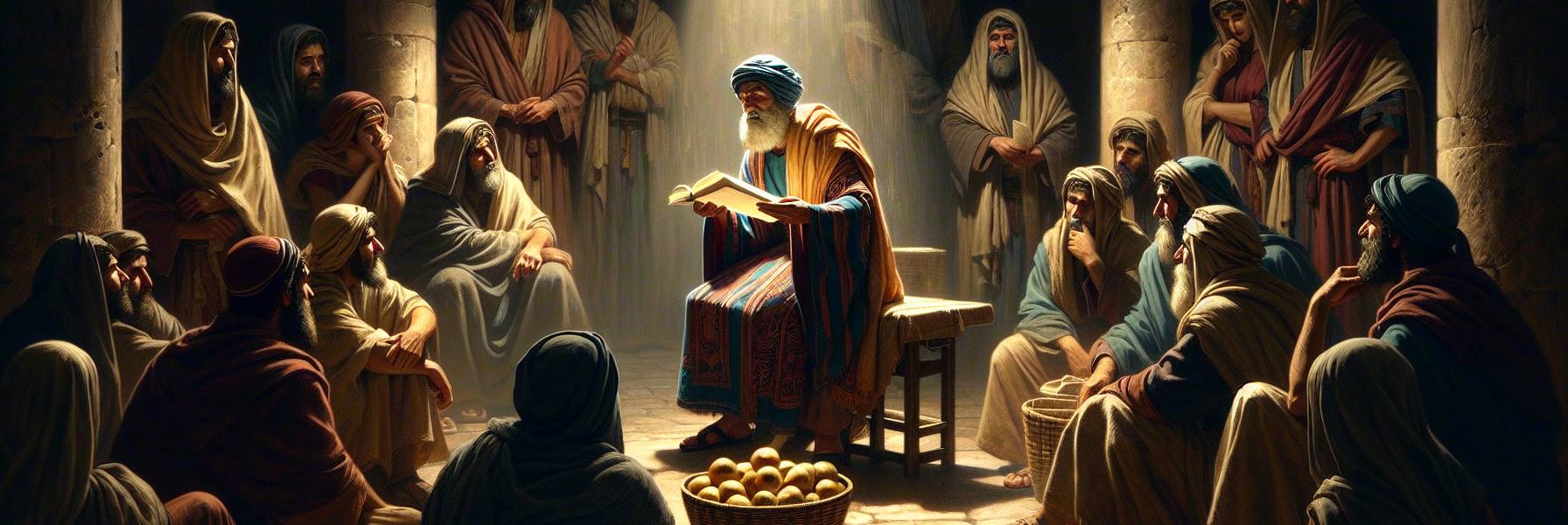

The air in Ephesus held the damp, close weight of a coming storm. Silas felt it in his bones, an old ache that had little to do with the weather. He sat in the shadowed corner of the small upper room, the murmur of voices around him a familiar tapestry. They were a mixed bunch—a former fish-seller from Galilee, a Syrian merchant’s daughter, a few local Jews who carried a new, bewildered hope. They looked to him, sometimes, because of his past. He had worn the linen ephod. He had known the weight of the basin, the smell of the altar, the solemn terror of the Holy Place.
Tonight, the letter from the traveling brother was about priesthood. They had been reading it for weeks, this dense, soaring document that was less a letter and more a sustained thunderclap. The reader’s voice, a young man named Lucas with a steady tone, found the words:
*“For every high priest chosen from among men is appointed to act on behalf of men in relation to God, to offer gifts and sacrifices for sins. He can deal gently with the ignorant and wayward, since he himself is beset with weakness.”*
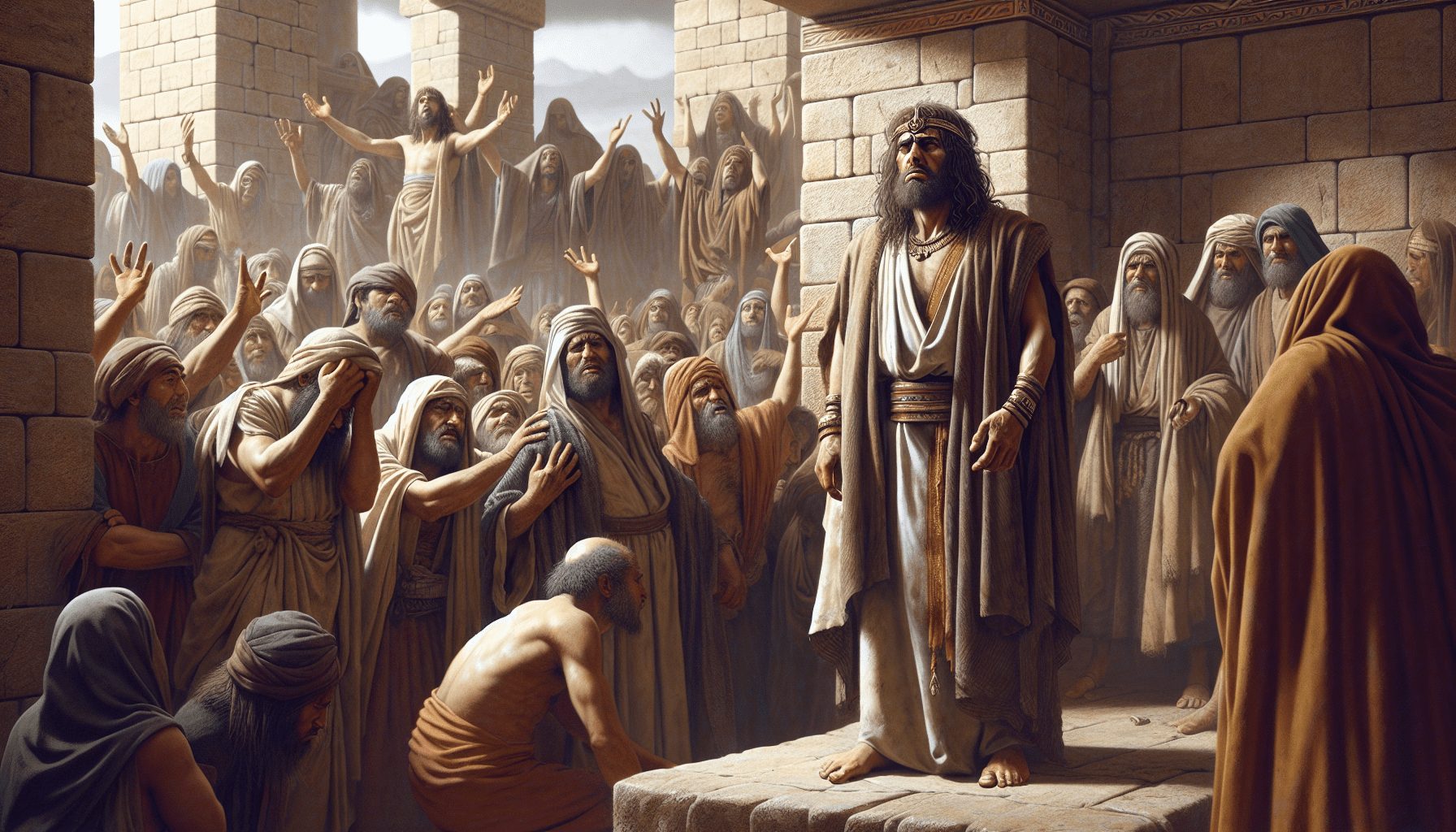
Silas closed his eyes. He could see the courtyard of the Temple, not as a pilgrim saw it, but from within. He saw old Eliab, the high priest the year Silas turned thirty. Eliab had hands that trembled slightly before the Day of Atonement. Not from fear of God alone, but from the crushing weight of knowing his own failings—a sharp word to a servant, a fleeting envy of a richer colleague, the secret pride in his own lineage. That was the weakness. You carried the sins of the people into the Most Holy Place, and your own heart was a tangled knot of them. The “dealing gently” came from that shared, humiliating truth. You were a sinner appointed for sinners.
Lucas continued, the parchment whispering. *“And one does not take the honor upon himself, but he is called by God, just as Aaron was.”*
A memory, sharp as flint: his cousin, a boy of sixteen with bright, ambitious eyes, declaring he would be a priest because it was a good living, because the family expected it. Their father, a stern Levite, had backhanded him. The honor was not yours to take. It was laid upon you, a weighty garment you could not weave yourself. It was a call in the night, a naming you did not choose.
The storm broke outside. A sudden gust rattled the shutters, and rain hissed against the stone. The lamp flames danced. Lucas raised his voice slightly over the sound.
*“So also Christ did not exalt himself to be made a high priest…”*
Here the words began to do the strange, heart-stopping work they always did. They took the solid, tangible world of bulls and goats, of incense and blood-sprinkled mercy seats, and they spoke of a man. A man from Nazareth. Silas had never seen him, but he’d heard the stories from those who had. They spoke of tired feet on dusty roads, of calloused hands breaking bread, of tears at a friend’s tomb. Not the remote, gilded figure of the high priest emerging once a year in blinding sanctity, but a man who ate with tax collectors and touched lepers.
*“…but was appointed by him who said to him, ‘You are my Son, today I have begotten you’; as he says also in another place, ‘You are a priest forever, after the order of Melchizedek.’”*
Melchizedek. The name was a mystery from the ancient scrolls, a king of righteousness, a priest of God Most High appearing to Abraham with bread and wine, owning no lineage, his beginning and end untold. He was a rumor of a priesthood older than Sinai, a priesthood that didn’t come from a tribe, didn’t pass from father to son, didn’t end with death. And the writer was stitching this mystery to the man from Galilee. The rain fell in sheets now, a roar on the tiles. Silas felt unmoored. It was as if the very floor of his understanding was being lifted and set into a wider, wilder ocean.
Then came the part that always caught in his throat, that made the old priestly ache in him twist into something like awe.
*“In the days of his flesh, Jesus offered up prayers and supplications, with loud cries and tears, to him who was able to save him from death, and he was heard because of his reverence.”*
Not a serene, icon-like figure. Loud cries. Tears. The Gethsemane stories, whispered among believers, took on a new, terrifying clarity. This was the high priest at his work? Not the silent, solemn entry into the Presence, but a man face-down in the dirt of an olive grove, begging for another way. His offering was his own will, his own life. And he was heard. Not by being spared the cup, but by being sustained through drinking it. Reverence was not cool ceremony; it was the agonized “nevertheless, not my will but yours.”
*“Although he was a son, he learned obedience through what he suffered.”*
Silas turned the phrase over in his mind. Learned. As a boy learns a trade. The obedience of the Son was not automatic, not robotic. It was forged in the fire of hunger, loneliness, misunderstanding, betrayal, and the searing pain of nails. The high priest had to be able to deal gently with the weak. How did he learn that? Not by observing from a holy distance, but by suffering weakness himself—by trembling in the garden, by feeling abandonment on the cross. His qualification was his perfect, hard-won solidarity.
*“And being made perfect, he became the source of eternal salvation to all who obey him, being designated by God a high priest after the order of Melchizedek.”*
Made perfect. Not from lacking, but from completing. The work was finished. The final sacrifice was offered, once. The curtain was torn, not from top to bottom by a priestly hand, but by God’s own hand from top to bottom. The mystery of Melchizedek flooded in: a priesthood without beginning of days or end of life. A kingly priesthood. A priesthood that didn’t repeat, because the cry of “It is finished” echoed into eternity.
The reading ended. The rain had softened to a steady patter. No one spoke for a long moment. The fish-seller was weeping silently, his rough hands covering his face. The merchant’s daughter stared into the lamp flame, her expression one of stunned relief.
Silas finally opened his own hands, looking at the palms that had once carried the blood of lambs. He felt the old ache dissolve, not into nothing, but into a profound, quiet gratitude. His own priesthood had been a shadow, a beautiful, trembling hint. The reality was a man who had walked through the true, terrifying Holy Place of human suffering and death, and had emerged, not just with atonement, but with an open, everlasting way. He was a high priest who knew the way because he *was* the way. And his throne was a seat of mercy, still warm, Silas thought, with the tears he had shed in the garden. It was a place where even an old, weary Levite, acquainted with his own weakness, could come without trembling.