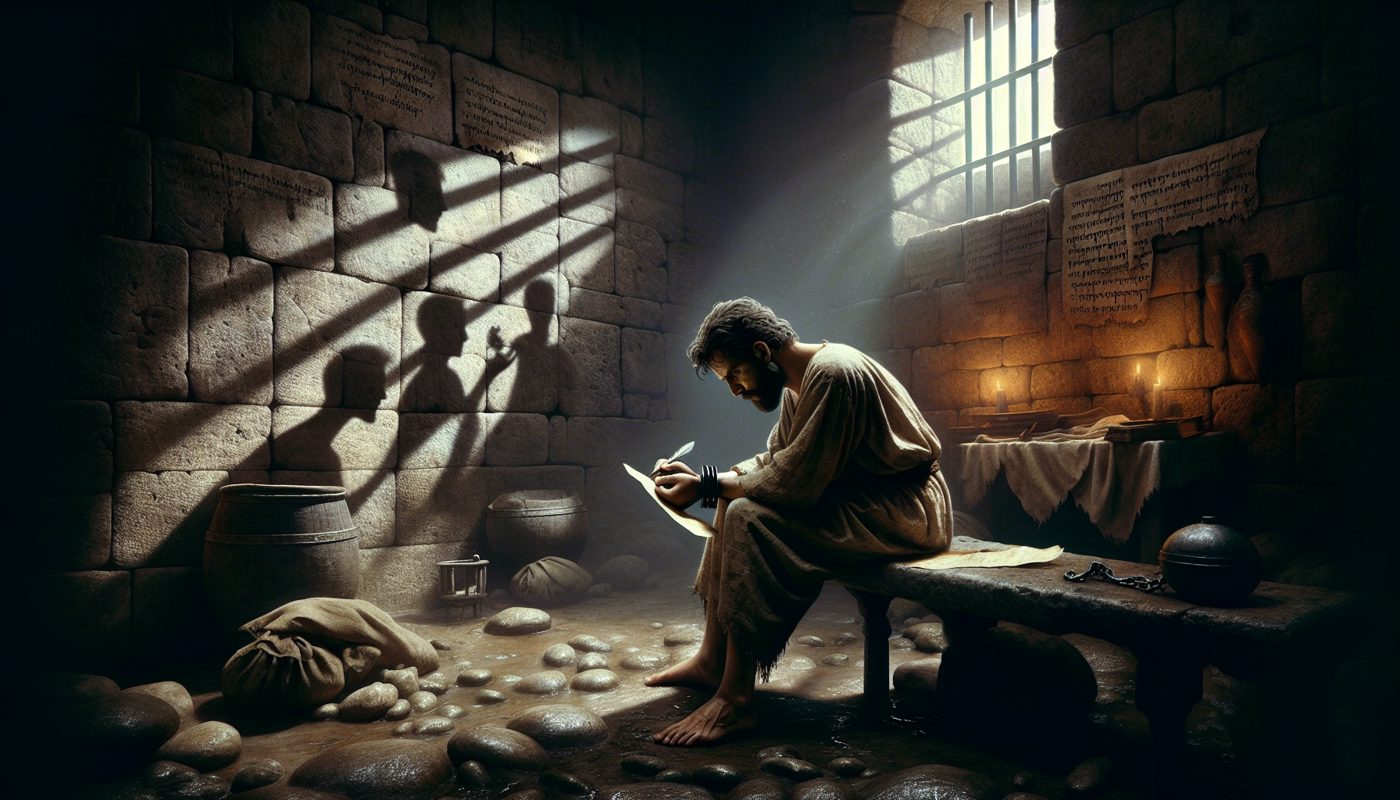
The letter turns. Paul has been warm, urgent, grateful. Now the voice sharpens. He names three things to avoid—dogs, evil workers, the concision—and the terms land like stones thrown into still water. He is not speaking to outsiders. He is warning the assembly itself.
Paul does not waste time on abstract warnings. He lays his own credentials on the table as if they were evidence in a trial. Circumcised the eighth day. Of the stock of Israel. Of the tribe of Benjamin. A Hebrew of Hebrews. A Pharisee. Zealous enough to persecute the church. Blameless under the law. He recites the list without nostalgia. It is a record of what he once counted as gain.
Then he makes the calculation. Whatever things were gain to him, he has counted as loss for Christ. Not a gentle revaluation. A deliberate, written-off loss. He does not say the old life was evil. He says it became refuse. The word is strong, the kind of word used for table scraps or what is swept from a threshing floor. He wants the Philippians to understand the scale of the exchange.
The goal is not moral improvement. It is to be found in Christ, not having a righteousness of his own that comes from the law, but the righteousness that comes from God through faith. Paul is not describing a transaction. He is describing a relocation. He wants to be inside that righteousness the way a man stands inside a shelter.
He wants to know Christ. Not to know about him. To know the power of his resurrection and the fellowship of his sufferings. To be conformed to his death. That is not pious language. It is the language of a man who has accepted that the shape of his life will follow the shape of his Lord's life, including the part that ends in a grave.
Paul is honest about where he stands. He has not already obtained the resurrection. He is not already perfect. He presses on to lay hold of that for which Christ laid hold of him. The grammar is precise. Christ grabbed him first. Paul is now trying to grab back what he was grabbed for. The whole Christian life is that reaching.
He describes it with a single motion. Forgetting what lies behind and stretching forward to what lies ahead, he presses on toward the goal for the prize of the upward call of God in Christ Jesus. There is no room for looking back. The past is not a resource. It is a weight he has already dropped.
Then Paul turns to the congregation. Those who are mature should think this way. If they think differently, God will reveal it. But the rule is clear: walk by the same standard to which you have already attained. He is not asking them to invent a new path. He is asking them to stay on the one they are already walking.
He tells them to imitate him. To watch those who walk as he walks. And then he weeps. There are many who walk as enemies of the cross of Christ. Their end is destruction. Their god is their belly. Their glory is in their shame. They mind earthly things. Paul does not name them. He does not need to. The Philippians know who they are.
He closes the warning with a statement of citizenship. Their citizenship is in heaven. They are waiting for a Savior from there, the Lord Jesus Christ, who will transform their lowly body to be like his glorious body. The same power that subjected all things to Christ will do this. Paul is not offering comfort. He is stating the constitutional reality of the church.
The chapter ends with that transformation. Not escape from the body, but its refashioning. Paul does not promise that the waiting will be short. He promises that the waiting has an end, and the end is not annihilation but conformity to the body of Christ's glory. That is the prize he is pressing toward. That is the loss that makes all other loss bearable.
Comments
Comments 0
Read the discussion and add your voice.
Members only
Sign in to join the conversation
We keep comments tied to real accounts so the discussion stays clean and trustworthy.
No comments yet. Be the first to add one.