Genesis 36 is a chapter of names—generations, chiefs, and kings—and it does not pause to explain why any of them matter. It simply records that Esau, also called Edom, took his wives from the daughters of Canaan: Adah the Hittite, Oholibamah the Hivite, and Basemath the daughter of Ishmael. These women bore him sons in the land of Canaan: Eliphaz, Reuel, Jeush, Jalam, and Korah. The chapter gives no narrative beyond the births, no drama, no divine speech. It is a list, and it expects the reader to accept that list as significant.
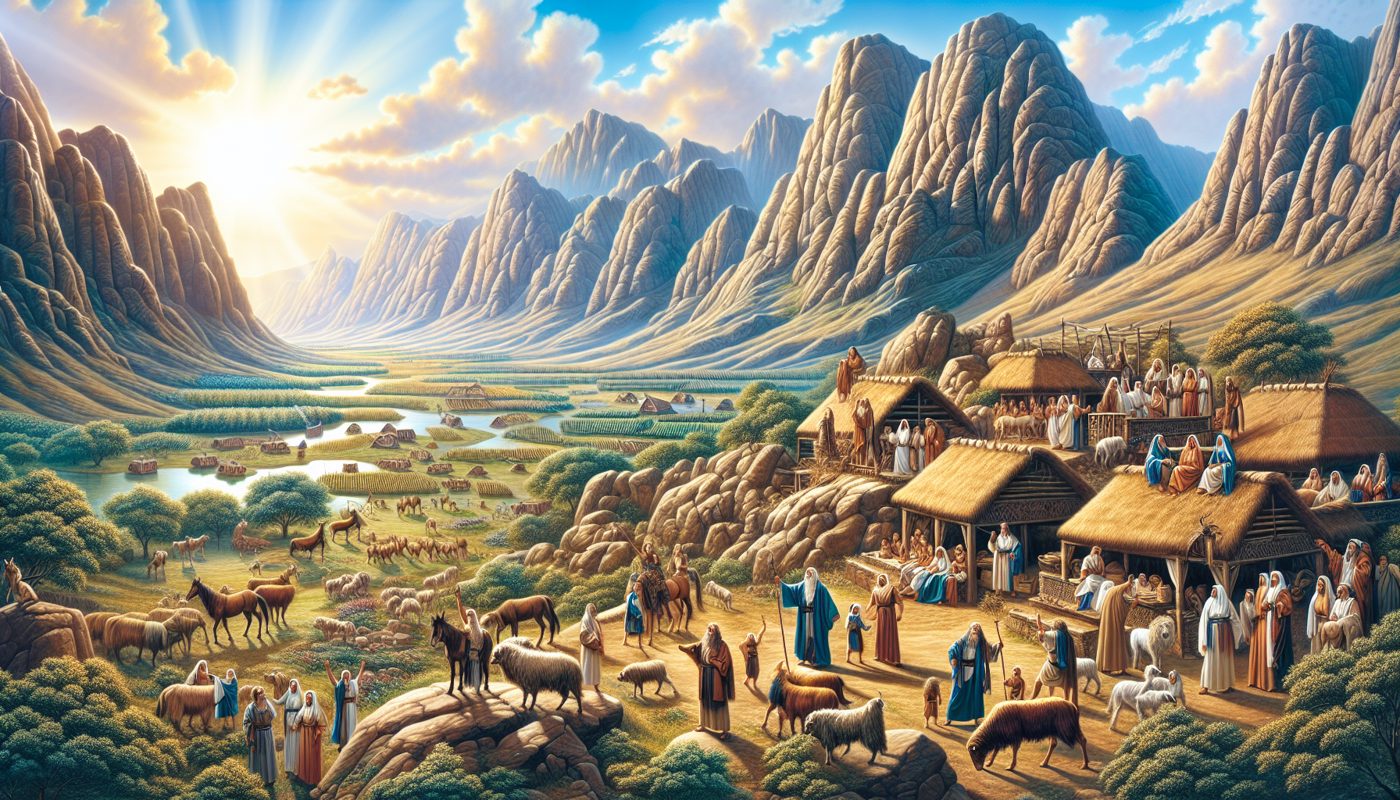
The chapter then reports that Esau moved his entire household—wives, sons, daughters, servants, cattle, and all his possessions—away from Jacob. The reason is stated plainly: their substance was too great for them to dwell together, and the land of their sojournings could not bear them because of their cattle. So Esau settled in Mount Seir, and the text repeats: Esau is Edom. That move is the only action in the chapter. Everything else is genealogy.
The sons of Esau are named again, this time with their own sons. Eliphaz had Teman, Omar, Zepho, Gatam, Kenaz, and also Amalek by his concubine Timna. Reuel had Nahath, Zerah, Shammah, and Mizzah. Oholibamah’s sons—Jeush, Jalam, and Korah—are listed separately. The chapter then elevates these sons to chiefs: chief Teman, chief Omar, chief Zepho, chief Kenaz, chief Korah, chief Gatam, chief Amalek. Each chief is tied to a mother, and the text closes this section by saying: These are the sons of Esau, and these are their chiefs; the same is Edom.
But the chapter does not stop with Esau’s line. It turns to the Horites, the original inhabitants of Seir, and lists their sons and chiefs: Lotan, Shobal, Zibeon, Anah, Dishon, Ezer, Dishan. Among these, a brief note appears: Anah found the hot springs in the wilderness while feeding the donkeys of Zibeon his father. That small detail—a man finding water in a dry place—is the only moment of human texture in the entire Horite genealogy. The rest is names, and then the chiefs of the Horites are named again, as if to fix them in memory.
Then the chapter shifts to kings. It lists eight kings who reigned in Edom before any king reigned over Israel: Bela son of Beor from Dinhabah; Jobab son of Zerah from Bozrah; Husham from the land of the Temanites; Hadad son of Bedad, who struck Midian in the field of Moab, from Avith; Samlah from Masrekah; Shaul from Rehoboth by the River; Baal-hanan son of Achbor; and Hadar from Pau, whose wife was Mehetabel, daughter of Matred, daughter of Me-zahab. Each king died, and another succeeded him. No dynasty is established; the kings come from different cities and clans.
The chapter ends with another list of chiefs from Esau, this time organized by their families, places, and names: chief Timna, chief Alvah, chief Jetheth, chief Oholibamah, chief Elah, chief Pinon, chief Kenaz, chief Teman, chief Mibzar, chief Magdiel, chief Iram. The final line reads: These are the chiefs of Edom, according to their habitations in the land of their possession. This is Esau, the father of the Edomites.
What the chapter does not do is explain why Edom matters. It does not compare Esau to Jacob, does not mention the stolen blessing or the reconciliation. It simply records that Esau’s descendants became a structured people—with chiefs, a land, and a line of kings—before Israel had any king. The chapter is a document of fact, not a story. It treats Esau’s household with the same genealogical seriousness that other chapters give to Jacob’s. The Lord is not mentioned in the chapter, and no covenant is invoked. Yet the chapter exists, placed in the book of Genesis, as a witness that Esau, too, became a nation.
Comments
Comments 0
Read the discussion and add your voice.
Members only
Sign in to join the conversation
We keep comments tied to real accounts so the discussion stays clean and trustworthy.
No comments yet. Be the first to add one.