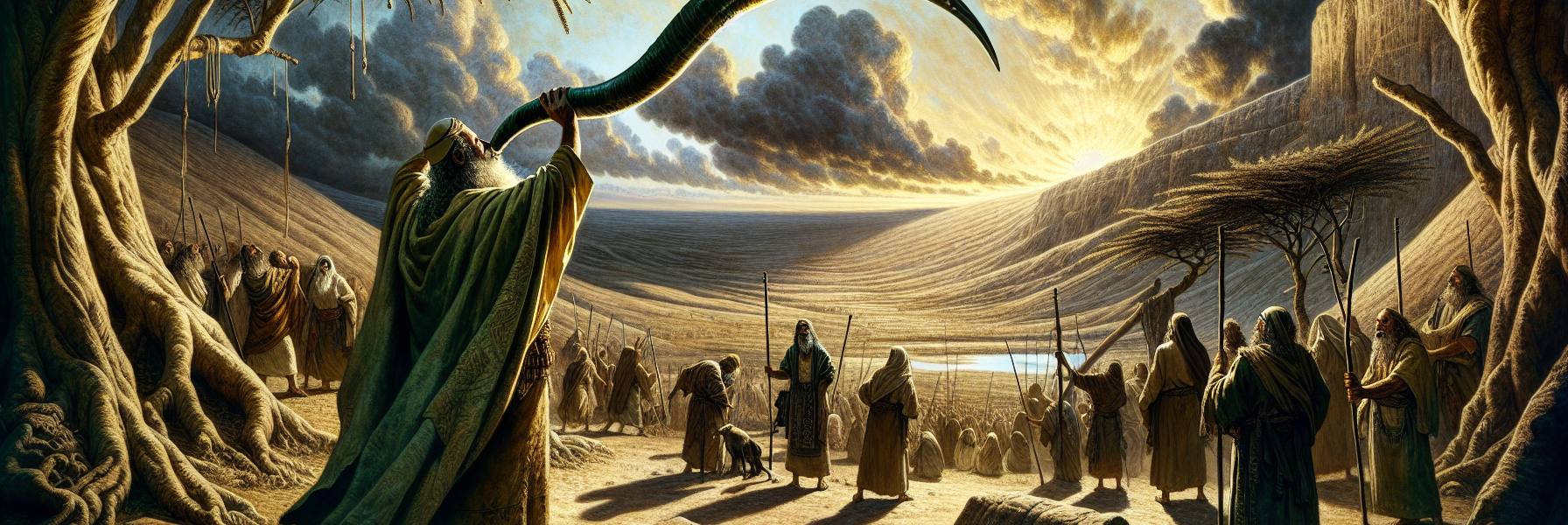

The heat of Tishri was beginning to soften. Each morning now, a faint, dry coolness lingered in the shadows of the acacia groves, a whispered rumour of the coming rains. For Elidad, whose bones remembered seventy such turnings of the year, the seventh month always arrived with a weight, a solemn, gathering pressure in the air itself.
It began with the blast of the shofar. Not the single, silver note of the new moon, but a broken, trembling cry that tore the dawn on the first day of the month. Elidad stood at the door of his tent, the sound moving through him like a physical tremor. *Yom Teruah*. The Day of Awakening Blast. It was not a call to arms, but a summons to attention. The camp, still sleepy, grew still. Mothers hushed children. Men paused, hands on tent-pegs, eyes turning toward the Tabernacle courtyard, a distant shimmer of linen and gold against the barren hills. The routines of desert life—grinding grain, tending flocks, mending leather—felt suddenly provisional, like garments laid aside for a greater dressing.
For ten days, a peculiar quiet descended. Conversations were hushed. Disputes were set aside, not resolved, but suspended. Elidad watched his grandson, Elishama, a boy of ten, become unusually still, his playful shouts muted. The boy felt it too—the awful, beautiful approach of the Day. *Yom Kippur*. The tenth day.
Elidad was there, on the edge of the great assembly, when the High Priest, a figure of dazzling white linen, emerged from the Holy Place. The blood of the bullock for his own house, the blood of the goat for the people—these were mysteries Elidad could not see, performed behind the curtain. But he could see the result. A man, bent under a weight far heavier than the incense in his censer, moving like a man walking through deep water. The second goat, the one for Azazel, was led away by a man chosen by lot, a man who would return dusty and alone from the desolate places, a living echo of sins carried off, never to be found. The silence on that day was total. It was a silence you could feel on your skin, a hollow, hungry silence that gnawed at the soul. They afflict their souls, the Law said. Elidad felt it not as a ritual hunger, but as a profound emptiness, a facing of the vast, terrifying space between what they were and what the Holy One had called them to be.
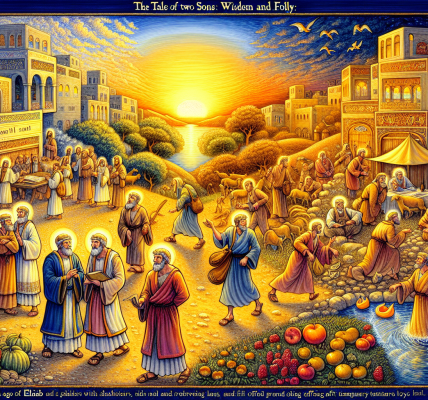
Then, on the fifteenth day, the air broke. As if the held breath of the camp was finally exhaled, a great rustling, a sound of laughter and labour, swept through the Israelite host. *Chag HaSukkot*. The Feast of Booths.
For seven days, they lived in shelters. Elidad and Elishama built theirs together, lashing poles of acacia wood with cords grown soft with use, laying palm fronds and willow branches across the top. The roof was meant to be sparse, to let in the stars. “Why do we live in a broken house, Grandfather?” Elishama asked, his small hands struggling with a knot.
“To remember,” Elidad said, grunting as he tightened the frame. “To remember our fathers lived with no roof but the mercy of the Cloud, no walls but the pillar of Fire. We are a people of the journey, not the palace.”
And then the offerings began. A great, smoke-filled poetry of devotion that unfolded day by weary, glorious day. Elidad, as a elder of his tribe, had his duties near the altar. He watched, year after year, the staggering procession of sacrifices ordained for these days.
On the first day: thirteen young bullocks, two rams, fourteen lambs, all without blemish. The grain offerings, fine flour mingled with oil, a sweet savour. And the sin offering of one goat. The numbers were immense. The Levites worked in shifts, their robes dark with sweat and soot. The lowing of the bullocks was a deep chorus, the bleating of the lambs a higher counterpoint. The air grew thick, not with the smell of death, but with the scent of dedication—seared meat, crushed grain, olive oil, and incense. It was a smell that spoke of cost, of precious things given freely.
Each day, the number of bullocks diminished by one. Twelve on the second day, eleven on the third, down to seven on the seventh day. Elidad pondered this strange, diminishing count. It was like a great company setting out, their ranks thinning as they approached a sacred destination. It was a lesson in humility, he thought. The initial, overwhelming burst of devotion—thirteen bulls!—could not be sustained. The offering matured, focused, became more concentrated as the feast wore on. The rams and lambs remained constant, a foundation of unwavering commitment beneath the shifting, decreasing numbers.
He watched the priests, their faces gleaming in the firelight, their movements a well-practised dance of slaughter, flaying, and placement. The blood, always the blood, dashed against the base of the bronze altar. It was a stark, violent mercy. Elishama, peeking from behind his grandfather’s robe, whispered, “It’s so much.”
“It is the cost of peace,” Elidad murmured back. “The cost of a holy God dwelling among an unholy people. Do not look away. Remember the cost.”
The eighth day was different. *Atzeret*. The Solemn Assembly. A day of holy convocation, with no ordinary work. The offerings of this final day were simple, pared down: one bullock, one ram, seven lambs. It felt like a quiet, firm seal placed upon the seven days of exuberance. After the grand, numerical symphony, a single, resonant chord.
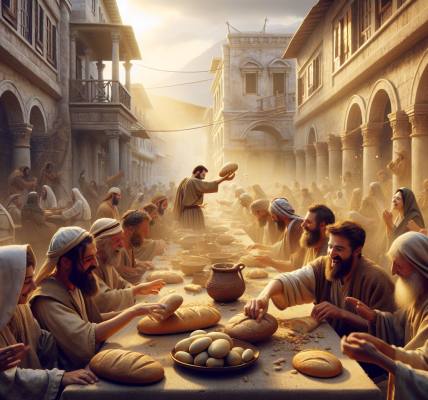
On the final evening, Elidad sat with Elishama in their sukkah. The stars were brilliant through the gaps in the branches. The smell of the sacrifices still hung faintly in the cool air, mixed with the scent of dusty earth and their own simple supper of bread and olives.
“Did it please Him, Grandfather?” the boy asked, his voice sleepy. “All the bulls and lambs?”
Elidad was silent for a long time. He thought of the precise, relentless instructions from Moses—the exact measures of flour, the specified animals, the counted days. It was not the mind of a bureaucrat, but the rhythm of a poet-king. It was a pattern imposed on chaos, a sacred mathematics of grace.
“It was not about the animals, little one,” he said finally, his voice rough. “It was about the heart. The Holy One gave us a calendar of longing. The blast to wake us. The day to cleanse us. The feast to remind us we are pilgrims. The offerings… the offerings are the language of that longing. We speak in blood and smoke and grain because we have no other words big enough. We say, ‘This much, and then this much less, and then this final offering,’ to show our lives are a pattern He has written. We follow the pattern. That is our answer. That is our ‘yes’.”
The boy was asleep. Elidad pulled a blanket over him. Outside, the camp was quiet, the Tabernacle a dark silhouette against the star-strewn sky. The month of solemn feasts was over. The journey would resume tomorrow. But for now, under the flimsy, star-filled roof of their booth, they dwelt in the memory of the pattern, in the echo of the shofar’s cry, in the profound, costly silence of the Day, and in the lingering, smoky fragrance of a devotion counted out, day by diminishing day, unto the Lord.