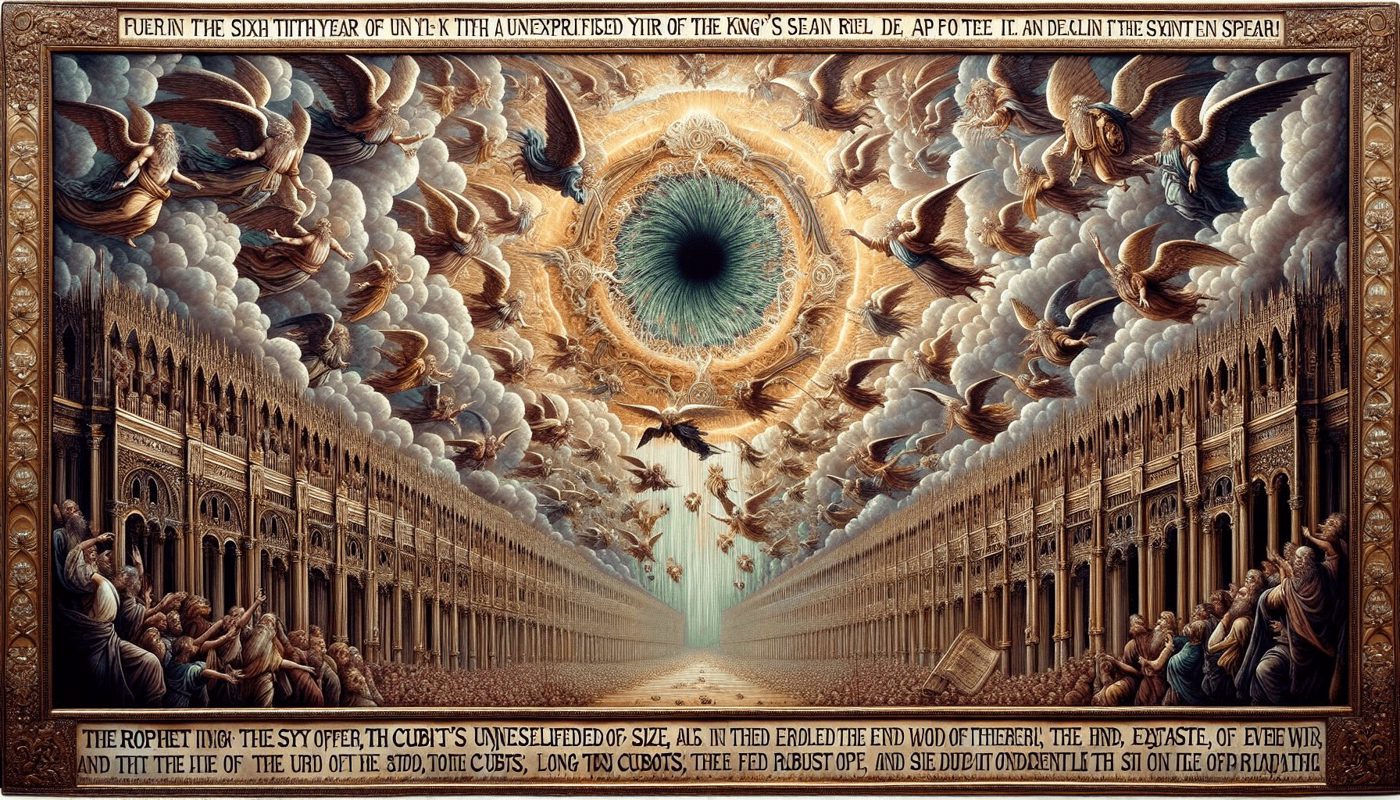
Zechariah lifts his eyes again and sees a flying scroll. It is not rolled up but stretched out, moving through the air with purpose. The angel asks what he sees, and Zechariah answers plainly: a scroll twenty cubits long and ten cubits wide. The size is given without explanation, but the angel immediately supplies the meaning. This is a curse going out over the whole land.
The curse is not vague. It targets two specific offenses. On one side, every thief will be cut off. On the other side, everyone who swears falsely by the Lord’s name will be cut off. The scroll does not merely float overhead. The Lord of hosts says he will cause it to go forth, and it will enter the house of the thief and the house of the false swearer. It will stay inside that house and consume it—timber and stones together. The judgment is internal and total.
Then the angel who had been speaking with Zechariah goes out and tells him to lift his eyes again. Zechariah sees something else coming forth. He asks what it is. The angel answers: an ephah. That is a standard grain measure, a basket used for commerce. But the angel adds that this ephah represents their appearance in all the land. The basket carries a meaning that reaches beyond itself.
Inside the ephah, Zechariah sees a woman sitting. A talent of lead is lifted up—a heavy lid. The angel identifies the woman directly: “This is Wickedness.” Then he casts her down into the ephah and presses the lead weight over its mouth. The woman is not free. She is forced into the basket and sealed shut. Wickedness is contained, not roaming.
Zechariah looks up again and sees two women coming forth. They have wings like the wings of a stork, and the wind is in their wings. They lift the ephah between earth and heaven. The image is strange: stork wings, wind-driven flight, and a basket carrying a sealed woman suspended in midair.
Zechariah asks the angel where they are taking the ephah. The answer is specific: to the land of Shinar. That name carries weight. Shinar is the plain where Babel was built, the place of human ambition and rebellion. The angel says they will build a house for her there. When it is prepared, she will be set in her own place. Wickedness is not destroyed in this vision. It is relocated, given a dwelling, and confined to a particular territory.
The two visions in this chapter work together. The flying scroll deals with individual guilt—thieves and false swearers are cut off and their houses consumed. The woman in the ephah deals with corporate wickedness, personified and then removed from the land. The scroll purges the community from within. The basket exports the corruption to a place where it can no longer infect the people of God.
Zechariah does not explain the mechanics of how these judgments will be carried out. He simply records what he sees and what the angel tells him. The visions are stark and economical. There is no dialogue beyond the angel’s identifications. The prophet watches, asks, and receives answers that are direct and final.
The chapter ends with the woman settled in Shinar. The vision does not return to the flying scroll. The curse has gone out. The wickedness has been removed. The land is left under the authority of the Lord who sent the scroll and commanded the basket’s flight.
Comments
Comments 0
Read the discussion and add your voice.
Members only
Sign in to join the conversation
We keep comments tied to real accounts so the discussion stays clean and trustworthy.
No comments yet. Be the first to add one.