
The fifth year of Rehoboam’s reign, and the air over Jerusalem hung thick, not with the promise of rain, but with a different kind of heaviness. It was the stillness of presumption. The king, having secured his throne, having fortified the cities of Judah with walls and towers and storehouses of grain, now walked the polished floors of his palace with a slower, more satisfied step. The early fervor, that desperate reliance on the God of his father Solomon, had cooled like forgotten embers. Judah, he reasoned, was strong. His kingdom was established. The law of the Lord, once read daily in his court, became a distant melody, replaced by the immediate, tangible music of power and security.
It began in small ways. The high places reappeared on the hills, not with official sanction, but without official rebuke. Asherah poles, those strange, carved fingers pointing accusingly at the sky, were set up again under spreading terebinth trees. The people, taking their cue from a distracted court, slipped back into old habits—a sacrifice here to ensure a good harvest, a whispered prayer there to a local deity for a child’s health. Rehoboam knew. His officials knew. But the land was at peace, and prosperity has a way of silencing conscience. They had forsaken the covenant. The word, heavy and true, hung unspoken in the perfumed air of the throne room.
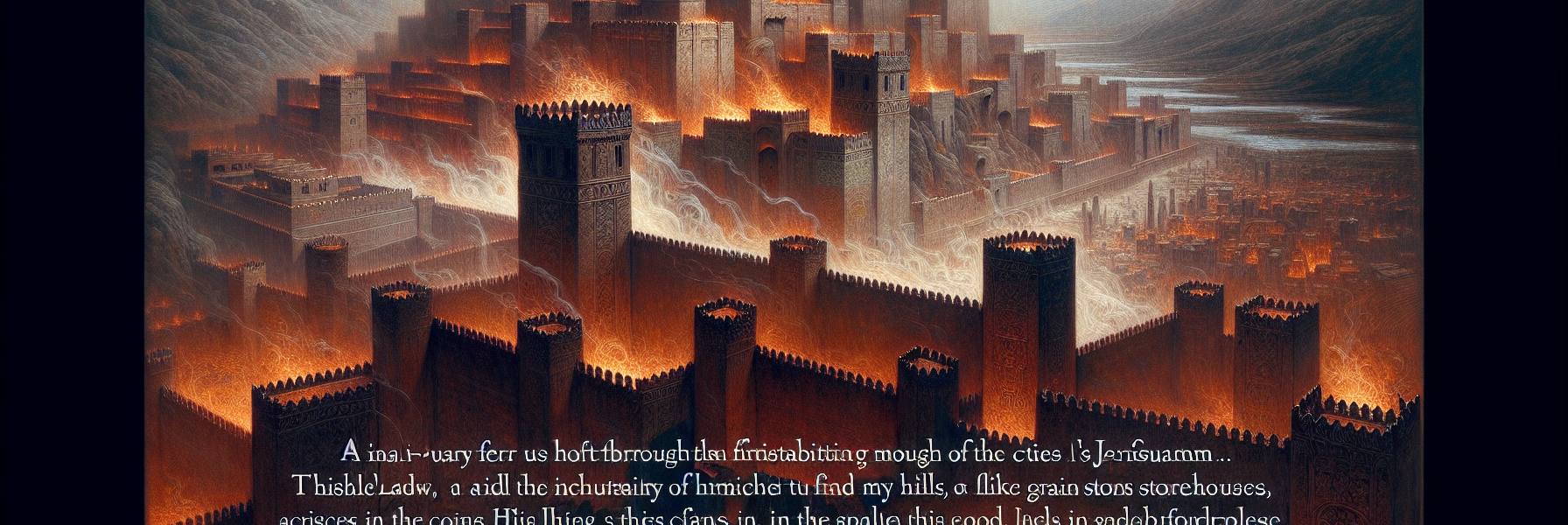
The reckoning came not from a neighboring king, but from the south, from the ancient land of the Nile. Shishak, Pharaoh of Egypt, moved with a patience only vast power can afford. His army was not a raiding party; it was a geological force. News, fragmented and terrified, reached Jerusalem: city after city in Judah had fallen. The fortified places, the pride of Rehoboam’s early reign, crumbled like sun-dried mud before the onslaught. Lachish, Gezer, Aijalon—the names were tolling bells of doom. The Egyptian host advanced, a river of polished bronze and flickering spearpoints, swallowing the land. And at its heart, rumbling on great wheels, came the chariots—a sound Jerusalem had not heard since the days of her greatest glory.
Panic, sharp and sour, replaced presumption. The courtiers who had spoken of strength now muttered of surrender. Rehoboam, his face the color of chalk, gathered the trembling princes of Judah and the elders of Jerusalem in the inner court, not as a council of war, but as a gathering of condemned men. The great walls they had built seemed laughably thin.
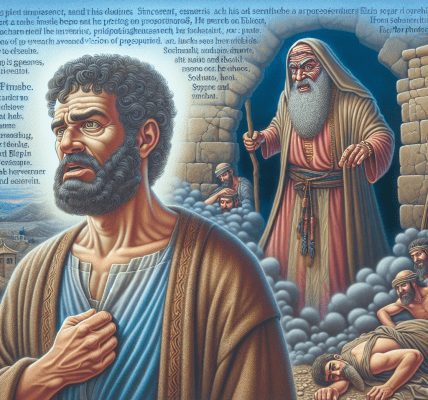
It was then the prophet Shemaiah came. He did not request audience; he entered, his simple linen robe a stark contrast to the panicked finery around him. The room fell silent. He did not shout. His voice was low, worn smooth by the weight of the words it carried.
“Thus says the Lord,” Shemaiah said, his eyes holding the king’s, “You have forsaken me, so I have forsaken you to the hand of Shishak.”
The sentence was absolute. No appeal. No bargaining. It was simply the echo of their own choice returned to them. The words carved away the last pretense of royal authority, leaving only the bare, terrified core of a man and his people.
And something broke in that room. Not in anger, but in a collective, gut-deep recognition of truth. Rehoboam slumped from his throne, his robes pooling around him on the stone floor. The princes and elders followed, a rustle of silk and a clatter of ornaments as they prostrated themselves. No one planned it. It was the body’s response to a shattered soul.
“The Lord is righteous,” Rehaoboam whispered into the dust, the words tearing at his throat.
They stayed there for a long time, the proud court of Judah pressed against the cold stone. When Shemaiah spoke again, his tone had shifted, not to lightness, but to a terrible, gracious severity.
“Because they have humbled themselves, I will not destroy them completely. In a little while I will grant them deliverance. My wrath shall not be poured out on Jerusalem by the hand of Shishak. Nevertheless, they shall be his servants, that they may know the difference between my service and the service of the kingdoms of the earth.”
The reprieve was a bruise, not a blessing. They would live, but they would wear the yoke.
Shishak entered Jerusalem not with fire, but with the cold efficiency of an auditor. His soldiers, disciplined and silent, moved through the temple and the palace like a tide. The gold was the first to go. The great shields Solomon had made, five hundred of them, beaten from the finest gold, were pried from the walls of the House of the Forest of Lebanon. They vanished into the Pharaoh’s treasure wagons. Then the shields Rehoboam had made in their place, his own proud imitation of his father’s glory—those too were taken. The golden vessels, the inlay from the doors, the adornments from the pillars—all of it, stripped away.
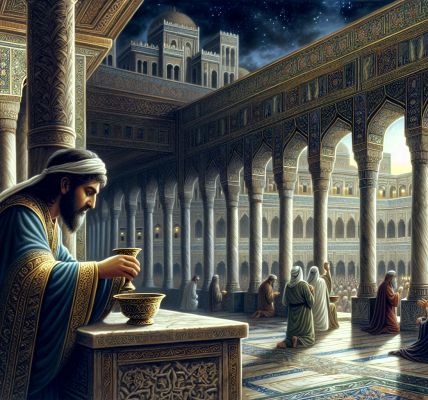
In its place, Rehoboam ordered shields of bronze to be hammered out. Bronze, the common metal of soldiers and farmers. He entrusted them to the captains of the guard, who kept them in the guardhouse by the palace gate. A pathetic symbol. Every time the king went up to the house of the Lord, the guard would bring out these dull, brownish shields, carry them in a solemn procession, and then return them to the dark of the guardhouse. The clang of bronze, not the shimmer of gold, now marked the royal progress. It was a public, perpetual confession.
The weight of Egypt did not lift quickly. For years, a subtle shadow lay over Judah. Tribute was paid. Deferences were made. The service was not always chains and whips, but it was a constant, grating reminder of their subjugation, a daily lesson in the cost of forsaking a light yoke for a heavy one.
Rehoboam grew old under this shadow. The scripture notes, with a starkness that feels like winter wind, that he did evil because he did not set his heart to seek the Lord. His story ends not with a bang, but with the slow sigh of diminished things. There were wars, constant, grinding skirmishes with Jeroboam to the north. They faded into one another, a blur of stalemate and wasted blood.
He slept with his fathers, this grandson of David, and was buried in the City of David. They laid him in a tomb, surely, but the true monument to his reign was not stone. It was the memory of stolen gold, the sight of those bronze shields being trotted out and put away, and the deep, unanswerable silence in the places where the presence of God had once been invoked without shame. The final word on his seventeen years was a whisper that echoed in the empty treasury and in the quieted hearts of the people: *He had not set his heart.* It was not a dramatic failure, but a slow turning away, and the long, hard road back was only just beginning.