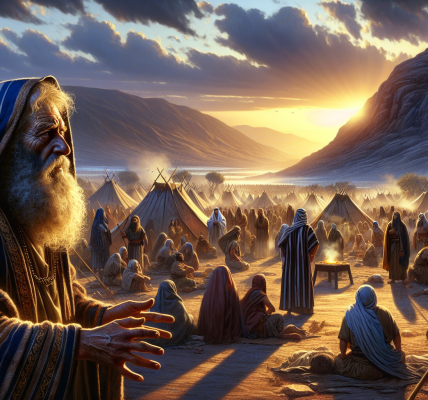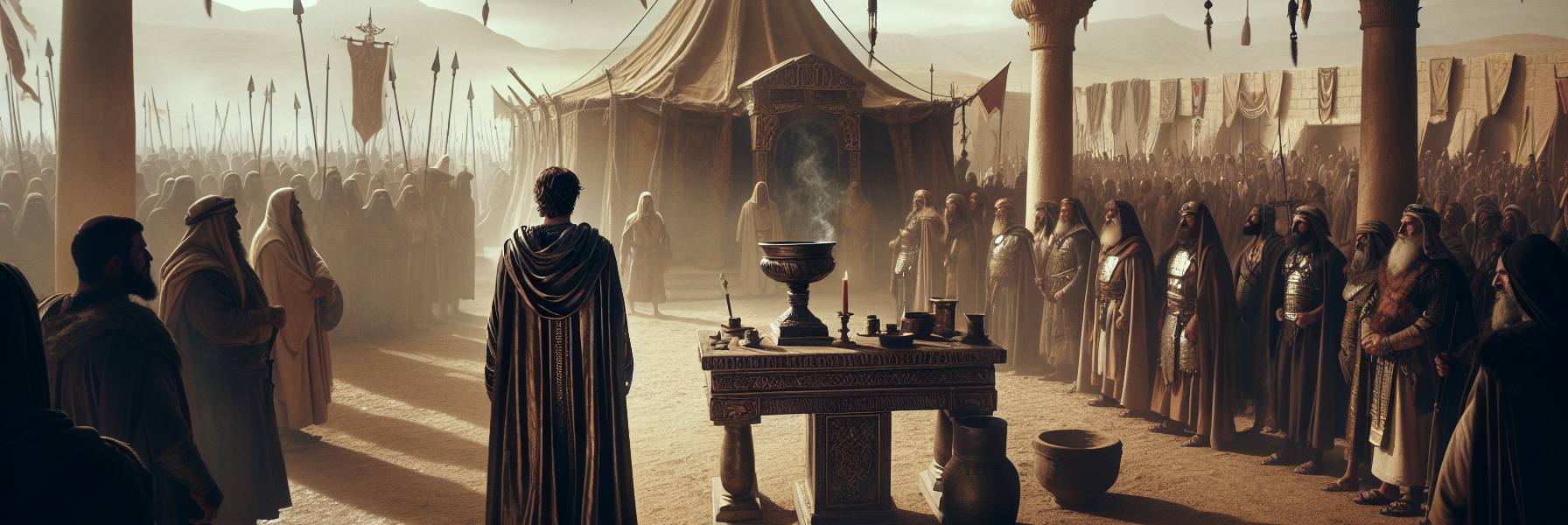

The air at Gibeon was thick with the smell of earth and smoke. It clung to Solomon’s robes as he stood before the ancient bronze altar, a relic from the wilderness days that his father David had brought up here, to this high place. The tabernacle of Moses, that weathered tent of meeting, stood behind it, a humble shadow against the sprawling royal encampment. It was a jarring contrast—the simple, sun-bleached hides of the sanctuary against the brilliant banners and polished armor of the king’s retinue.
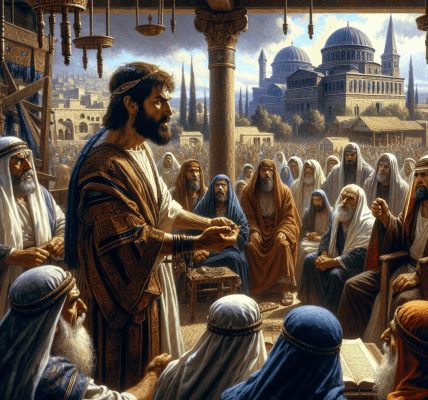
He had come with everyone. The commanders, the judges, every tribal head, the leading men of Israel—they were all there, a sea of expectant faces shimmering in the heat. The weight of it pressed on him, a weight different from the royal crown. His father’s last breaths had been full of charged words about strength, about obedience, about a house for the Name. Now the kingdom was his, solid and sprawling, a fact he felt in the tremor of the ground under the feet of thousands.
The sacrifice was enormous. A thousand burnt offerings. The logistics alone had occupied his stewards for weeks. Now, the fires roared, a wall of heat that made the distant hills waver. The priests moved in a slow, bloody ballet, their chants rising and falling beneath the crackle of flame and the lowing of beasts. The smoke poured upward in a greasy, twisting column, a plea written in a language older than words. Solomon watched it, his eyes stinging. This was the form, the duty. But as the smell of searing fat filled his nostrils, his mind was not on the ritual. It was on the silent, empty space ahead of him. A throne. A nation. A legacy. A child with a man’s inheritance.
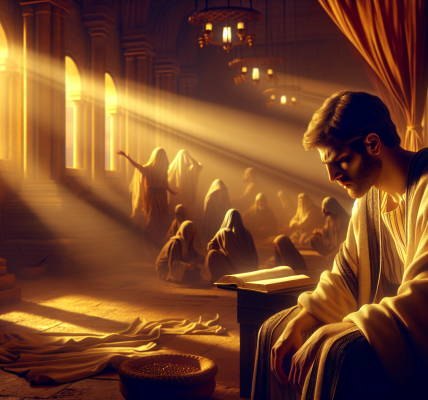
Night fell, a deep and velvet dark that the great fires could not fully pierce. The camp settled into a murmur. In the tent reserved for him, Solomon lay restless. The pomp of the day receded, leaving only the quiet terror of vacancy. How does one judge? Not just disputes over sheep or field boundaries, but the hearts of men? How does one lead a people chosen by God, without trampling the delicate covenant they carried? His father had been a warrior, a poet, a man after God’s own heart even in his stumbles. He, Solomon, was a prince of peace. The geometry of rule, the calculus of justice—it felt like trying to hold water in his hands.
Sleep, when it came, was thin. And in it, a presence.
It was not a dream of images, but of immensity. A voice that did not sound, yet formed words in the center of his being.
*Ask. What shall I give you?*
He was awake, yet not awake. The coarse weave of his bedroll was real under his fingers, but the tent walls seemed to have dissolved into star-flecked darkness. The voice echoed in the hollow places the day’s ceremonies could not fill.
There was no hesitation, because the question had been gnawing at him since the crown first touched his hair. The answer was already there, worn smooth by fear and longing.
He spoke into the dark. “You have shown great and steadfast love to David my father, and have made me king in his place. Now, O LORD God, let your word to David my father be confirmed. For you have made me king over a people as numerous as the dust of the earth.”
He paused, the next words feeling like the only true thing he owned. The wealth of the kingdom, the fear of his enemies, the admiration of the assembly at Gibeon—all of it was suddenly chaff, insubstantial.
“Give me now wisdom and knowledge, that I may go out and come in before this people. For who can govern this people of yours, which is so great?”
The silence that followed was profound, but not empty. It was a listening silence. Then, the presence again, not in his ears but in his bones.
*Because this was in your heart, and you have not asked for riches, wealth, honor, or the life of those who hate you, nor have you asked for long life, but have asked for wisdom and knowledge for yourself that you may govern my people over whom I have made you king… wisdom and knowledge are granted to you.*
The voice carried a warmth that had nothing to do with the dying embers outside.
*I will also give you riches, wealth, and honor, such as none of the kings who were before you has ever had, and none after you will have.*
Then, it was gone. Not with a sound, but with a subtraction of weight. Solomon drew a shuddering breath. The tent was just a tent. The night sounds of the camp crept back in—a distant laugh, the snort of a horse, the settling of a fire. He sat up, his body thrumming as if from a long journey. Nothing looked different, and yet everything was.
The morning dawned clear and sharp. The assembly gathered again, but Solomon saw them with new eyes. He saw not just a crowd of subjects, but a tapestry of stories, of needs, of potential quarrels and hidden loyalties. He saw the weave of it all. The knowledge sat in him not as a filled ledger, but as a quiet understanding, a sense of depth and connection he had not possessed the day before.
They returned to Jerusalem, to the king’s citadel. And the signs of the promise began to gather, almost as an afterthought. Envoys from distant lands came, drawn by the rumor of a new kind of king. Their gifts were exotic and lavish: spices from the south with scents that spoke of hidden jungles, gold from Ophir that gleamed with a softer, deeper light, and horses. Great, snorting, magnificent beasts from Egypt and Kue, their coats gleaming, their harnesses jingling with silver. Chariots, hundreds of them, lined the stables, their bronze fittings catching the sun.
His officials organized it, the wealth flowing in and being portioned out, stored, traded. Solomon oversaw it, but his attention was often elsewhere. He would sit in the place where he rendered judgment, and the people would come. A case would be presented—two women, one child, a tragic, knotted tale of loss and desperation. The court would hold its breath. And Solomon, with that new depth in his gaze, would see not just the facts, but the heart-knot itself. He would speak, and his words, simple and astonishing, would slice the knot clean through.
The fame of his wisdom began to outpace the fame of his wealth. It traveled on the roads merchants walked, in the songs sailors sang. It was said the king in Jerusalem could untangle anything, could see the truth hidden in the heart like a seed in the earth.
And in his quieter moments, walking the parapets of his father’s city, Solomon would look at the accumulating gold, the stables full of strength, the peaceful borders. He would feel the profound, humbling truth. The riches were given. The wisdom was a gift. It was all a form of grace, an answer to a request made in the honest dark, when a young king, surrounded by smoke and splendor, had asked for nothing for himself, but only for the skill to serve the dust of the earth that had been placed, trembling, into his hands.