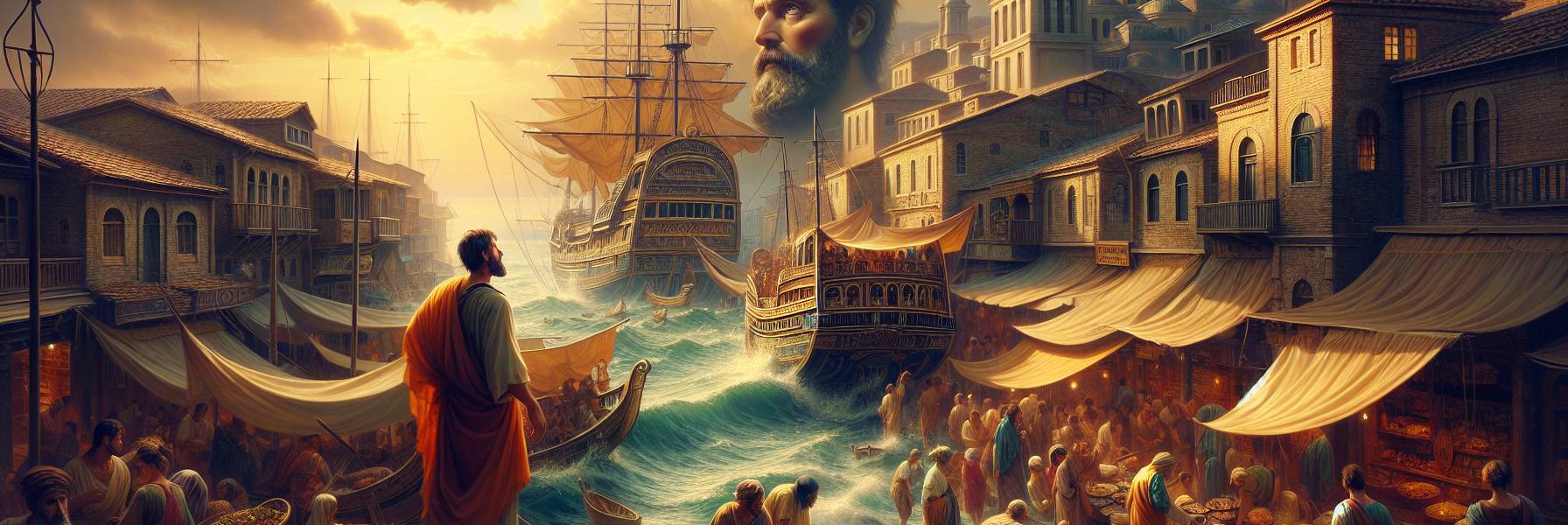

In the bustling port city of Thessalonica, where the salty sea air mingled with the scent of spices and the clamor of merchants filled the narrow streets, a profound sense of urgency gripped the heart of the Apostle Paul. Having been driven out by hostile crowds, he now found himself in Athens, his spirit restless and his prayers fervent. Though surrounded by the marble grandeur of philosophers and temples, his thoughts continually drifted northward to the fledgling community of believers he had been forced to abandon so abruptly.
He saw their faces in his mind’s eye—Lydia, the seller of purple cloth, whose household had first opened their doors; Jason, who had suffered for his hospitality; the gentle eyes of the elderly and the eager faith of the young. The memory of their earnest reception of the gospel was a sweet balm, but it was overshadowed by a gnawing, paternal anxiety. He knew all too well the fickleness of human resolve and the ferocity of the tempests that assail a new faith.
“The tempter is cunning,” Paul would murmur to himself as he paced the stone courtyards. “He sows doubt in the fertile soil of affliction. What if their faith, so tender and new, has withered under the heat of persecution?”
This torment became so unbearable that he could no longer endure the silence. He resolved to send a messenger, a man of proven character and shared suffering. His choice fell upon Timothy, his son in the faith. Timothy’s youth was tempered by a spirit of genuine compassion and a steadfast loyalty that Paul trusted implicitly.
Summoning the young disciple, Paul placed his hands firmly upon Timothy’s shoulders. The weight of the mission was palpable in his touch. “My son,” Paul said, his voice low and earnest, “I can no longer bear this uncertainty. You must go to Thessalonica. Strengthen them. Encourage them in their faith. Remind them that we are destined for such trials, for we ourselves told them again and again that we must suffer many hardships to enter the kingdom of God. Do not let them be unsettled by these persecutions.”
He looked deep into Timothy’s eyes, imparting the core of his fear. “Above all, learn the state of their faith. I fear that the tempter may have somehow tempted you all, and our labor among you might have been in vain.”
With those weighty words and a final, prayerful embrace, Timothy departed, his figure growing smaller until he vanished into the dusty horizon of the road leading north. The days that followed were a long, agonizing vigil for Paul. Each sunrise brought no news, and each sunset deepened the shadows of his concern. He poured himself into preaching in Athens, debating with Stoics and Epicureans on the Areopagus, but his heart was tethered to Thessalonica. His prayers were a constant, whispered plea: “Lord, guard them. Lord, establish their hearts. Let their love not grow cold.”
Then, one afternoon, as the sun cast long golden beams across the city, a familiar, travel-worn figure appeared. It was Timothy, his face etched with the fatigue of the journey, but his eyes alight with a fire of good news.
Before Timothy could even speak, Paul clasped him in a tight embrace, his own heart pounding with a mixture of dread and hope. When they found a moment of privacy, Timothy began to speak, and his words were like a life-giving stream in a desert.
“Paul,” Timothy began, a smile breaking through his weariness, “they stand firm. Their faith is not only intact; it is thriving. Their love abounds. They speak of you constantly with deep affection and longing, yearning to see you again just as we yearn to see them.”
He recounted stories of their steadfastness. He told of how, when faced with slander and physical threats from their own countrymen, the believers would gather in secret, and instead of cursing their persecutors, they would pray for them. He spoke of how they supported one another, the wealthy sharing with the poor, the strong encouraging the weak. Their love was not a mere sentiment but a tangible force, a living testimony to the Spirit at work within them.
“And this is their greatest comfort and their constant declaration,” Timothy continued, his voice swelling with emotion. “They live in the sure and certain hope of the Lord’s return. They speak of the coming of our Lord Jesus with all his holy ones as their blessed hope, the anchor for their souls in the present distress. This hope is the source of their strength and their love.”
As Paul listened, a weight he had carried for weeks, for months, lifted from his soul. A profound, soul-deep relief washed over him, followed by an irrepressible joy. The report was far better than he had dared to hope. In that moment, all the weariness of his own travels, the scars of his own persecutions, felt insignificant.
He looked at Timothy, his eyes glistening with tears of gratitude. “Now we really live,” he breathed, the words a prayer of thanksgiving, “since you are standing firm in the Lord.”
That very night, by the flickering light of an oil lamp, Paul took up a sheet of parchment and a stylus. The words flowed from a heart overflowing with thankfulness and love.
*To the church of the Thessalonians, in God our Father and the Lord Jesus Christ…*
He wrote of his incessant longing to see them, of his thankfulness to God for the good news of their faith and love. He assured them that their perseverance was a profound encouragement to him in his own distress and persecution. He penned the words that would echo through the centuries, born from the relief of a spiritual father hearing of the well-being of his children: “For what is our hope, our joy, or the crown in which we will glory in the presence of our Lord Jesus when he comes? Is it not you? Indeed, you are our glory and our joy.”
He concluded that section of his letter with a prayer that was both a benediction and a deep yearning: “Now may our God and Father himself and our Lord Jesus clear the way for us to come to you. May the Lord make your love increase and overflow for each other and for everyone else, just as ours does for you. May he strengthen your hearts so that you will be blameless and holy in the presence of our God and Father when our Lord Jesus comes with all his holy ones.”
The letter was sealed and sent, a testament to a faith that had been tested in the furnace of affliction and emerged not as slag, but as purified gold. And in the quiet of his room, Paul knelt, no longer in anxious supplication, but in joyful thanksgiving, for he had learned that the word of God, once planted in an honest heart, was a living and enduring power, able to sustain his beloved children through any storm.