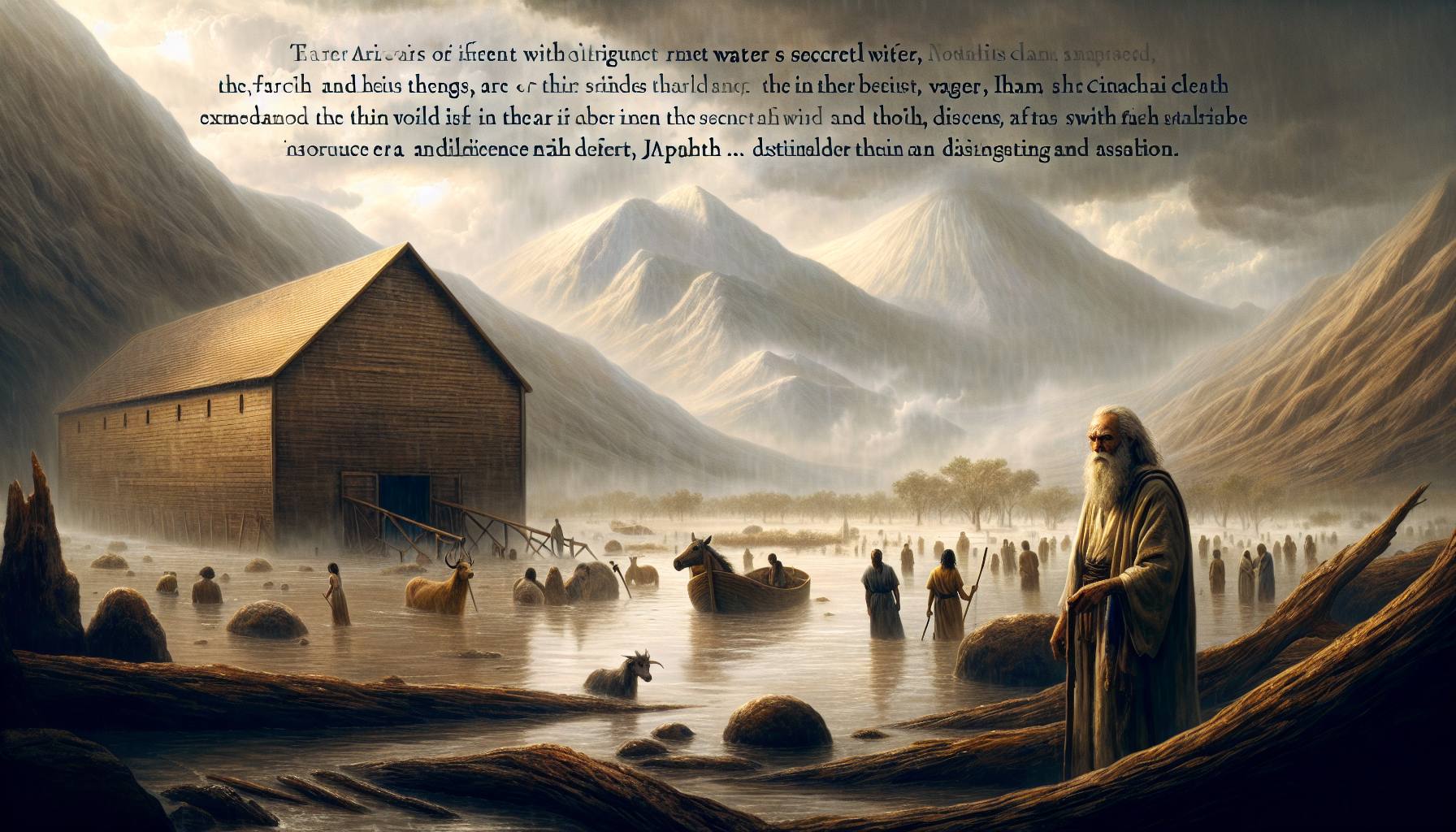
Genesis 9 opens with a blessing, but it is not a simple return to Eden. God tells Noah and his sons to be fruitful, multiply, and fill the earth, yet the world they enter is marked by fear as well as promise. The animals will dread man. Every moving thing is now given for food, as the green herb had been before. This is a new order after the flood, but it is not innocence restored.
The first hard boundary appears immediately: flesh with its life, that is, its blood, must not be eaten. Then the chapter moves from food to bloodshed. God will require an account for the blood of man, whether from beast or from man, because man was made in the image of God. The command is not ornamental. Human life carries a gravity that the post-flood world must not forget.
Then the chapter steadies itself around covenant. God speaks not only to Noah, but to Noah and his sons with him. He establishes his covenant with them, with their seed after them, and with every living creature that came out of the ark. The promise is sweeping and precise at once: never again will all flesh be cut off by the waters of a flood, and never again will there be a flood to destroy the earth.
The sign of that covenant is the bow in the cloud. The chapter lingers there because the sign matters. When the cloud comes over the earth and the bow is seen, God says he will remember the covenant between himself and all flesh. The bow does not mark human achievement or improved behavior. It marks divine restraint. The future of the earth will not be secured by man's innocence, but by God's word.
That becomes painfully clear in the second half of the chapter. Noah, the man who survived the flood, plants a vineyard. He drinks of the wine, becomes drunk, and lies uncovered in his tent. The chapter gives no excuse and offers no softening language. Even after judgment has washed the earth, shame can still take root inside a single tent.
Ham sees his father's nakedness and tells his brothers outside. Shem and Japheth respond differently. They take a garment, lay it on both their shoulders, walk backward, and cover Noah without looking on him. The contrast is deliberate. One son exposes. Two sons cover. The chapter does not let the moment dissolve into embarrassment; it turns it into a dividing line inside Noah's own house.
When Noah awakes and learns what has been done, he speaks words that fall as blessing and curse. Canaan is cursed to servitude. The Lord, the God of Shem, is blessed. Japheth is enlarged. The chapter closes by tracing the consequences outward from a private act into the future of peoples and households. Genesis 9 refuses the fantasy of a clean slate. The flood is over, the covenant stands, the bow remains in the cloud, and sin is still close enough to shame a father and divide his sons.
Noah lives three hundred and fifty years after the flood. Then he dies. That closing note matters because Genesis 9 is a chapter of continuance. Life continues. History continues. The earth goes on under covenant, under restraint, and under the weight of what man still is.