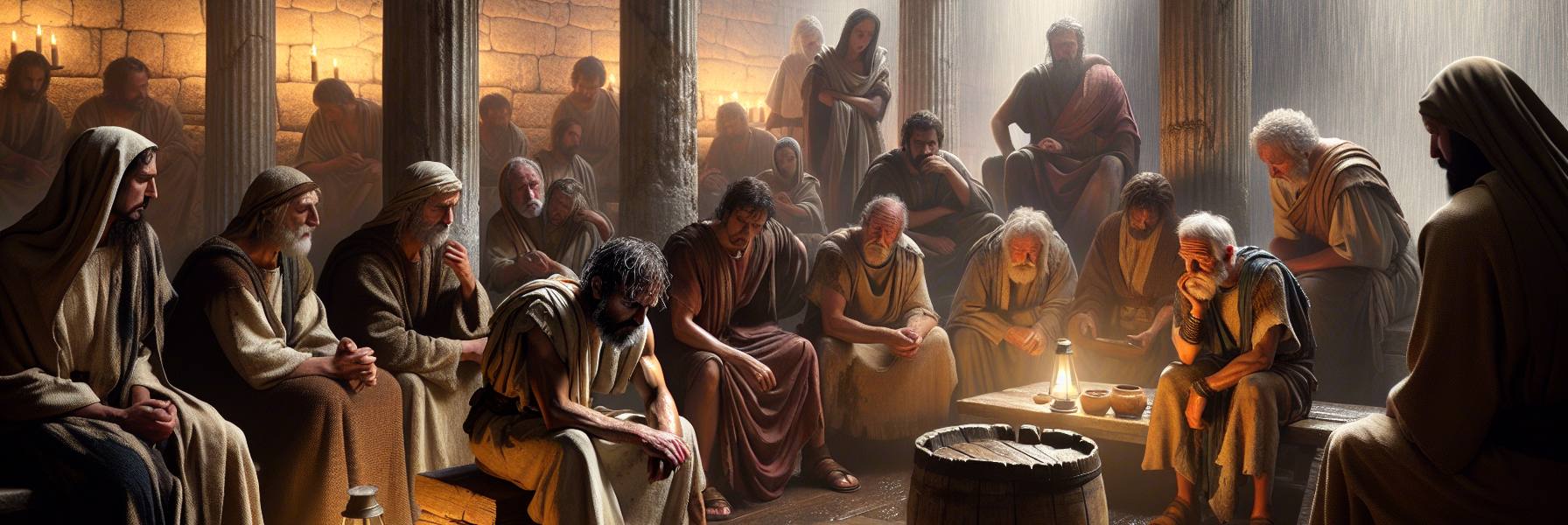

The rain had finally ceased, but the damp clung to everything in Ephesus. It seeped through the plaster of the upper room where we met, making the lamplight seem thicker, the shadows deeper. My bones ached with it, or perhaps with the weight of the words we’d been hearing. The letter from our brother in Rome—a lengthy, careful thing written on heavy papyrus—was being read aloud for the third time. We were slow to understand.
I sat on a rough wooden bench, my fingers tracing a knot in the grain. Around me were faces I knew better than my own: Lydia, her merchant’s sharpness now softened by a persistent worry; Marcus, a former legionary whose stillness was a new habit; old Matthias, who still wore the fringes of his phylactery under his tunic, a secret touchstone. We were a patchwork, a people between worlds.
The reader, a young man named Gaius with a clear, careful voice, reached the part that had been troubling us for days. “For it is impossible,” he read, the Greek words precise and heavy as stones, “for those who have once been enlightened, who have tasted the heavenly gift, who have shared in the Holy Spirit, and have tasted the goodness of the word of God and the powers of the coming age—and then have fallen away—to be brought back to repentance.”
A log shifted in the brazier. The hiss was loud in the silence. Matthias let out a long, slow breath, almost a sigh. I knew what he was thinking. We all did. It sounded like a door slamming shut. We’d all known someone who had turned back. Silas, who returned to the synagogue after the riots, craving the old, definable boundaries. Chloe, who decided the cost to her family’s reputation was too high. Their absence was a cold space among us. And this text… it felt like it was etching their names in stone.
“It is impossible,” Gaius repeated, softer now, as if feeling our dread. Then he continued, his tone shifting. “To their loss, they are crucifying the Son of God all over again and subjecting him to public disgrace.”
Lydia spoke up, her voice brittle. “So there is no hope? For them? What if… what if we stumble? Is the door locked behind us?” The unspoken fear hung in the damp air: *What if it locks behind me?*
Gaius held up a hand, asking for patience. He read on, and here the imagery changed. It left the courtroom for the field. “Land that drinks in the rain often falling on it and that produces a crop useful to those for whom it is farmed receives the blessing of God. But land that produces thorns and thistles is worthless and is in danger of being cursed. In the end it will be burned.”
I closed my eyes. I wasn’t a farmer, but my father had been. I knew the smell of turned earth after a spring rain, the tender green shoots of wheat, the patient, backbreaking work of weeding. I also knew the fierce, useless anger at finding a patch you’d neglected choked with star-thistle and bramble, their roots deep and defiant. You couldn’t replant there. You had to burn it clean and start anew. The metaphor wasn’t about a single failure, a moment of doubt. It was about the settled direction of a life. Thorns weren’t an accident; they were the crop of neglected ground.
The letter wasn’t finished with us. Gaius’s voice strengthened. “Even though we speak like this, dear friends, we are convinced of better things in your case—things that accompany salvation.”
My head came up. It was as if the writer had been listening to our fearful silence, to the pounding of our hearts. He had led us to the terrifying cliff’s edge only to firmly take our shoulder and turn us around. He wasn’t writing to condemn us, but to provoke us. To wake us up from a kind of spiritual drowsiness.
“God is not unjust,” Gaius read, a new warmth entering his recitation. “He will not forget your work and the love you have shown him as you have helped his people and continue to help them.”
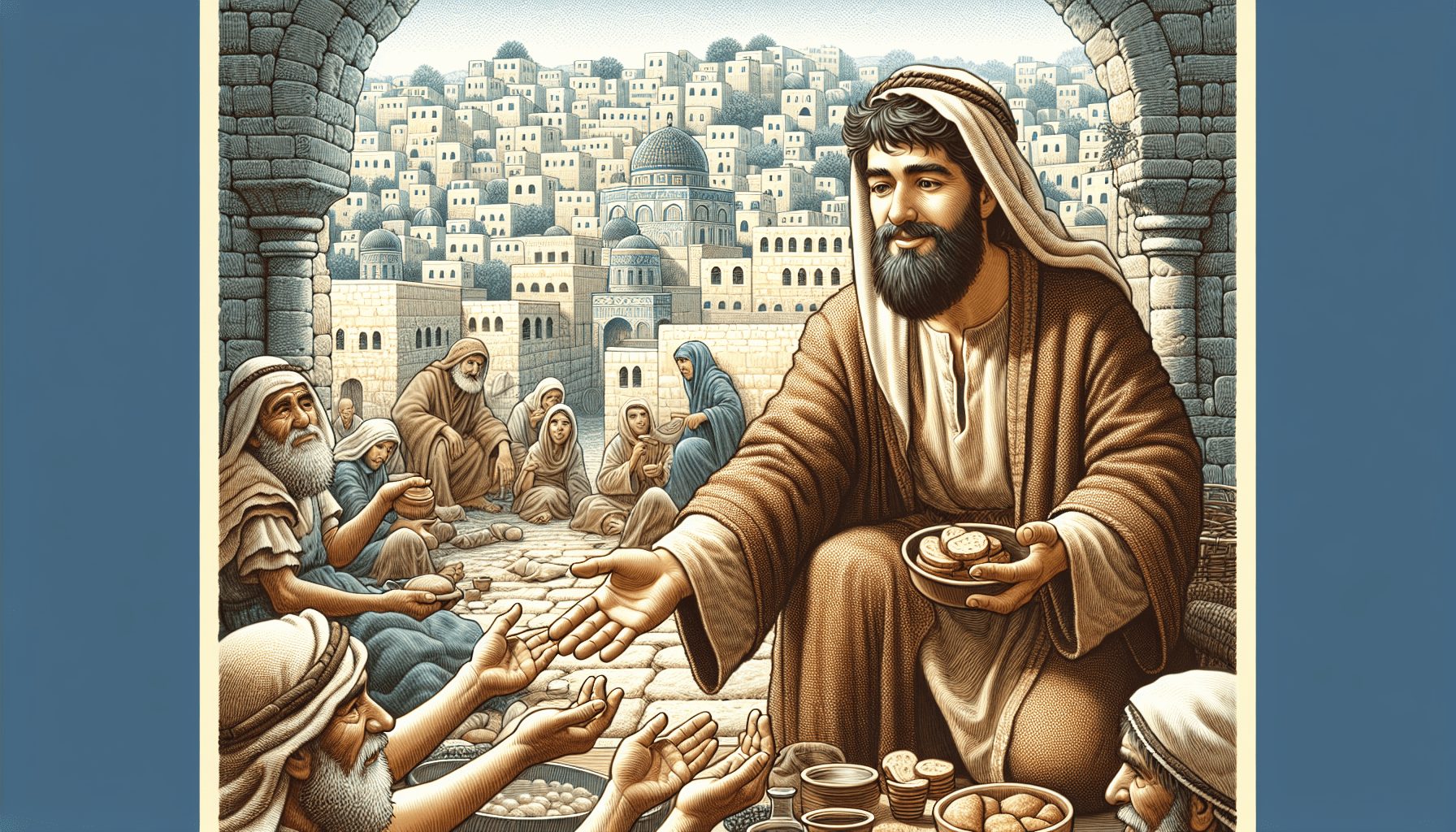
I looked at Marcus, who regularly risked his neck carrying provisions to believers imprisoned in the city. At Lydia, whose home was this meeting place, whose resources clothed the destitute among us. The letter was saying: Look at what you are already doing. This is the evidence of the life within you. Don’t dwell on the hypothetical falling away; pursue the actual, steady, growing forward.
Then came the anchor. “We want each of you to show this same diligence to the very end, so that what you hope for may be fully realized. We do not want you to become lazy, but to imitate those who through faith and patience inherit what has been promised.”
The writer pointed us back to Abraham. To the promise. To the utter reliability of God, who swore by himself, having no one greater to swear by. Gaius’s voice settled into a rhythm of profound assurance. “God did this so that, by two unchangeable things in which it is impossible for God to lie, we who have fled to take hold of the hope set before us may be greatly encouraged. We have this hope as an anchor for the soul, firm and secure.”
An anchor. Not for a calm sea, but for a storm-tossed one. We were in the storm. Persecution was a cloud on the horizon. Heresies buzzed like flies. Our own hearts were often unconvinced and afraid. But the anchor wasn’t inside the boat, subject to our panicked movements. It was lodged somewhere beyond the veil, in the very inner sanctuary where Jesus had gone as our forerunner.
I realized then what the writer was doing. The severe warning at the beginning wasn’t a threat to the earnest but struggling believer. It was a description of the ultimate, willful rejection of known truth. It was the diagnosis of the thorn-field. But the bulk of the message, its heart, was a passionate plea: *Don’t stay where you are! Move on!* Stop re-laying the foundation of repentance from dead works over and over. Don’t get stuck in elementary teachings. Go on to maturity. The anchor holds. So press on.
The reading finished. The lamp flickered. For a long moment, no one spoke. The dread had lifted, not because the hard words were retracted, but because they were framed within a far greater, more stable reality.
Matthias finally broke the silence, his old voice rough. “My father,” he said, “had a field on a hillside. The soil was good, but shallow. In a drought, the first to wither. He had to deepen it. Break up the hardpan underneath. It was exhausting work. He said you couldn’t just keep sprinkling seed on stone.” He looked around at us, his eyes gleaming. “I think… I think that is what he means. Let the rain sink deep. Let it find good soil.”
We sat there in the damp Ephesian night, a band of former pagans, Jews, slaves, and merchants. We were not yet mature. We were often afraid. But we had tasted the heavenly gift. And we had an anchor, sure and steadfast, in a place the storm could never touch. The way forward wasn’t to cower at the starting line, but to run, however clumsily, toward the promise. We had work to do, love to show, a hope to hold. And for the first time in days, the weight felt like that of a growing crop, not a tombstone.