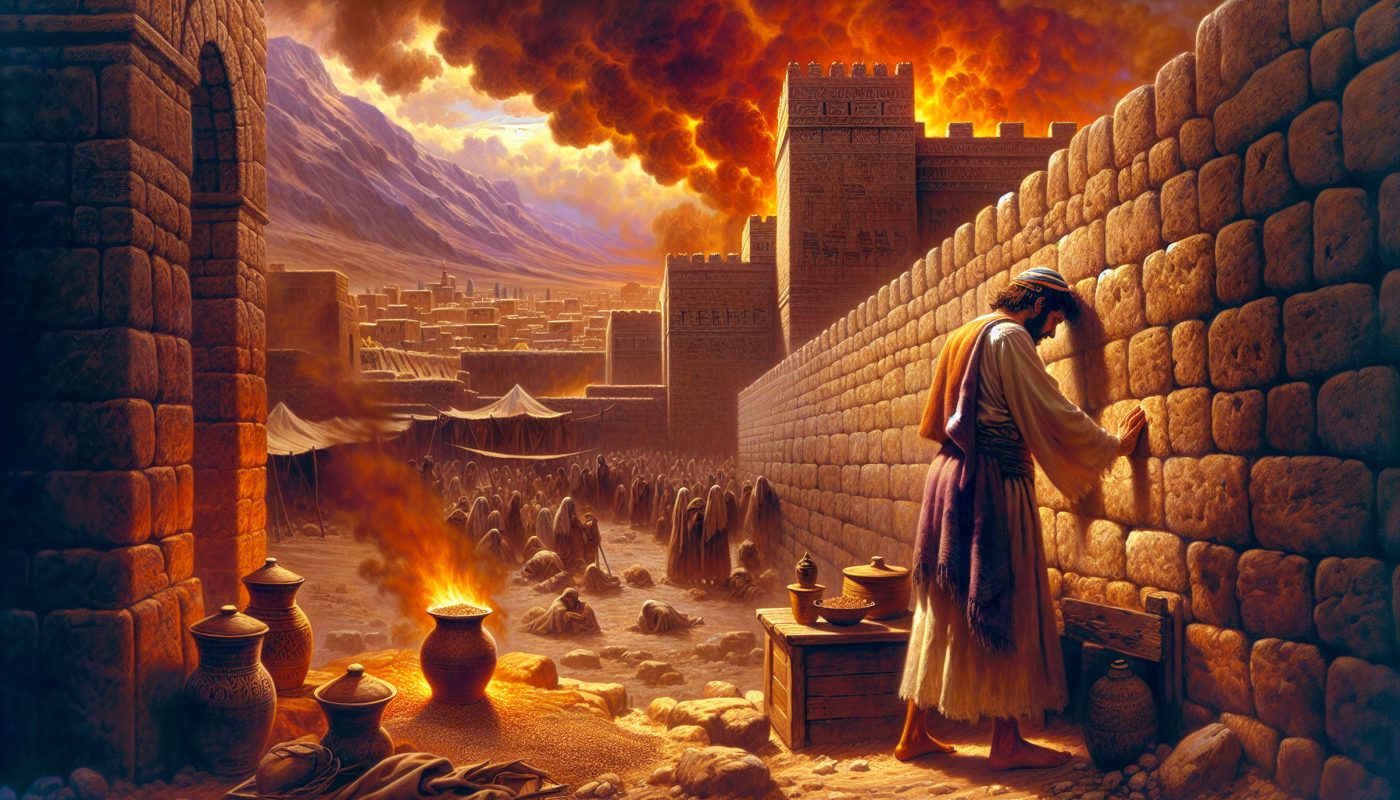
The Lord spoke to Moses with a precision that matched the gravity of what was being established. The instructions that followed were not about defiant rebellion, the kind that raises a fist against heaven. They addressed something quieter, more insidious, and far more common: the sin committed unwittingly, the error made without intent, the misstep taken in ignorance. The chapter opens with this category—"If any one shall sin unwittingly"—and then proceeds to build a system of atonement that treats the unintentional sin with the same seriousness as the deliberate one.
The first case is the anointed priest. If the priest sins, the text says he brings guilt on the people. His error is not private. It ripples outward, contaminating the worship of the whole congregation. For this, he must bring a young bull without blemish. He lays his hand on its head, a gesture of identification and transfer, and kills it before the Lord at the entrance of the tent of meeting. The priest then takes the blood into the sanctuary, dips his finger, and sprinkles it seven times before the veil. He puts blood on the horns of the altar of incense, and pours the rest at the base of the altar of burnt offering. The fat, the kidneys, the caul of the liver—these are burned on the altar. But the rest of the bull, the skin, the flesh, the head, the legs, the entrails, the dung, is carried outside the camp to a clean place where the ashes are poured out, and burned there. The sin of the priest requires a complete removal, a disposal that mirrors the expulsion of the guilt itself.
Then the chapter turns to the whole congregation of Israel. If the assembly errs and the thing is hidden from their eyes, and they become guilty of something the Lord has commanded not to be done, then when the sin becomes known, the assembly must bring a young bull for a sin offering. The elders lay their hands on its head before the Lord, and it is killed. The priest does the same blood work: seven sprinklings before the veil, blood on the horns of the incense altar, the rest poured at the base of the burnt offering altar. The fat is burned, and the bull is carried outside the camp and burned. The pattern is identical to the priest's offering, because the congregation's guilt is no lighter than the priest's.
Next comes the ruler. When a leader sins unwittingly and is made aware of it, his offering is a male goat without blemish. He lays his hand on its head and kills it where the burnt offering is killed. The priest takes the blood and puts it on the horns of the altar of burnt offering, not the incense altar. The blood is poured at the base. The fat is burned on the altar. The ruler's offering is less costly than the bull, but the ritual is still exact. The blood touches the altar of the courtyard, not the inner sanctuary. The distance from the veil marks the difference in the sphere of responsibility.
Finally, the common person. If anyone of the people sins unwittingly and becomes guilty, and the sin is made known to him, he brings a female goat without blemish. He lays his hand on its head and kills it in the place of the burnt offering. The priest puts blood on the horns of the altar of burnt offering, pours the rest at the base, and burns the fat on the altar. If the person brings a lamb instead, it must also be a female without blemish. The same procedure applies. The priest makes atonement, and the person is forgiven.
The chapter does not soften the weight of the unintentional sin. It does not say, "It was an accident, so let it pass." Instead, it provides a path—costly, bloody, and public—for the guilt to be removed. The offering is not a fine for carelessness. It is a recognition that sin, even when unknown to the sinner, creates a real breach. The blood on the horns, the fat burned as a sweet aroma, the body burned outside the camp—these are not arbitrary gestures. They are the appointed means by which the Lord restores what was broken without the sinner's knowledge.
The structure of the chapter is a ladder of responsibility: priest, congregation, ruler, common person. The cost of the offering descends with the rank, but the ritual remains consistent. Every case requires the laying on of hands, the shedding of blood, the application of blood to the altar, the burning of the fat, and the disposal of the carcass. The pattern teaches that sin is not measured by human intention alone. It is measured by the Lord's command. And the command is absolute.
The phrase that recurs at the end of each section is this: "the priest shall make atonement for him, and he shall be forgiven." The forgiveness is not automatic. It comes through the appointed means. The chapter does not speculate about what happens if the sinner never learns of his error. It only addresses what must be done when the sin becomes known. The knowledge itself becomes the moment of accountability. Once the sinner knows, he cannot remain silent. He must bring the offering.
The chapter closes with the same note it opened with: the Lord speaking to Moses. The entire system is given as a word from God, not as a human invention. The unintentional sin is not beyond the reach of atonement. But the atonement is not cheap. It costs an animal, a life, and the labor of the priest. It costs the sinner the admission that he is guilty, even when he did not mean to be. And it costs the community the recognition that sin, however it enters, must be removed.
Comments
Comments 0
Read the discussion and add your voice.
Members only
Sign in to join the conversation
We keep comments tied to real accounts so the discussion stays clean and trustworthy.
No comments yet. Be the first to add one.